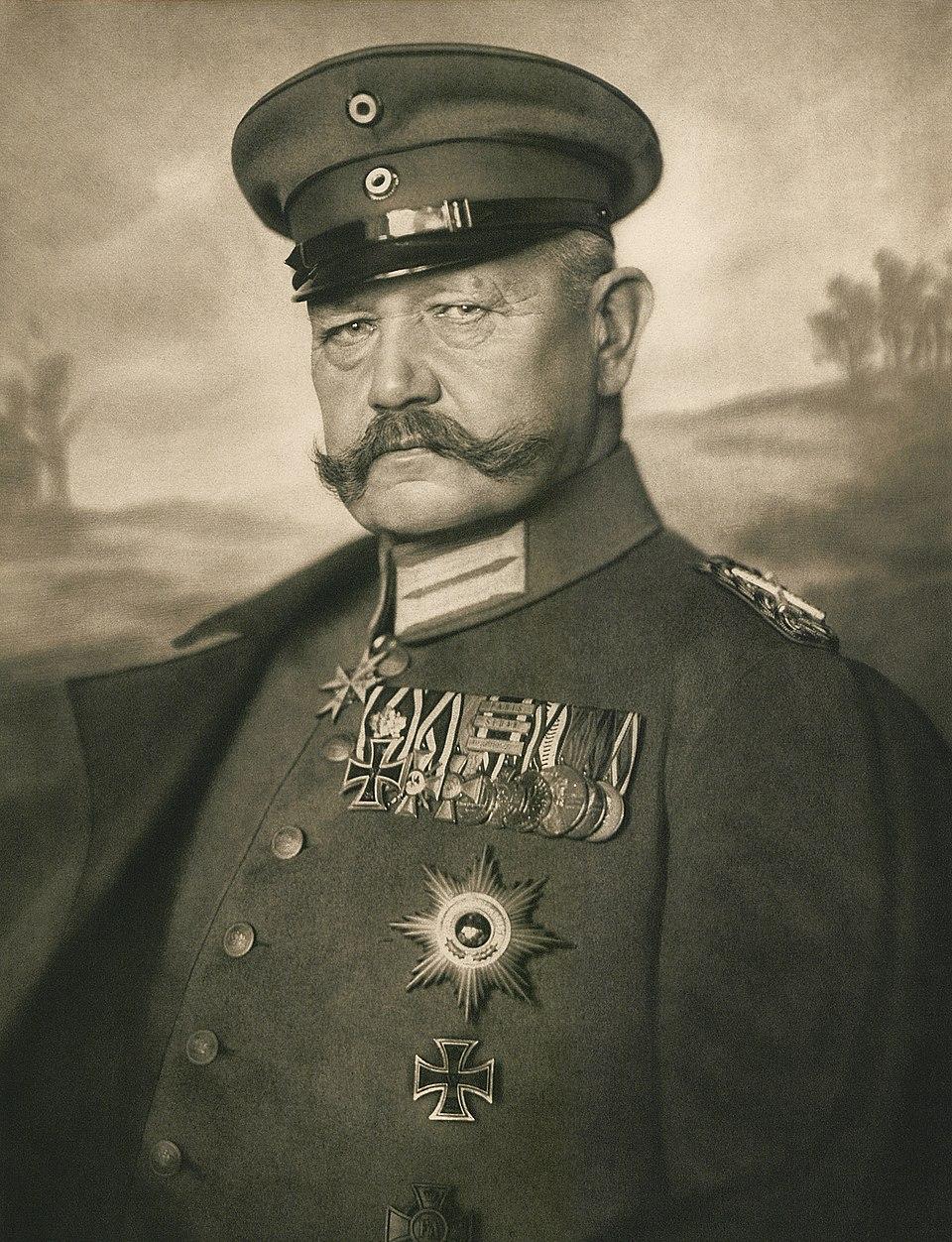
Paul von Hindenburg
In German history, Paul von Hindenburg stands as a figure of influence and controversy. Born in 1847 into a Prussian aristocratic family, he grew up in the military traditions of his lineage. Following his father’s path, he pursued a military career, eventually rising to the highest ranks of the German army and later the presidency of the Weimar Republic. Hindenburg first gained fame during World War I.
Together with his chief of staff, Erich Ludendorff, he commanded the German victories at Tannenberg and the Masurian Lakes, triumphs that made him a national hero with almost mythical status. After the war, Germany was plunged into chaos, facing economic hardship and political instability. In 1925, Hindenburg was elected president of the Weimar Republic, largely thanks to his wartime reputation and his supposed ability to restore order. Though conservative and sympathetic to the monarchy, he initially upheld democratic principles.
His presidency, however, is most remembered for his role in Adolf Hitler’s rise. During the Great Depression, as the government faltered, Hindenburg—pressured by advisors—appointed Hitler chancellor in 1932, believing he could be controlled. It was a disastrous miscalculation. After Hindenburg’s death in 1934, Hitler consolidated power, merging the presidency with the chancellorship to establish the dictatorship that led to World War II.
Any feedback for this story?