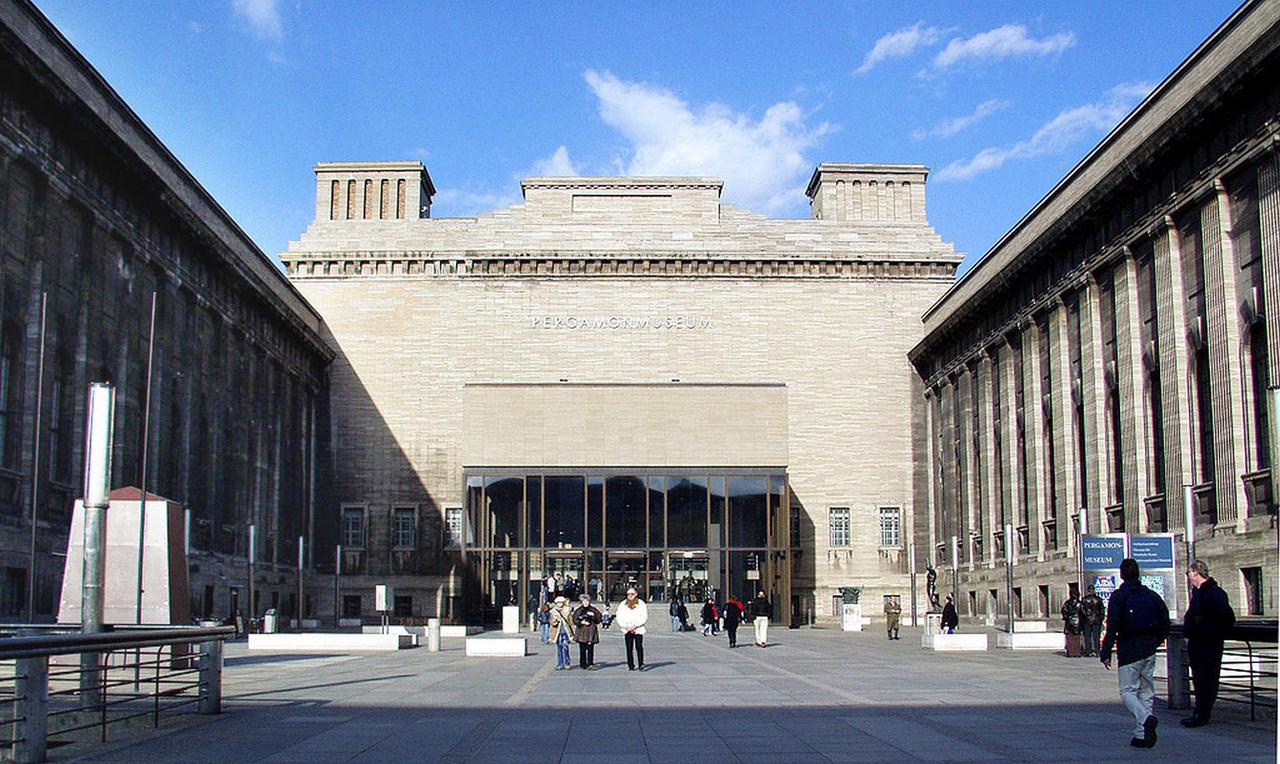
Pergamon Museum
As you stand here on Berlin’s Museum Island, the Pergamon Museum surrounds you with echoes of ancient civilizations. Its grand façades hint at treasures from distant lands, gathered to tell stories of human history and artistry. Completed in 1930, the museum is named after the ancient Greek city of Pergamon, located in what is now modern-day Turkey. It houses monumental structures that were once part of ancient cities, carefully reconstructed to preserve their cultural and architectural heritage.
One of the museum’s most remarkable exhibits is the Pergamon Altar, a massive Hellenistic structure dating back to the 2nd century BCE. The altar is famous for its intricate frieze depicting the battle between gods and giants, showcasing both artistic mastery and mythological storytelling. Excavated between 1878 and 1886 by German archaeologists, it was transported to Berlin and became the museum’s centerpiece. Beyond the altar, visitors find the Market Gate of Miletus, a grand Roman gateway from the 2nd century CE, and the Ishtar Gate of Babylon, a spectacular entrance adorned with blue-glazed bricks and reliefs of dragons and bulls.
These structures once formed part of major ancient cities, representing impressive urban planning and artistic achievement. The Pergamon Museum also holds extensive collections of Islamic art, Middle Eastern artifacts, and ancient sculptures, making it a crossroads of cultures and epochs. Though damaged during World War II and currently undergoing renovations, the museum continues to offer visitors a chance to walk through history’s monumental chapters. Each exhibit invites reflection on the craftsmanship and beliefs of ancient peoples, bridging past and present within these walls.
Any feedback for this story?