Pioniere
Hackescher Markt has always been a young people's square, with cafés, schools tucked into the side streets, and an S-Bahn station that funnels thousands of teenagers through it every day. The kids you see here look like the kids who hung around this place forty years ago. The difference shows up in what they used to wear around their necks.
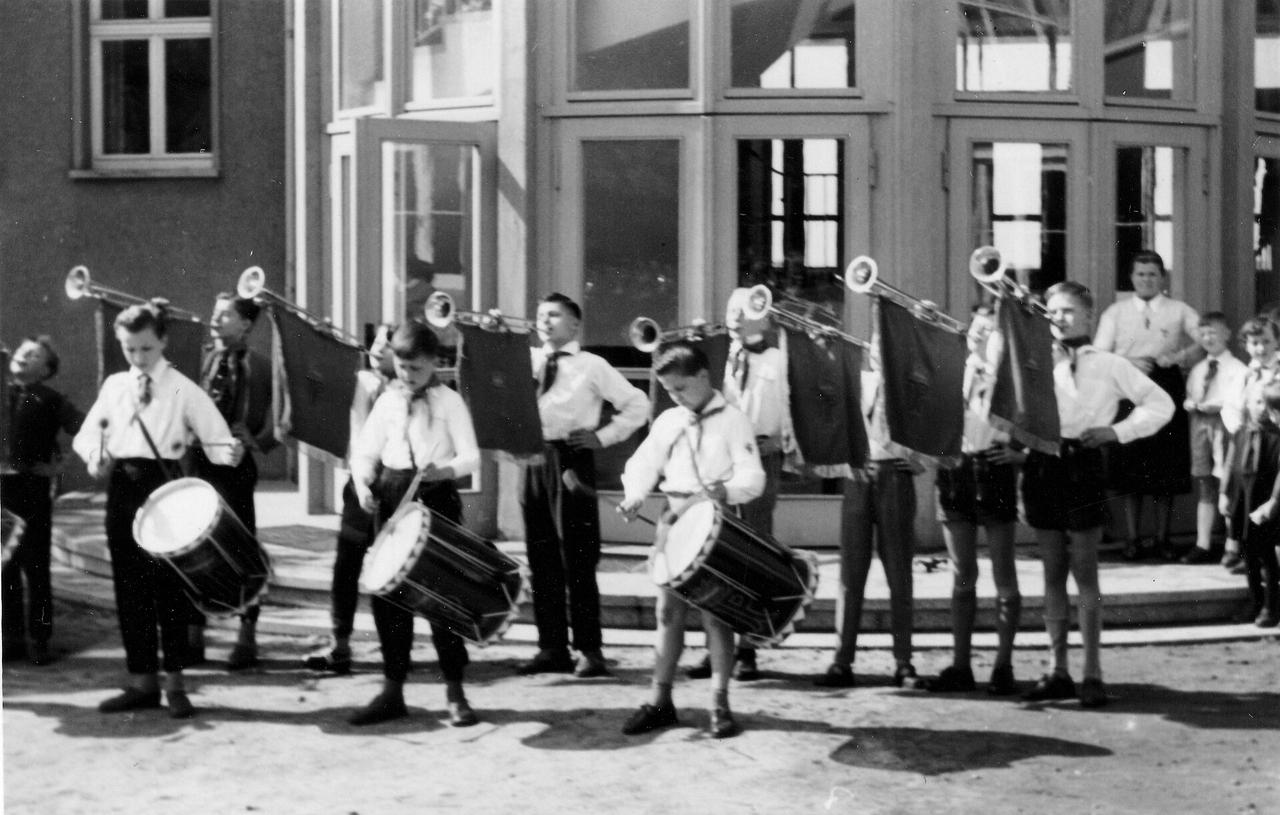
In East Germany, on your first day of primary school at age six, you were given a blue scarf. From that moment on you were a Jungpionier, a Young Pioneer. At ten the scarf turned red and you became a Thälmann Pionier, named after Ernst Thälmann, a German communist leader who was murdered in a Nazi concentration camp in 1944. At fourteen you got a blue shirt and joined the FDJ, the Free German Youth, which was the GDR's youth organisation.
By 1989, ninety-eight percent of all East German schoolchildren were members. Joining was officially voluntary, but if you didn't, you weren't getting into the academic track of secondary school, you weren't going to university, and you weren't landing a decent job. So the choice wasn't really a choice.
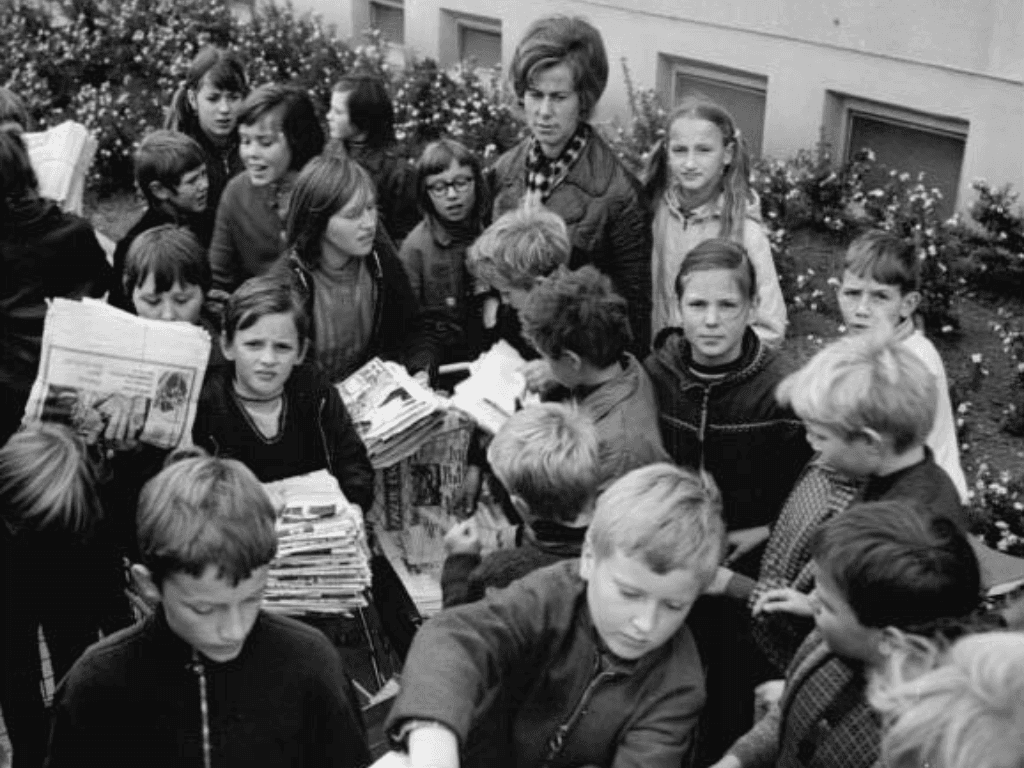
For most kids it was just school. Every morning the Pioneer salute, "Für Frieden und Sozialismus, seid bereit", which means "for peace and socialism, be ready", and then you got on with your maths lesson. There were flag ceremonies, recycling drives to raise money for Mozambique, and summer camps that a lot of East Germans still remember fondly: campfires, first crushes, sleeping under the stars.
But there was a strange edge to all of it. A Berlin historian who went through the system as a child wrote later that a fun day out with her class involved firing air rifles at targets and eating from a mobile field kitchen. The kids who wore those scarves are now in their fifties, walking past you on the street, probably dressed a little more comfortably than they were at eleven.
We're heading west now along Oranienburger Strasse, towards a station that deliberately didn't exist for twenty-eight years.
Any feedback for this story?