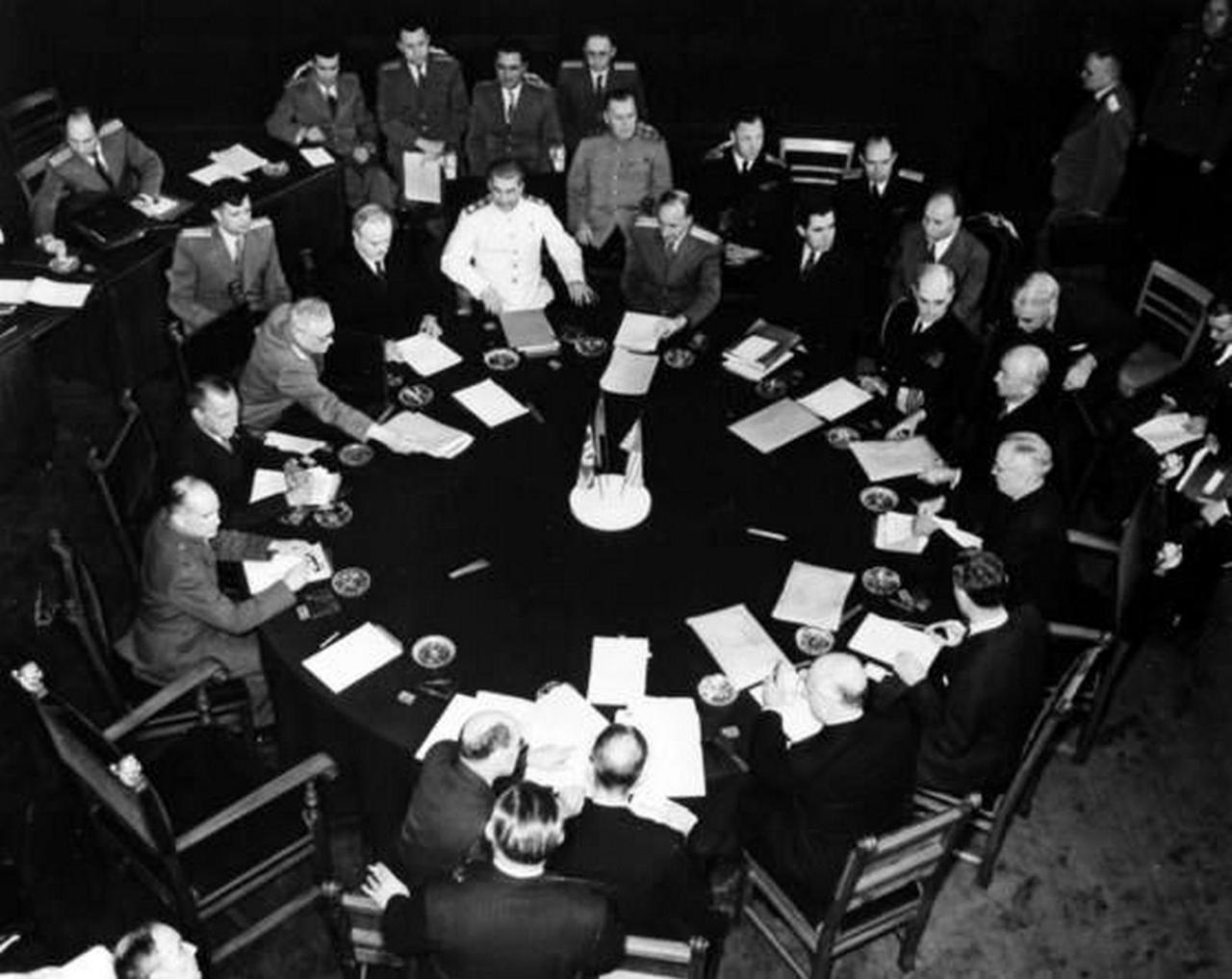
Potsdam Conference
In the summer of 1945, the world’s attention turned to the quiet town of Potsdam. At Cecilienhof Palace, leaders of the United States, the Soviet Union, and the United Kingdom gathered to shape the post-war order. The pivotal Potsdam Conference, held between July 17 and August 2, determined the fate of war-torn Europe and set the stage for a fragile peace. Participants included President Harry S. Truman, Soviet Premier Joseph Stalin, and British Prime Ministers Winston Churchill and his successor Clement Attlee.
Churchill began the talks but was replaced by Attlee following the British general election, a sign of the political turbulence of the period. Key decisions included the demilitarization, denazification, and democratization of Germany. The country and Berlin were divided into four occupation zones under the control of the US, the Soviet Union, the UK, and France. The Allies also settled on reparations: the Soviet Union received significant compensation from its zone and additional resources from the Western zones. Borders were redrawn with the Oder-Neisse line as the boundary between Germany and Poland, displacing millions of Germans.
Another major outcome was the Potsdam Declaration, demanding Japan’s unconditional surrender. This ultimatum foreshadowed the end of the war in Asia after the atomic bombings of Hiroshima and Nagasaki. Yet, despite agreements, the conference exposed deep ideological rifts between East and West, marking the early signs of the Cold War. The Potsdam Conference thus symbolized both the close of World War II and the dawn of a new geopolitical era.
Any feedback for this story?