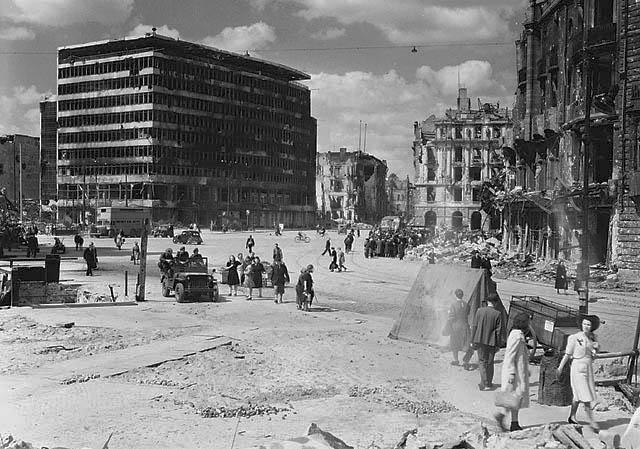
Potsdamer Platz reconstruction – 1990s
Potsdamer Platz was once one of the busiest squares in Berlin, known for its lively theaters, cafés, and bustling streets. By the 1990s, decades of war and the division of the city had left it largely empty, a blank space in the heart of Berlin. After the Berlin Wall fell in 1989, the area became a central focus for reconnecting the city physically and symbolically. In 1991, a design competition was held to guide the reconstruction of Potsdamer Platz. Seventeen architectural proposals were submitted, and the winning plan came from Munich-based firm Hilmer & Sattler.
Their vision combined modern architecture with elements that echoed the historic urban structure of early 20th-century Berlin. British architect Richard Rogers also submitted a design, though it was not chosen. The reconstruction was influenced by the principle of "Critical Reconstruction," which aimed to restore traditional city forms while integrating modern designs. This approach sought to create pedestrian-friendly streets, mixed-use buildings, and public spaces that respected Berlin’s architectural heritage. Architect Hans Stimmann championed this philosophy in Berlin, shaping the city’s redevelopment beyond Potsdamer Platz.
One of the most visible outcomes of this project was the Sony Center, completed in 2000. Designed by Helmut Jahn, it features a striking glass roof and hosts offices, shops, restaurants, and entertainment spaces. The complex became a symbol of Berlin’s optimism after reunification and an example of contemporary urban design. Other buildings, such as the Kollhoff Tower completed in 1999, added to the modern skyline. At 103 meters tall, it was one of Berlin’s highest buildings at the time and emphasized the city’s new vertical dimension.
Any feedback for this story?