Reichstag
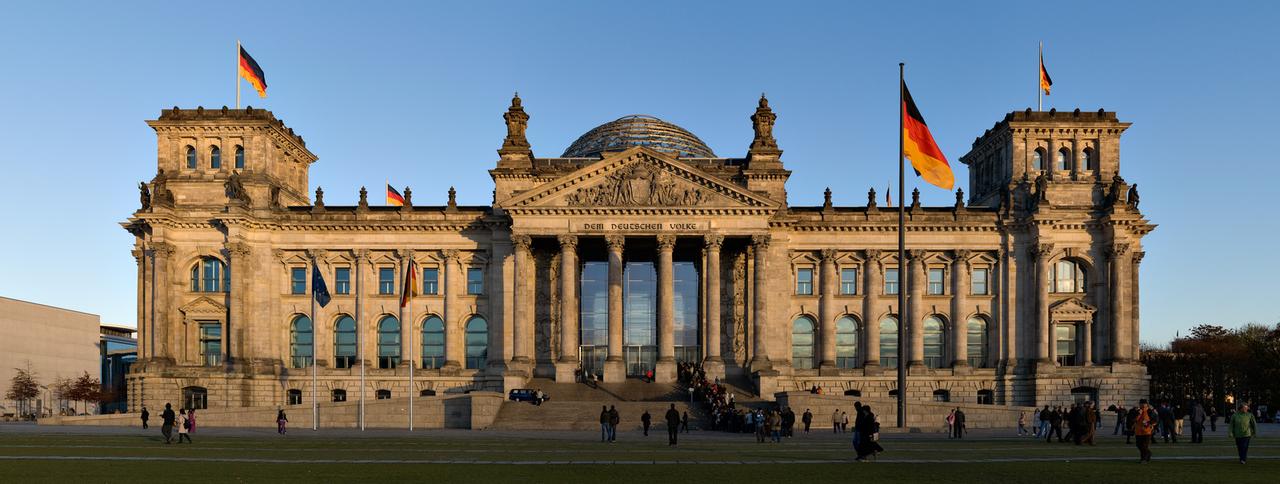
Look closely and you will notice the inscriptions above the grand columns “Dem deutschen Volke,” meaning “To the German people.” This isn’t just a decorative element. It’s a symbol of democracy, one that survived fire, war, division, and reunification. The Reichstag was completed in 1894 to house the Imperial Diet of the German Empire. It represented national unity, yet its history was anything but smooth. In 1933, a fire severely damaged the building, a turning point that the Nazis used to justify oppressive laws and consolidate power.
The true cause of the fire is still debated, but the consequences were immediate and far-reaching. During World War II, the Reichstag fell into ruin. It became a key target during the Battle of Berlin in 1945, with Soviet troops famously raising their flag on its rooftop. After the war, it sat largely unused through decades of division, standing right next to the Berlin Wall.
Following reunification, British architect Sir Norman Foster led its reconstruction. When it reopened in 1999 as the seat of the modern Bundestag, a glass dome was added a clear gesture towards transparency in government. Today, visitors walk above the parliament chamber, literally seeing democracy at work. Despite all it has endured, the Reichstag remains a living monument not just of architecture, but of Germany’s turbulent journey and democratic resilience.
Any feedback for this story?