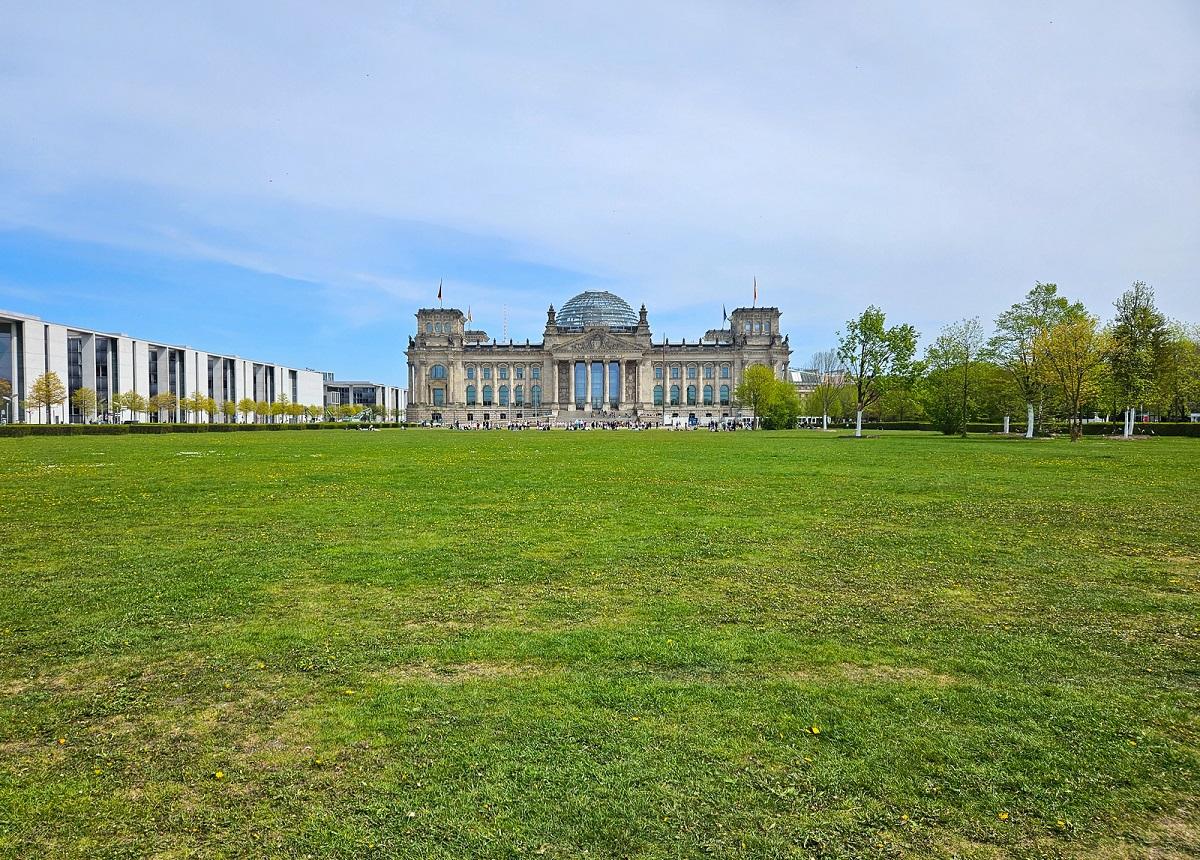
Republic Square
Standing here in the heart of Berlin, you are surrounded by a place that has witnessed the rise and fall of German history for over a century. This is the Platz der Republik, or “Square of the Republic,” a name that reflects Germany’s complex journey through monarchy, democracy, war, and reunification. Originally, this open space was part of the grand garden surrounding the Reichstag building, which was completed in 1894 to house the German Parliament. The square itself was created in 1918, shortly after the German Empire ended and the Weimar Republic was declared.
Its name, “Square of the Republic,” was chosen to symbolize the new democratic era. For much of the 20th century, the Platz der Republik was more than just a park. It became a witness to key events. In 1933, the Reichstag building was severely damaged by fire, an event that the Nazis used as a pretext to seize greater control of the country. After World War II, the square lay neglected as the city was divided during the Cold War. During the Cold War, the Reichstag was located near the Berlin Wall and the Platz der Republik became a quiet, underused area, symbolizing the divided Germany.
After reunification in 1990, the square regained importance. The Reichstag underwent a major renovation led by architect Norman Foster, who added the famous glass dome, symbolizing transparency and democracy. Today, the Platz der Republik is a popular green space for locals and visitors. It serves as a reminder of the changes Germany has experienced and the ongoing commitment to democracy. Occasionally, it hosts public events and demonstrations, continuing its long history as a place of political significance.
Any feedback for this story?