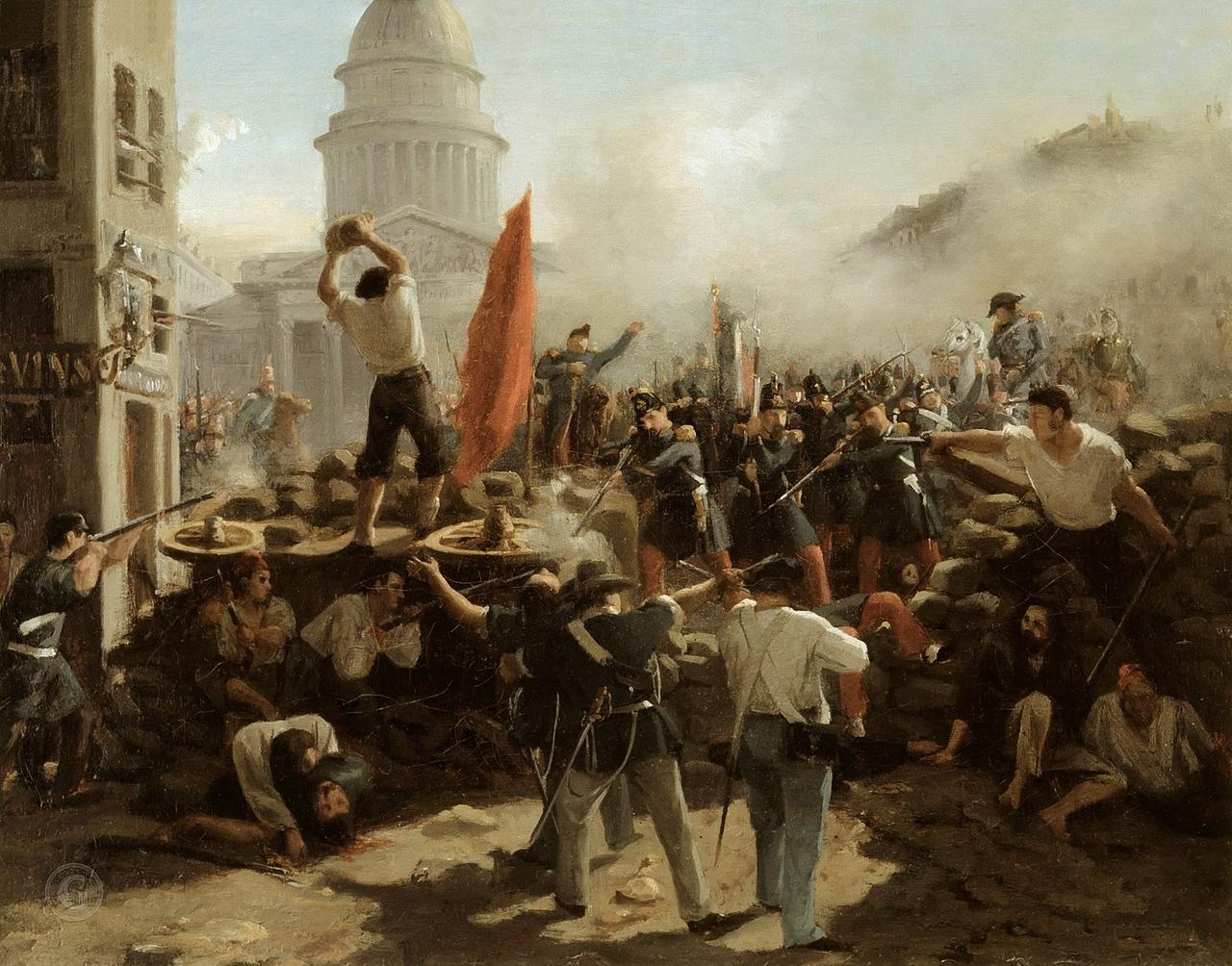
Revolution fails – 1848
In March 1848, Berlin became the center of a wave of revolutionary fervor that was sweeping across Europe. Citizens from all walks of life—students, workers, and members of the middle class—gathered to demand political reforms, civil liberties, and the creation of a unified German state. The movement was fueled by economic hardship, rising social tensions, and inspiration from revolutionary events in Paris. On March 18, tens of thousands assembled in front of the Berlin Palace to celebrate promises of reform from King Frederick William IV.
What began as a peaceful demonstration soon turned violent when the king ordered the square to be cleared. The resulting clash left hundreds dead, including men, women, and children, marking one of the bloodiest moments of the uprising. Despite the tragedy, the demands of the revolutionaries prompted political developments that had lasting significance. In May 1848, the Frankfurt National Assembly convened in St. Paul’s Church, aiming to draft Germany’s first liberal constitution and explore the idea of a united German nation.
The assembly brought together representatives from across the German states to debate civil rights, parliamentary governance, and the role of monarchy in a modern state. However, internal divisions weakened the revolutionary effort. The middle-class liberals sought a constitutional monarchy, while radical elements pushed for broader social reforms. Conservative forces, supported by the aristocracy, eventually suppressed the uprising, forcing many reformers into exile.
These émigrés became known as the “Forty-Eighters,” carrying their ideals abroad and influencing democratic movements in other countries. The Cemetery of the March Fallen in Berlin preserves the memory of those who lost their lives during these events. Students and citizens would gather there later in June 1848 to honor the fallen and to remind authorities of the revolution’s aspirations.
Any feedback for this story?