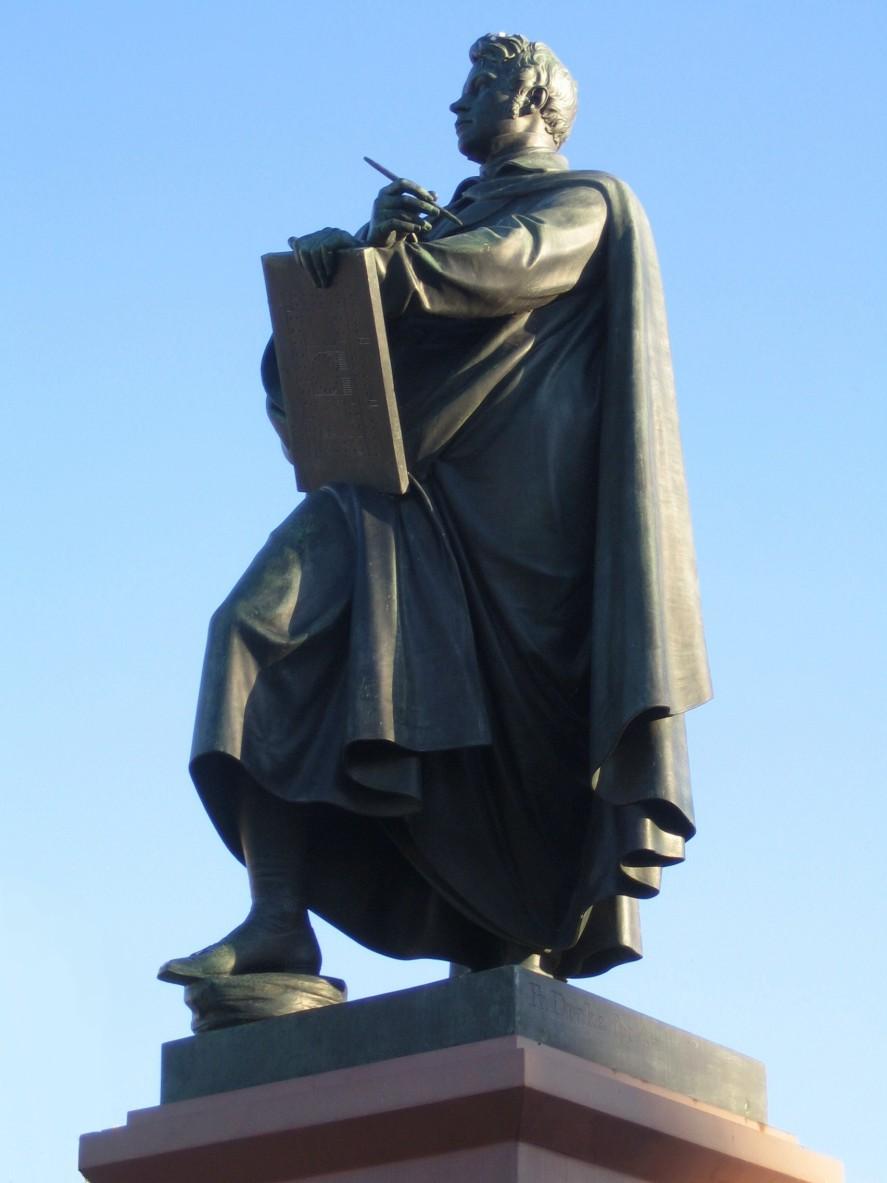
Schinkel's funeral – 1841
Karl Friedrich Schinkel, one of Prussia’s most influential architects, was laid to rest in Berlin in 1841, leaving a mark on the city both through his buildings and his final memorial. Berlin, at the time, was a garrison city—a city with a strong military presence and fortifications, housing soldiers and administrative structures for the army. Schinkel’s designs often reflected the disciplined, orderly character of such an environment, balancing functionality with elegance. After a year of declining health and several strokes, Schinkel passed away at age sixty in early October 1841.
His funeral took place three days later, on 12 October, at Dorotheenstadt Cemetery, a quiet burial ground in central Berlin. The ceremony was subdued, reflecting both his personal modesty and the deep respect the city held for him. His grave was marked by a Greek-style stele that he had originally designed in 1833 for his guardian’s memorial. This choice of design reflected Schinkel’s lifelong interest in classical architecture and his belief in simplicity and enduring form. His close collaborator, Peter Beuth, described the tomb as “simple as he was, enduring as his fame.”
n April 1843, Schinkel’s remains were re‑interred in a more prominent memorial setting within the same cemetery. His student Gustav Stier, following Beuth’s guidance, executed the plans around a polished red granite monolith with a bronze portrait relief by August Kiß. Later, Schinkel’s wife and two daughters were also laid to rest in this plot, commemorated with an additional gravestone during the 2011 restoration.
Any feedback for this story?