The Age of Napoleon Bonaparte
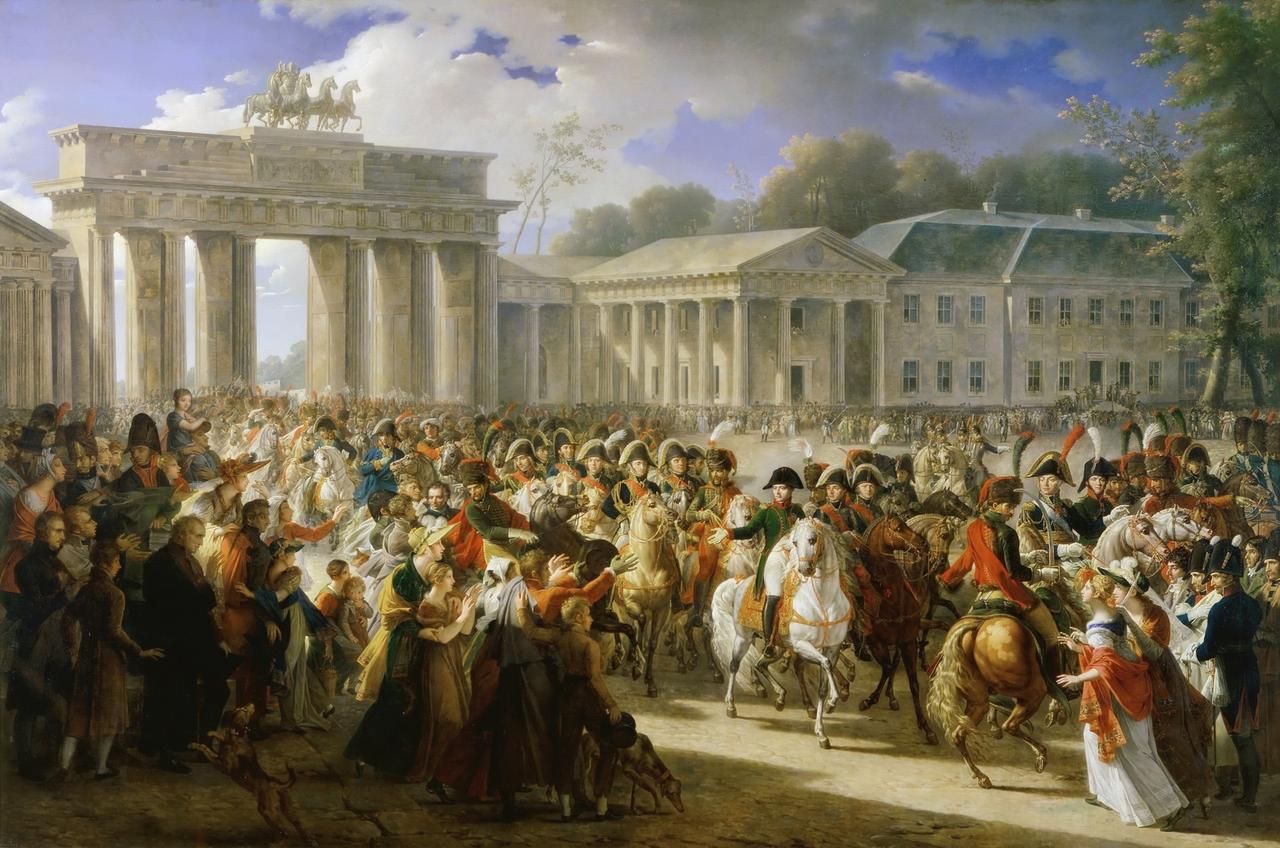
In October 1806, the streets of Berlin echoed with the march of Napoleon’s Grande Armée. The French Emperor had defeated Prussia at the Battle of Jena-Auerstedt, marking the beginning of a pivotal chapter in the city’s history. As Napoleon entered the Prussian capital, Berliners faced the reality of occupation and the sweeping changes it would bring. His conquest of Berlin was not merely a military victory but a calculated move to weaken Prussia and extend French dominance.
Napoleon’s arrival stirred both fear and fascination, as citizens observed the discipline of his troops and the grandeur of his entourage. One of his most significant actions was the Berlin Decree, issued in November 1806 as part of the Continental System. This economic measure sought to cripple Britain by forbidding trade between British merchants and nations under French influence, reshaping trade across Europe. Napoleon admired Berlin’s neoclassical architecture, especially the Brandenburg Gate, which he appropriated as a symbol of triumph.
He ordered the Quadriga, the chariot driven by Victoria atop the gate, to be taken to Paris as a war trophy. The sculpture was only returned in 1814 after Napoleon’s downfall. The occupation brought not only cultural influences but also hardship, as Berlin had to sustain the French troops. Thus, Napoleon’s presence was both a catalyst for modernization and a burden for the city’s inhabitants.
Any feedback for this story?