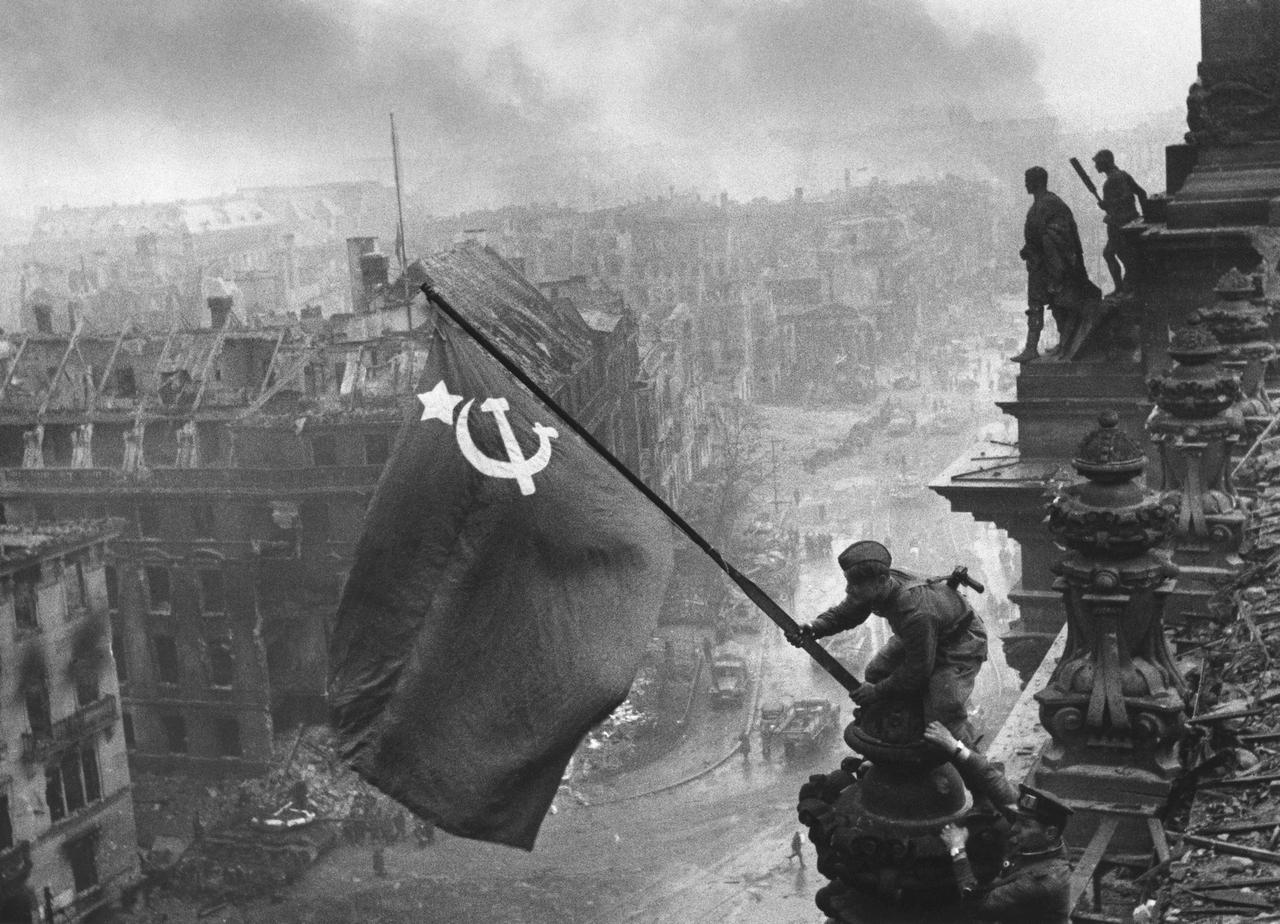
The Battle of Berlin
This street once led directly into the heart of a city under siege, as Berlin became the final battleground of the Second World War in the spring of 1945. The Battle of Berlin began in mid-April, when Soviet forces launched their final offensive against Nazi Germany. More than two million Red Army soldiers advanced from the east, facing German defenders made up of regular troops, older men from the Volkssturm, and even teenage members of the Hitler Youth.
The fighting was brutal and close — street by street, building by building. Homes, schools, and landmarks were turned into shelters or strongholds. By late April, Berlin was surrounded. Soviet troops pushed deeper into the city, while constant shelling reduced entire districts to rubble. Adolf Hitler remained in his underground bunker near the Reich Chancellery, just a short distance from here. On April 30, 1945, with Soviet forces only blocks away, he died by suicide.
The surrender of Berlin followed shortly after. On May 2, German forces in the city laid down their arms, and six days later, Germany surrendered unconditionally. The human cost of the battle was enormous. More than 80,000 Soviet soldiers and 90,000 German troops were killed. Tens of thousands of civilians also died — in bombings, street combat, or from starvation and hardship. This was not just the end of a battle. It was the fall of a regime and the beginning of a divided Berlin. The city was soon split among Allied powers, setting the stage for decades of Cold War tension.
Any feedback for this story?