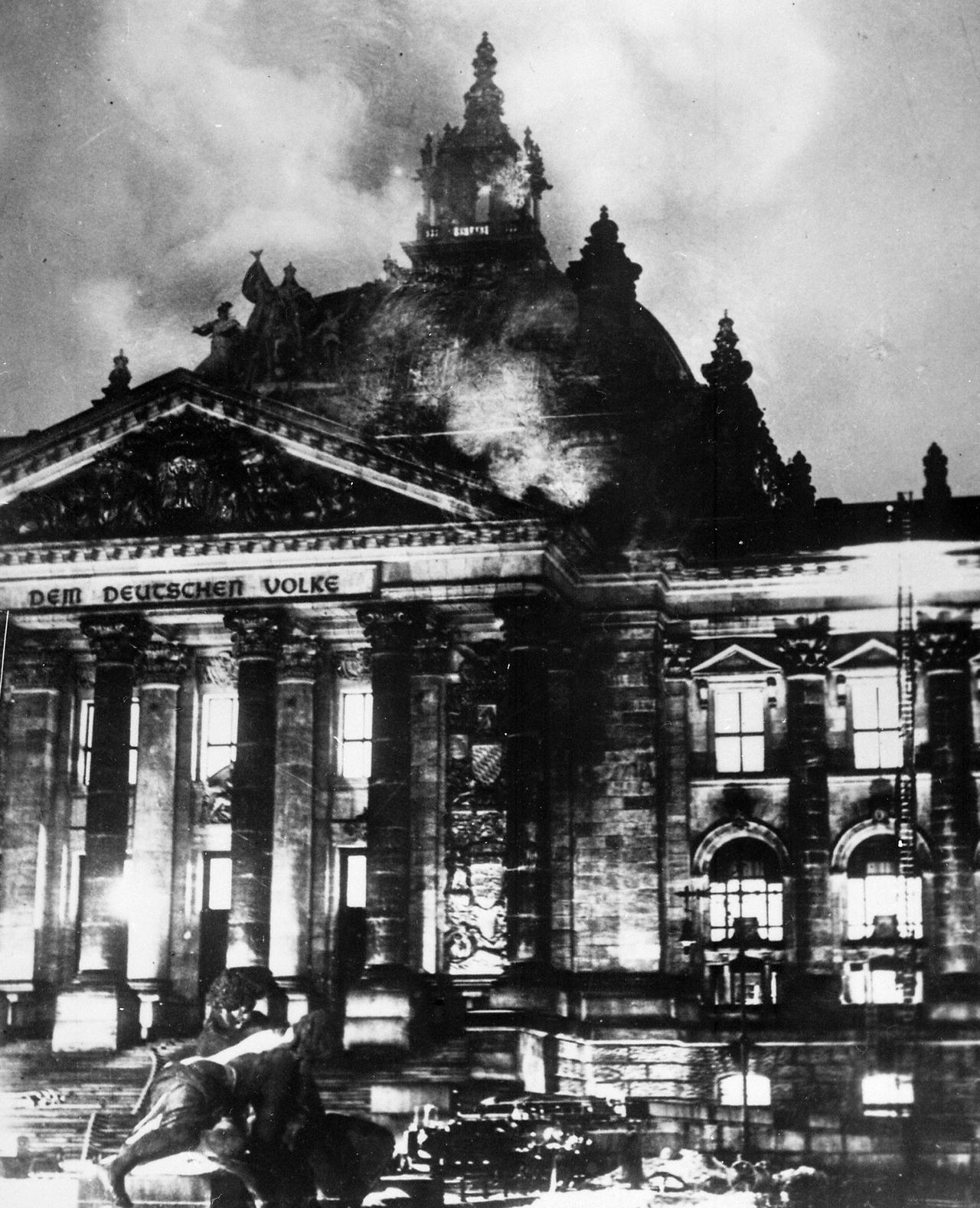
The Reichstag fire
Here on the night of February 27, 1933, flames lit up the sky as the Reichstag building burned. Within hours, police had arrested a young Dutch communist, Marinus van der Lubbe, who was found inside the building. He claimed sole responsibility for the fire, but doubts quickly arose. The Reichstag fire didn’t just destroy a building it ignited one of the most decisive turning points in German history. The Nazi leadership, including Adolf Hitler and Hermann Göring, seized the moment. By the next day, President Hindenburg signed the “Reichstag Fire Decree.”
This emergency law suspended civil liberties, allowed mass arrests, and eliminated privacy of communication all without parliamentary approval. Many historians believe the Nazis exploited the fire to crush political opposition. Within weeks, thousands of communists, social democrats, and critics were arrested or silenced. The Nazis used the fear of a communist uprising to consolidate power and suppress dissent.
While van der Lubbe was tried and executed in 1934, the question of who actually set the fire has remained debated. Some believe he acted alone; others suggest the Nazis orchestrated the event to justify the crackdown. The German government officially pardoned van der Lubbe in 2008, recognizing the injustice of his trial under Nazi laws.
Any feedback for this story?