Treptowerpark
You’re standing where the Spree’s gentle current meets wide lawns and old trees. This is Treptower Park — a place Berliners have loved for generations, but it carries a history that’s far more layered than its calm paths suggest. When it opened in 1888, the park was designed by Gustav Meyer, a student of the famous garden planner Peter Joseph Lenné. He wanted it to be a green escape for Berlin’s growing working-class population, but it also became a stage for events that still echo today. One forgotten moment came in 1896, when the park hosted the Great Industrial Exposition.
For months, parts of Treptower Park turned into a miniature city of innovation — electric lights, factories, and even a massive “Glaspalast” exhibition hall. Visitors could take boat rides on the Spree to see the wonders of modern industry. Walk south, and you’ll reach Karpfenteich — the “carp pond.” Its name came by accident: in the 1890s, someone deliberately flooded the new pond, and local innkeepers later stocked it with carp to attract visitors. But this quiet pond also hides a darker past.
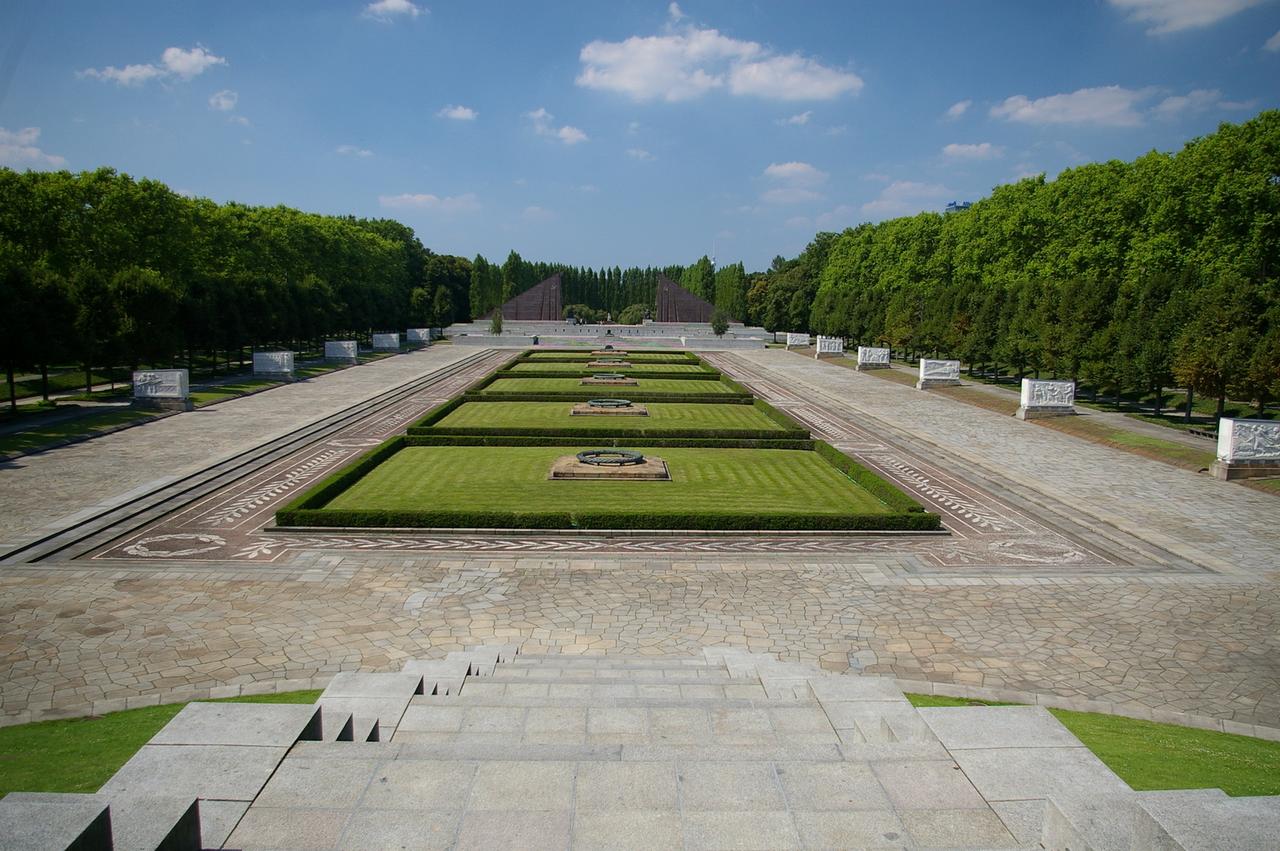
In the same year as the Exposition, Berlin held its first colonial exhibition here. Around a hundred people from Germany’s colonies in Africa and the Pacific were brought to live in staged “native villages” for visitors to watch — a disturbing display that historians and activists are now re-examining as part of Germany’s colonial legacy. And then there is the Soviet War Memorial, completed in 1949. Beneath its towering 30-metre statue of a soldier holding a rescued child lie about 7,000 Soviet soldiers who died in the Battle of Berlin. For decades, this was not just a cemetery, but a carefully designed political symbol during the Cold War, used to shape how East Germany remembered the war.
Any feedback for this story?