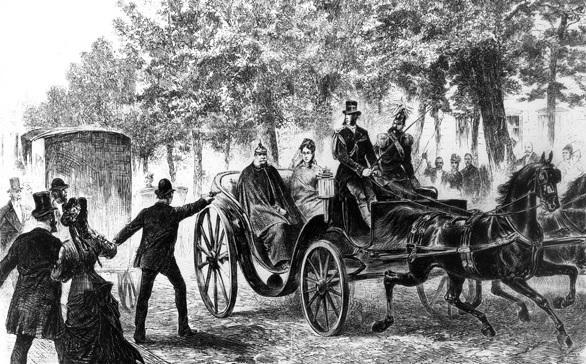
Unter den Linden #18
If you look at Unter den Linden number 18, you're standing at one of the most charged spots in 19th-century German history. From a window right here, on June 2, 1878, a man named Karl Nobiling aimed a shotgun at the open carriage of Kaiser Wilhelm I as it rolled down this very boulevard.
Wilhelm I was the first Emperor of a newly unified Germany, a powerful symbol of the nation's ambitions. He was 81 years old that day. Nobiling fired twice and hit him. The wounds were serious, but the old emperor survived. Nobiling then turned the gun on himself and died from his injuries three months later.
It was actually the second attempt on Wilhelm's life that year. Just weeks earlier, a man named Max Hödel had fired at the emperor's carriage nearby, also without killing him. And five years later, another plot involving dynamite was uncovered and foiled.
Each attack left political shockwaves. Chancellor Otto von Bismarck, the sharp and ruthless architect of German unification, used the violence to push through sweeping Anti-Socialist Laws, banning organizations, meetings, and publications linked to socialist and anarchist movements. A city street, a carriage, two shots, and suddenly the whole political landscape of Germany shifted.
Any feedback for this story?