Viktoriapark
Stand here for a moment and listen — the sound of rushing water you hear isn’t from a distant mountain stream. It’s the heart of Viktoriapark, an artificial waterfall built in the 1890s, right here in the middle of Berlin. Powered by pumps, it sends about 13,000 litres of water tumbling down a 24-metre drop every single minute, designed to mimic the rugged gorges of the Giant Mountains on the Polish–Czech border. The hill beneath your feet, the Kreuzberg, rises just 66 metres, but it has shaped Berlin’s story.
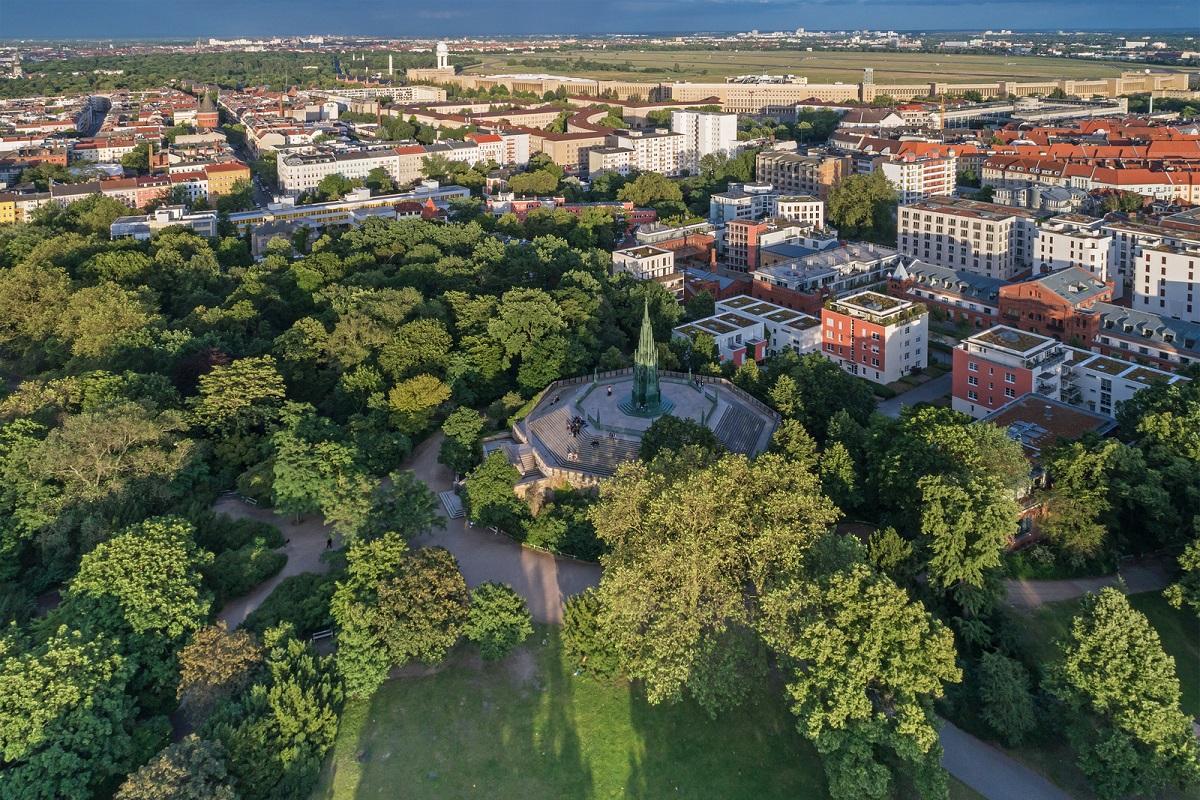
Long before it became a park, these slopes were covered with vineyards, earning it the old name “Round Vineyard.” That winemaking tradition returned in 1968, and even today a small quantity of local wine, Kreuz-Neroberger, is produced here. You won’t find it in shops; the bottles are reserved as gifts for official guests of the district. At the top of the hill stands a striking neo-Gothic iron monument designed by Karl Friedrich Schinkel and unveiled in 1821.
It commemorates Prussia’s victories over Napoleon in the early 19th century, and the Iron Cross on its spire gave both the hill and the surrounding district their name — Kreuzberg, or “Cross Mountain.” The waterfall and surrounding landscape were the vision of Hermann Mächtig, Berlin’s park director in the late 19th century. By 1894, his design transformed the once bare summit into a dramatic green space. Two years later, sculptor Ernst Herter’s bronze Rare Haul — showing a fisherman catching a mermaid — was placed at the pond below, adding a touch of folklore to the scene.
Any feedback for this story?