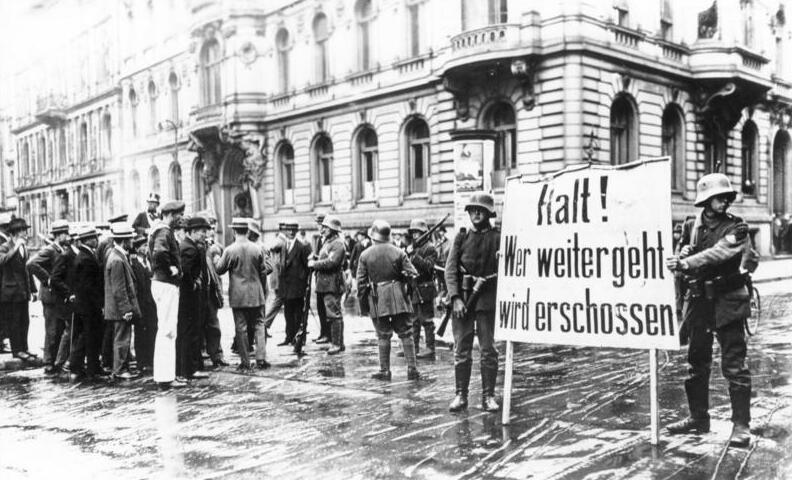
Weimar Republic
The Weimar Republic, established in Germany after World War I, was a period of great turmoil and transformation. Named after the city of Weimar, where its constitution was drafted, it lasted from 1919 to 1933 and faced constant political, economic, and social challenges. After Germany’s defeat in 1918, Kaiser Wilhelm II abdicated, leading to a provisional government that evolved into the Weimar Republic. The new democracy sought stability but met hostility and distrust.
Many Germans resented the Treaty of Versailles, which imposed heavy reparations and territorial losses. Politically, it was seen as a “republic without republicans.” President Friedrich Ebert and moderate Social Democrats tried to govern between extremes of left and right. The parliamentary system, though democratic, suffered from fragile coalitions and infighting. Economically, hyperinflation in the early 1920s wiped out savings and caused hardship.
The Dawes Plan of 1924 brought temporary stability, but the Great Depression of 1929 caused mass unemployment and unrest. Despite crises, the Republic became a hub of cultural and intellectual life: Berlin thrived in art, cinema, and literature, with figures like Bertolt Brecht, Marlene Dietrich, and the Bauhaus school. Yet its weaknesses left it exposed. The Nazi Party under Adolf Hitler capitalized on discontent, seizing power in 1933 and ending the Republic, which gave way to the Third Reich.
Any feedback for this story?