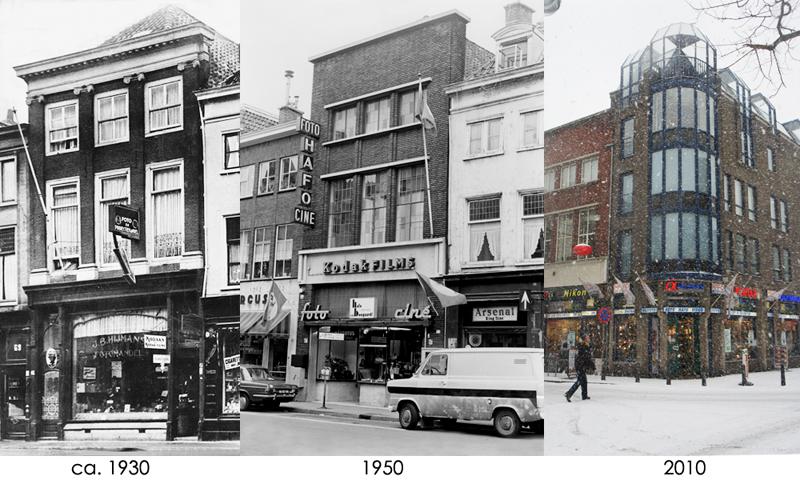
Hijmans Photo Trade
In 1916, Jacob Bernard Hijmans opened a small photography shop in The Hague's Jewish neighborhood. What started upstairs in a modest space quickly grew into a thriving business at Wagenstraat 67, where he moved in 1918. His photos captured daily life — from busy street corners to ordinary citizens — blending artistic vision with social documentary.
In the 1930s, the shop was renamed HAFO (Hague Photo Trade) and even expanded internationally. His brother Maurits opened a branch in Surabaya, Indonesia. Hijmans embraced innovation, introducing Dutch customers to new technology like Kodak’s Brownie cameras and Agfa’s Clack.
But World War II brought devastation. During the Nazi occupation, the shop was forcibly taken, and most of the Hijmans family, including Jacob Bernard, perished in the Holocaust. Remarkably, his wife Maria and their daughter survived, hidden in a safe place.
After the war, Maria, with the help of former manager Van Dijk, revived HAFO. Public interest in photography soared, and the shop became a hub again — hosting exhibitions and workshops for a new generation. Over the decades, HAFO adapted to the times while preserving its legacy.
Any feedback for this story?