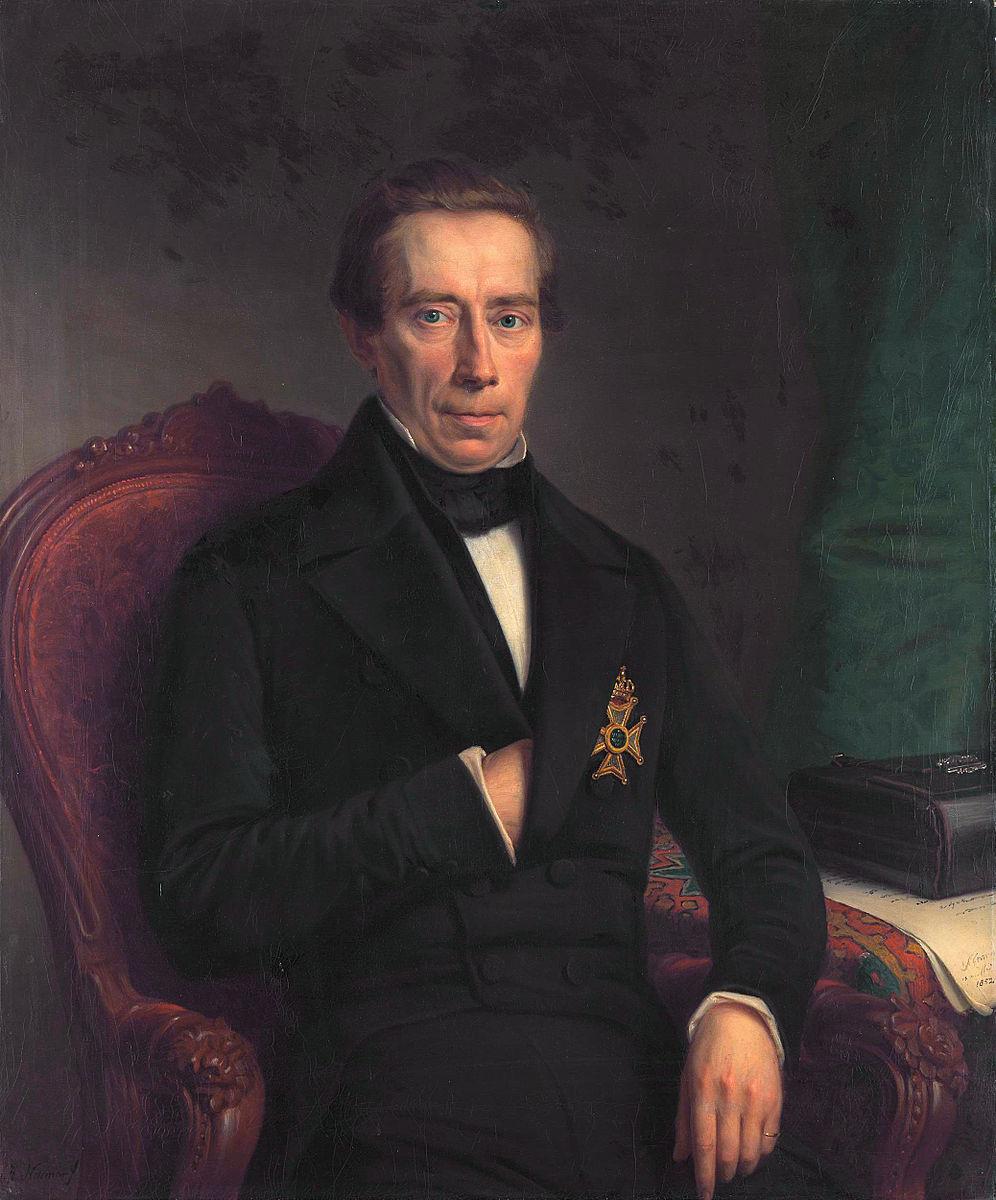
Johan Rudolf Thorbecke
The bronze figure gazing out over this square is Johan Rudolf Thorbecke, and if you live in a country where the government answers to parliament rather than to a king, you have men like him to thank for it.
Born in Amsterdam in 1798, Thorbecke trained as a lawyer before becoming a professor with a sharp eye for the flaws in Dutch society. When he entered parliament in 1840, the king and the aristocracy still held most of the real power, and Thorbecke found that arrangement deeply wrong. He believed firmly that the people's representatives, not the monarch, should control the government.
His moment came in 1848, when revolutions were erupting across Europe and King William II suddenly found himself nervous enough to invite Thorbecke to draft a new constitution. What Thorbecke delivered was radical: royal power was cut back sharply, and the government became accountable to parliament instead of to the crown. It was a transformation that placed the Netherlands among the world's earliest parliamentary democracies.
He later served as prime minister and even pushed through the abolition of the death penalty, which tells you something about the man's ambition.
Standing here today, looking at this statue, it is worth appreciating that Thorbecke did all of this without ever once threatening to cancel anyone.
Any feedback for this story?