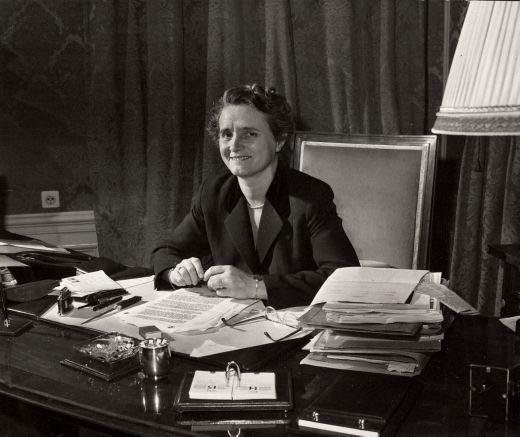
Marga Klompe
Marga Klompé was born on August 16, 1912, in Arnhem, as the eldest daughter in a Catholic family of five children. She was the only one allowed to pursue higher education, due to her talents. She earned a PhD in mathematics and physics from Utrecht University. During World War II, she joined the resistance and coordinated medical and food aid during the Battle of Arnhem.
After the war, Klompé joined the Catholic People’s Party (KVP). In 1948, she became a member of parliament, and in 1952, the first female representative in the European Coal and Steel Community, the predecessor of the EU. In 1956, she became the first female minister in Dutch history, responsible for Social Work.
Klompé played a key role in building the Dutch welfare state. In 1965, she introduced the General Assistance Act, securing the right to financial aid for those without income.
In 1967, she was considered as a possible prime minister, but she felt the country wasn’t ready. She served as minister until 1971 and was appointed Minister of State that same year—the first woman in the Netherlands to hold the title. After politics, she remained active in the Roman Catholic Church. Despite a serious illness in the 1980s, she stayed engaged until her death on October 28, 1986.
Any feedback for this story?