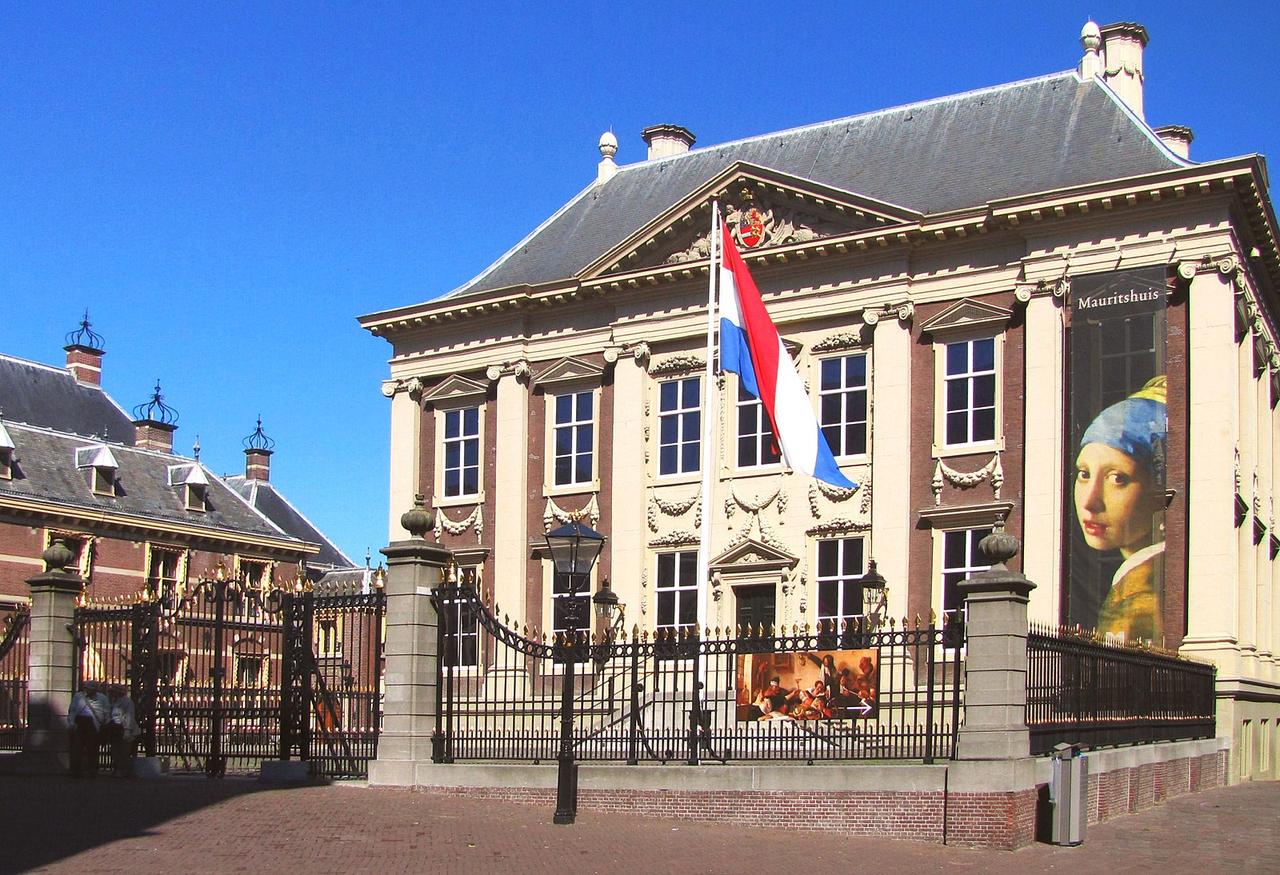

Mauritshuis
At the edge of The Hague’s Hofvijver stands the Mauritshuis—a refined building that once served as the residence of Count Johan Maurits of Nassau-Siegen. Today, it’s one of the Netherlands’ most beloved museums, known for its extraordinary collection of Dutch Golden Age paintings.
Step inside, and the elegant atmosphere immediately envelops you. Marble floors and ornate ceilings evoke the 17th century, when Johan Maurits called this place home. Since 1822, it has welcomed visitors to admire masterpieces like Vermeer’s Girl with a Pearl Earring, Rembrandt’s The Anatomy Lesson of Dr. Nicolaes Tulp, and Fabritius’s The Goldfinch.
But the Mauritshuis offers more than just Dutch masters. Flemish artists such as Rubens and Van Dyck also grace its walls, alongside fine porcelain and silver. Each piece tells a story of luxury, taste, and the global ties of the Dutch Republic in the 17th century.
Yet the museum also confronts the darker side of its past. Johan Maurits, art patron and governor of Dutch Brazil, was involved in the slave trade. In recognition, the museum removed his statue from the garden. A new plaque now tells the full story, including his troubling legacy.
Any feedback for this story?