Noordeinde Palace
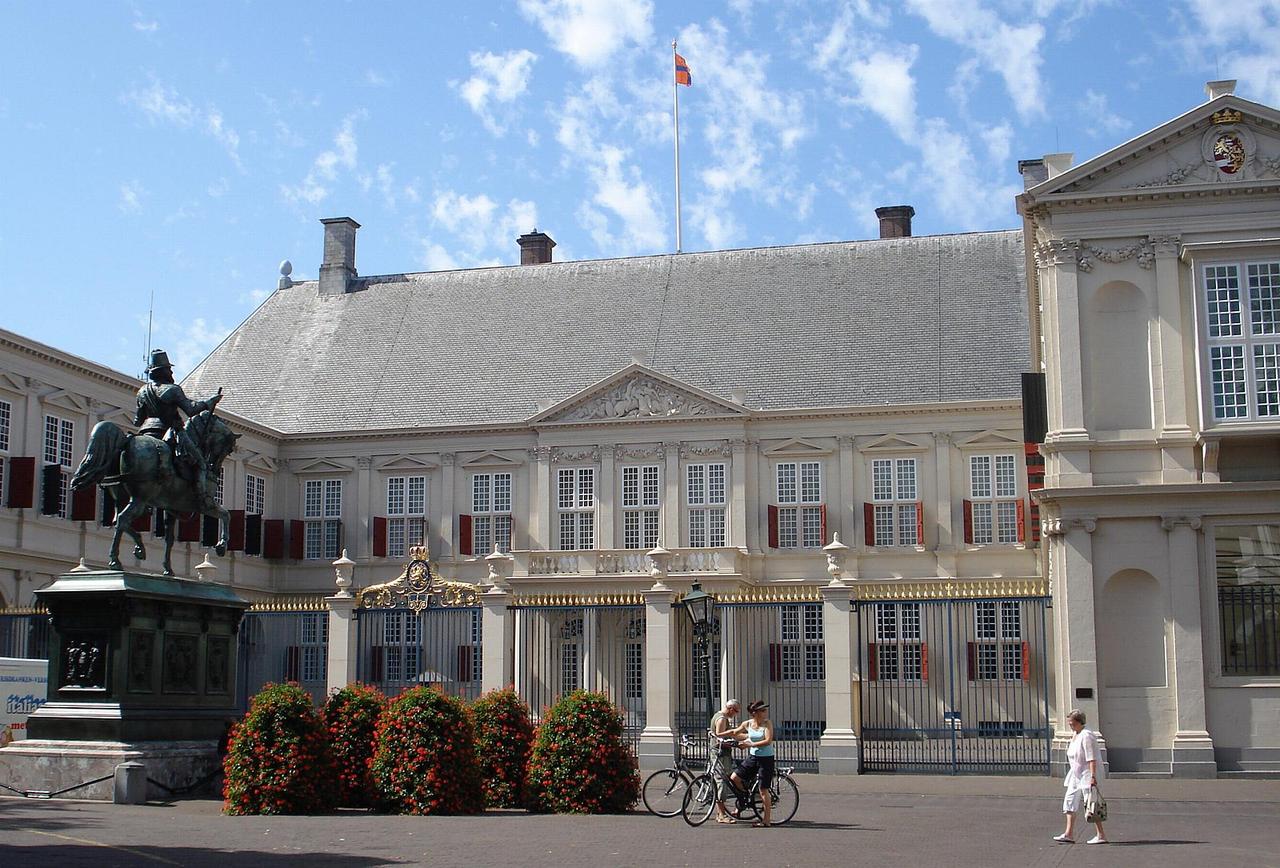
Noordeinde Palace, the working residence of King Willem-Alexander, has a rich history dating back to the Middle Ages. The area was first mentioned in a 1370 deed by Albrecht of Bavaria. In 1512, Willem Goudt became the owner, and in 1533 he transformed a medieval farmhouse into a stately home known as “die huysinge van Willem Goudt.”
In 1592, at the request of Maurice of Nassau, the house was rented to Louise de Coligny, widow of William of Orange. She lived there with her son, Frederick Henry, who inherited the property after her death in 1620. In 1640, the residence was renovated by Jacob van Campen, the architect of the Royal Palace in Amsterdam, and became known as the “Old Court.” In the 19th century, royal architect Isaac Gosschalk oversaw further expansions. A fire in 1948 damaged much of the interior, though the valuable Indies Room—gifted to Queen Wilhelmina—survived intact.
Today, Noordeinde Palace serves as the official workplace of the Dutch monarch. It hosts state visits, receptions, and formal gatherings, though it is not open to the public. It remains a powerful symbol of the Dutch monarchy. At the same time, it sparks debate. Is the monarchy still relevant? While opinions differ, the palace continues to represent a deep-rooted part of Dutch history and national identity.
Any feedback for this story?