Operation Snowflake
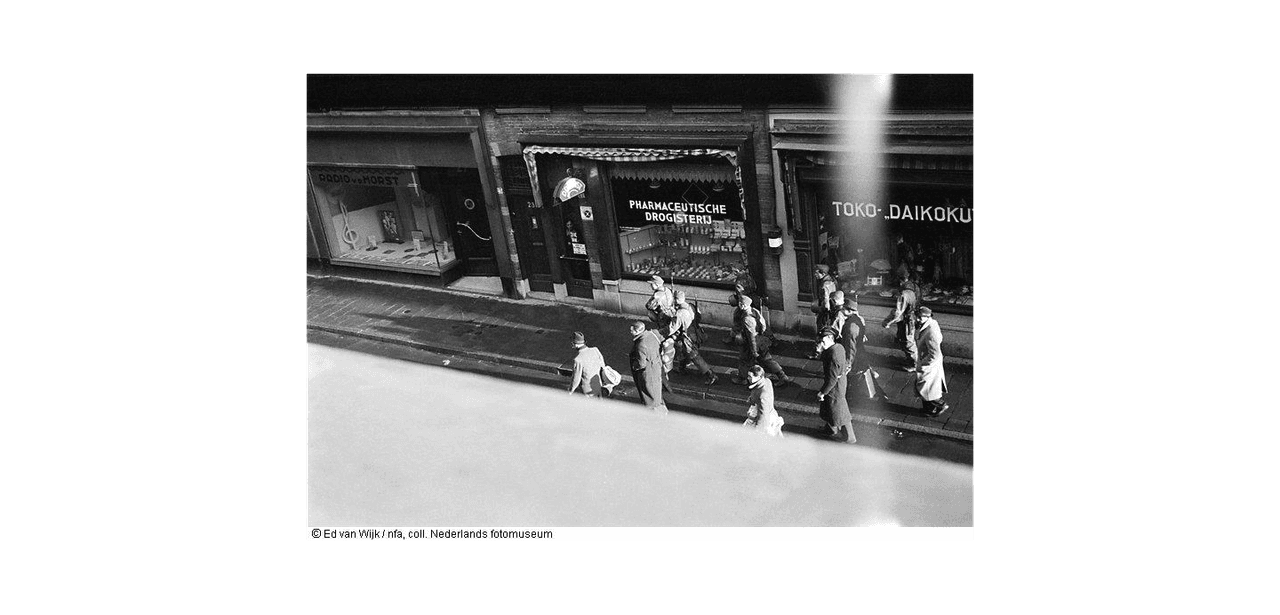
On November 21, 1944, The Hague woke to a large-scale raid. Under the name 'Operation Snowflake,' German soldiers swept through the city, targeting men aged 17 to 40 for forced labor in Germany.
Just two weeks earlier, a similar raid in Rotterdam had seen 52,000 men arrested. That warning prompted many in The Hague to hide—beneath floorboards, in kitchen cabinets, attics, and even above sliding doors. Thanks to these precautions, many evaded capture. Still, around 7,000 men were taken — far fewer than the Germans had hoped for.
Those arrested were gathered at three locations: the Building for Arts and Sciences, The Hague Zoo, and Gymnasium Haganum. From there, they marched to the Slaughterhouse grounds in Laakhaven, where barges awaited. Cramped into the holds, they were transported via the IJsselmeer to Kampen and placed in the Van Heutsz Barracks. From there, they were sent to labor camps across Germany.
Conditions in the camps were harsh: long workdays, little food, and poor hygiene. Many fell ill; some didn’t survive. The journey home after the war was slow and grueling. And once home, the men weren’t always welcomed—some were even viewed as traitors.
In November 1999, a monument titled ‘Forced Laborers’ was unveiled at the site of the former Hague Zoo. It honors the men taken during Operation Snowflake and the hardships they endured. If you’re hearing this story now, you’re standing right on that very spot.
Any feedback for this story?