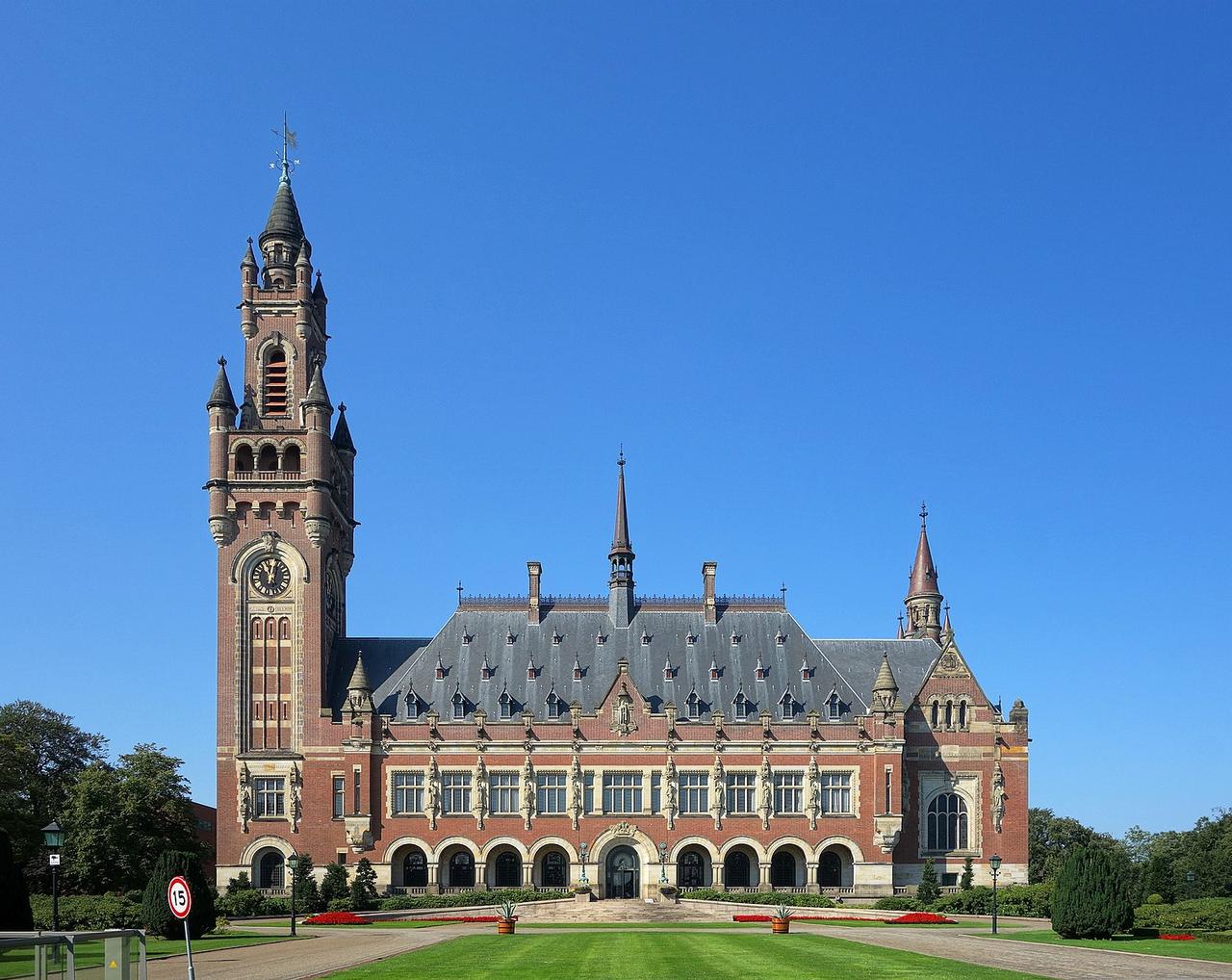
Peace Palace
You are now standing before the Peace Palace, one of the world’s most iconic symbols of international peace and justice. The foundation stone was laid during the Second Hague Peace Conference in 1907, at a time when the call for peace was gaining momentum. With support from 44 nations and funding from American philanthropist Andrew Carnegie, this monumental project became reality.
The Peace Palace officially opened on August 28, 1913, attended by royalty, legal scholars, and peace advocates. Today, it houses the International Court of Justice, the Permanent Court of Arbitration, and The Hague Academy of International Law. Its renowned library on international law remains a key resource for legal experts worldwide.
Architect Louis Cordonnier designed the building in an eclectic mix of styles—neorenaissance, neo-Gothic, and Jugendstil—creating a timeless and elegant structure. Modern materials like concrete and reinforced steel gave it both strength and resilience.
Even during World War II, the palace played a role in the Dutch resistance. Secret newspapers were printed here, and a hidden radio antenna was installed in the tower.
Curious about the kinds of legal disputes handled here? The Roods app offers insights into landmark international cases—some of which remain controversial to this day.
Any feedback for this story?