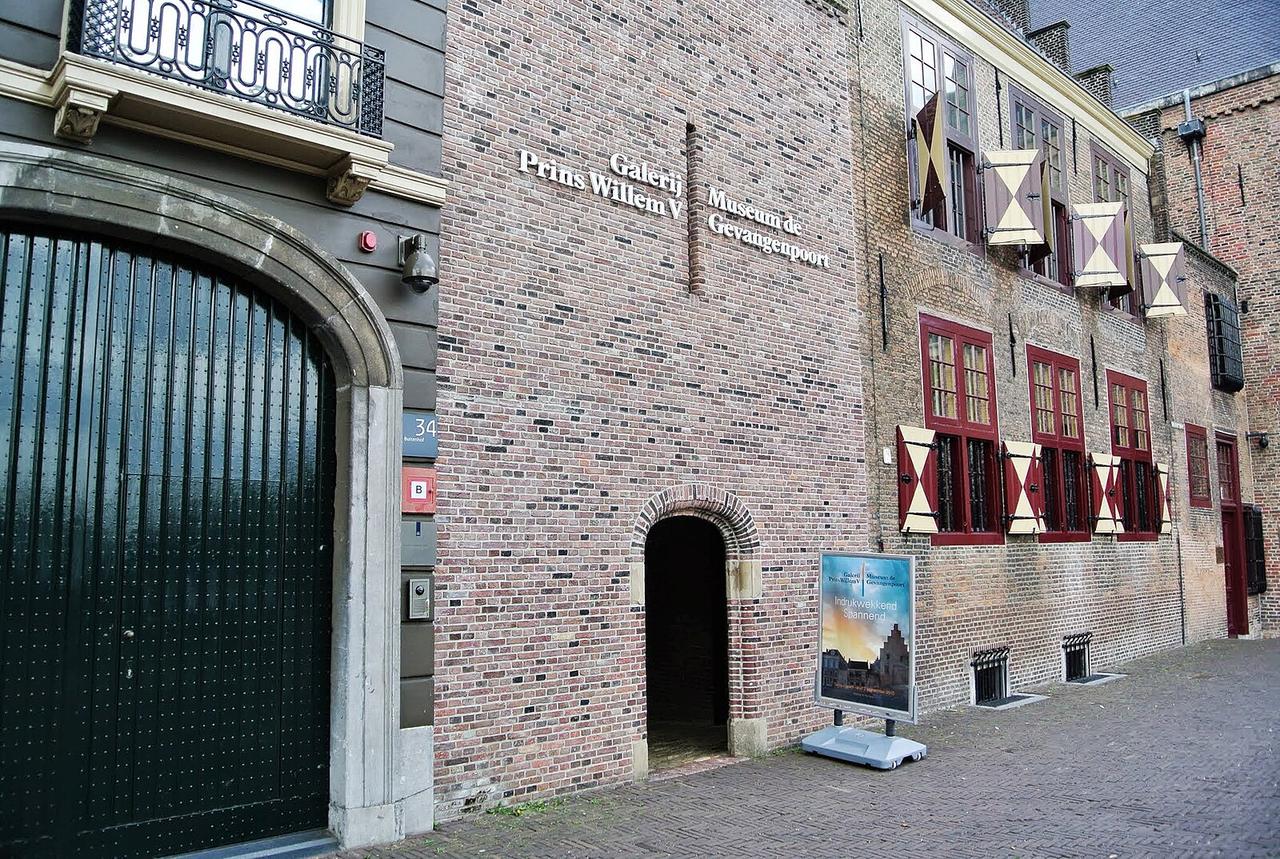
Rijksmuseum de Gevangepoort
You're standing in front of the Gevangenpoort, an imposing building with over 700 years of history. From around 1420 to 1828, it served as the prison of the Court of Holland. Criminals, rebels, and political prisoners were held here awaiting trial. In 1428, Philip the Good officially turned the gatehouse into a state prison.
The name "Gevangenpoort" still echoes that time. The prison was often overcrowded. In 1445, over a hundred rebellious Hoeken from Leiden were arrested. Because the prison couldn't hold them all, many were housed in local inns, such as 't Goude Hooft. Pirates were also brought here to stand trial for their crimes at sea. Under Emperor Charles V, the prison was significantly expanded between 1517 and 1535 with new cells and a larger courthouse. Still, it remained a harsh place. Up to fifteen people could be packed into one cell, waiting for their verdict. Punishments ranged from fines and banishment to public humiliation and execution. Torture was a common method to extract confessions. Imprisonment as a punishment only became common in the 17th century; before that, prisoners were merely held until sentencing.
One of the most infamous inmates was Cornelis de Witt. In 1672, he and his brother Johan fell victim to political intrigue. Cornelis was held at the Gevangenpoort and was ultimately murdered in brutal fashion. His tragic fate is just one of many stories hidden within these dark walls.
Any feedback for this story?