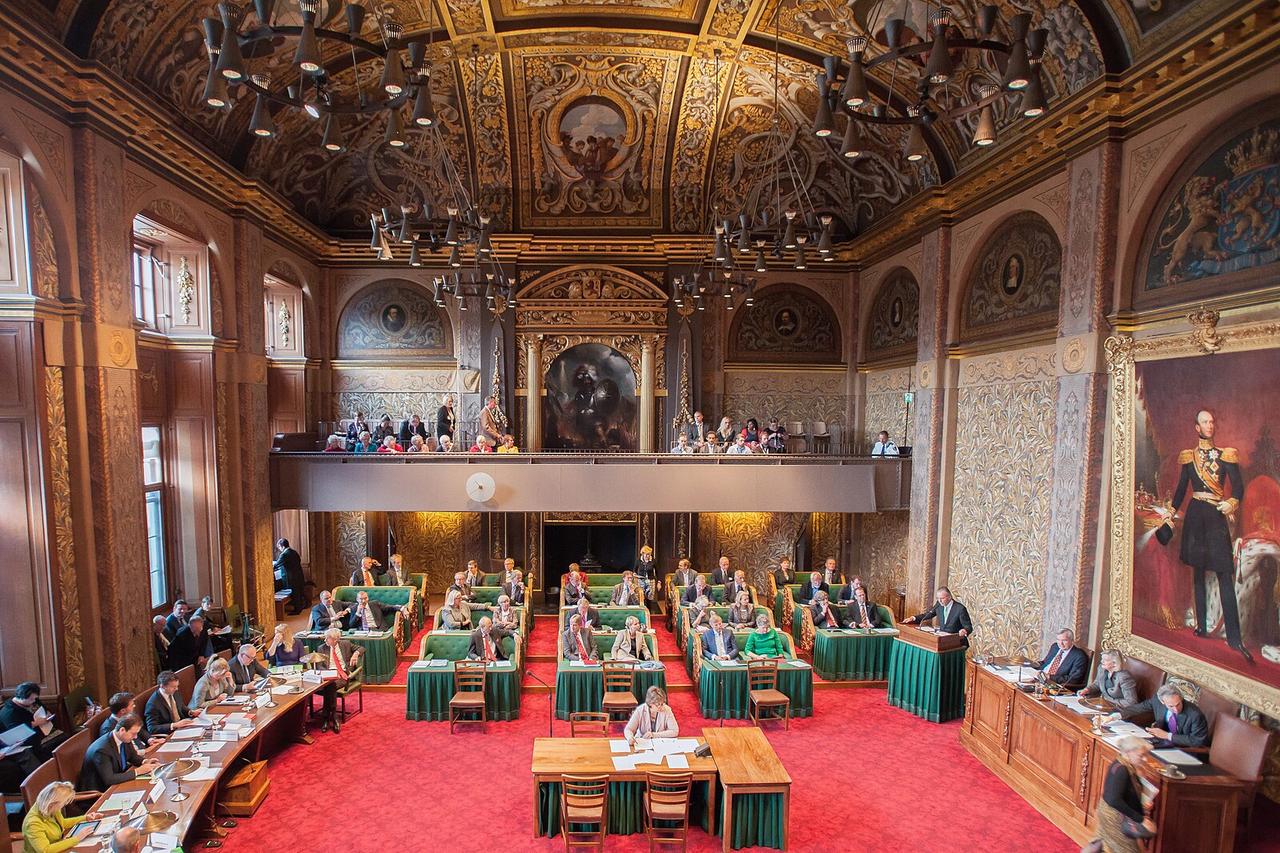
The Dutch Senate: The Eerste Kamer at the Binnenhof
The building you are standing near has been at the heart of Dutch politics for centuries, and the hall of the Eerste Kamer is one of its most quietly powerful rooms. Grand chandelier overhead, painted ceilings, portraits of serious men staring down from gilded frames. It looks more like a banquet hall than a legislature, which is perhaps fitting for a body that works largely out of the spotlight.
The name "Eerste Kamer" means First Chamber, yet it came second in terms of public attention, almost from the start. When it was established in 1815, senators were appointed by the king rather than elected by the people. That alone kept it at a respectful distance from democratic enthusiasm.
Today, 75 senators are chosen indirectly by provincial legislatures. Their job is not to draft laws but to scrutinize them. After the Tweede Kamer passes a bill, the Senate examines it for legal consistency, practical feasibility, and long-term consequences. Think of it as the last filter before something becomes the law of the land.
Critics argue the Senate wields too much power for a body so few people voted for directly. Supporters call it an essential safeguard. Both sides have a point, which is probably why, after more than two centuries, nobody has managed to get rid of it.
Any feedback for this story?