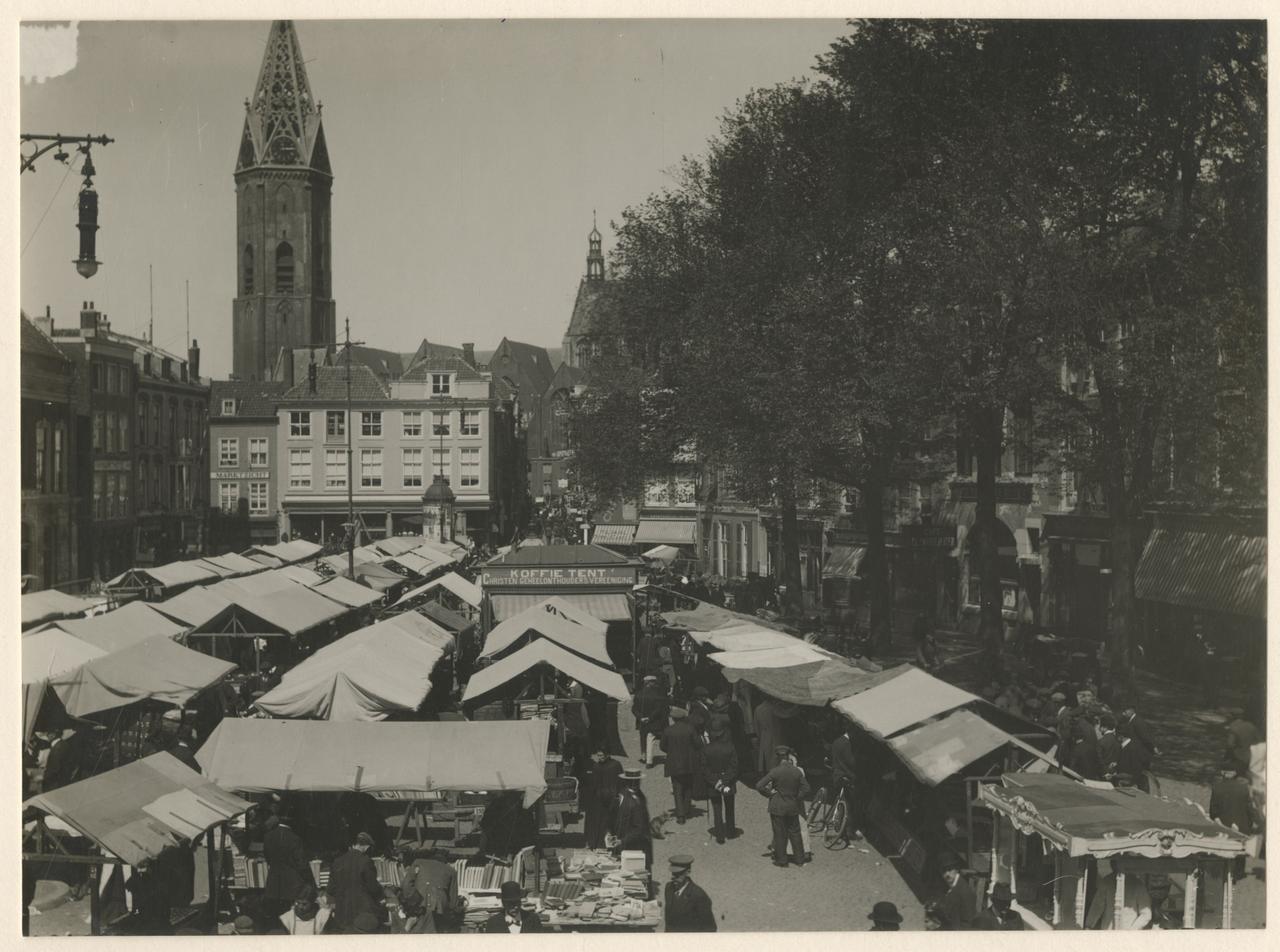
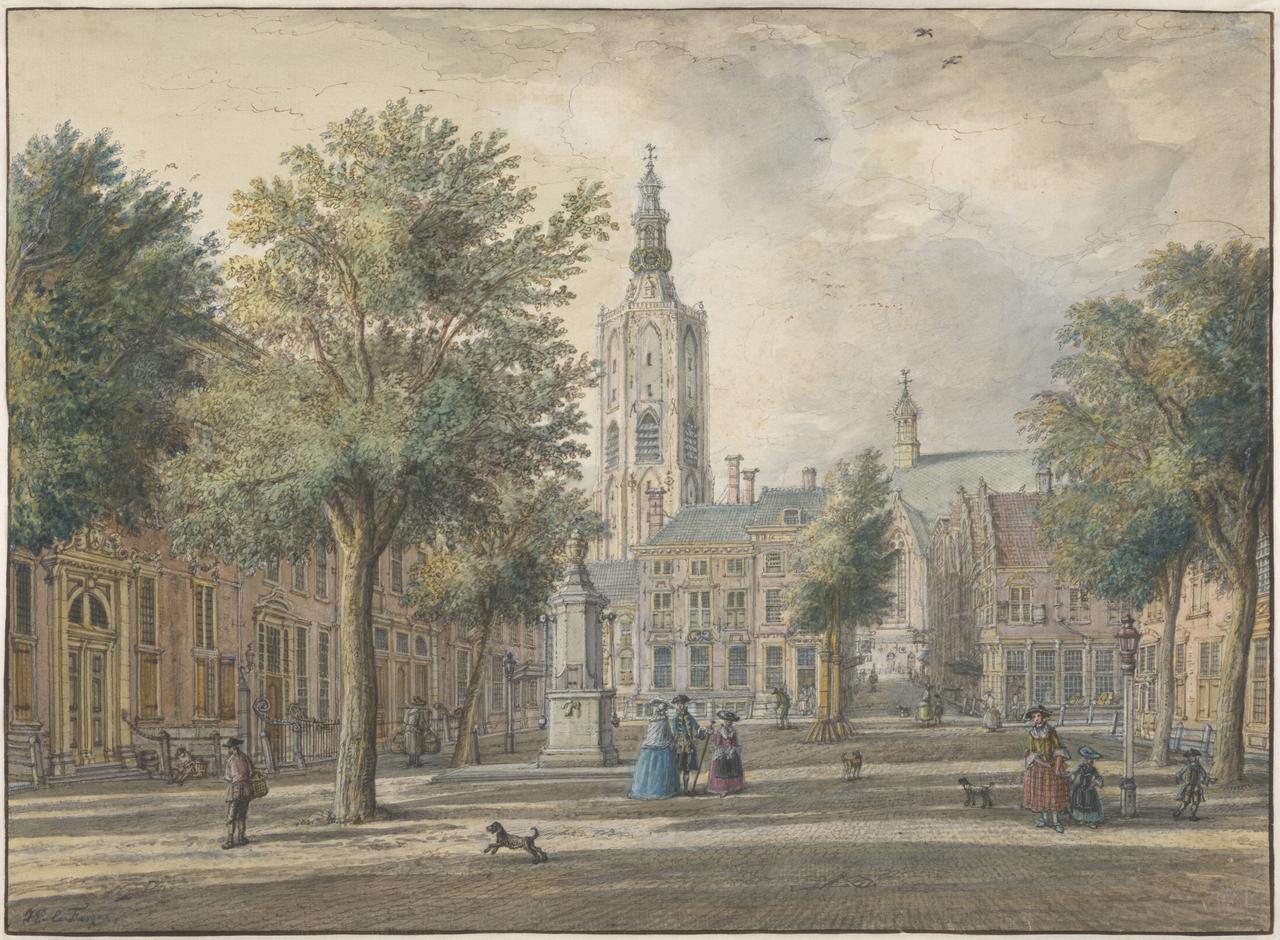
The Grote Markt
The current site of The Grote Markt was once home to the grand St. Elizabeth Convent, established in 1452. It was one of four nunneries built in The Hague during the late Middle Ages. In 1584, the convent was destroyed by a devastating fire. After the Reformation, the ruins were demolished and the land sold off.
By 1614, a fruit and vegetable market was established on the site. The Grote Markt quickly became the city’s main trading hub, with corn, butter, and cheese also sold—brought in from the fertile Westland region via the Prinsegracht. Impressive trading buildings like the Koorenhuis and the Boterhuis rose around the square.
At the end of the 19th century, most of The Hague’s inner canals, including the Prinsegracht, were filled in, and the market relocated. But by the 1970s, the square found a new identity as a lively nightlife district. Today, it’s known as the center of the city’s Popdistrict, hosting live concerts year-round across genres like rock, jazz, hip-hop, and electronic music.
At the heart of the square stands a statue of Haagse Harry, a beloved comic character who celebrates the city’s dialect and spirit. And there's the famed lamp shop of Piet de Borst. When the euro was introduced, Finance Minister Gerrit Zalm made his first official purchase there—a quirky but memorable chapter in modern Dutch history.
Any feedback for this story?