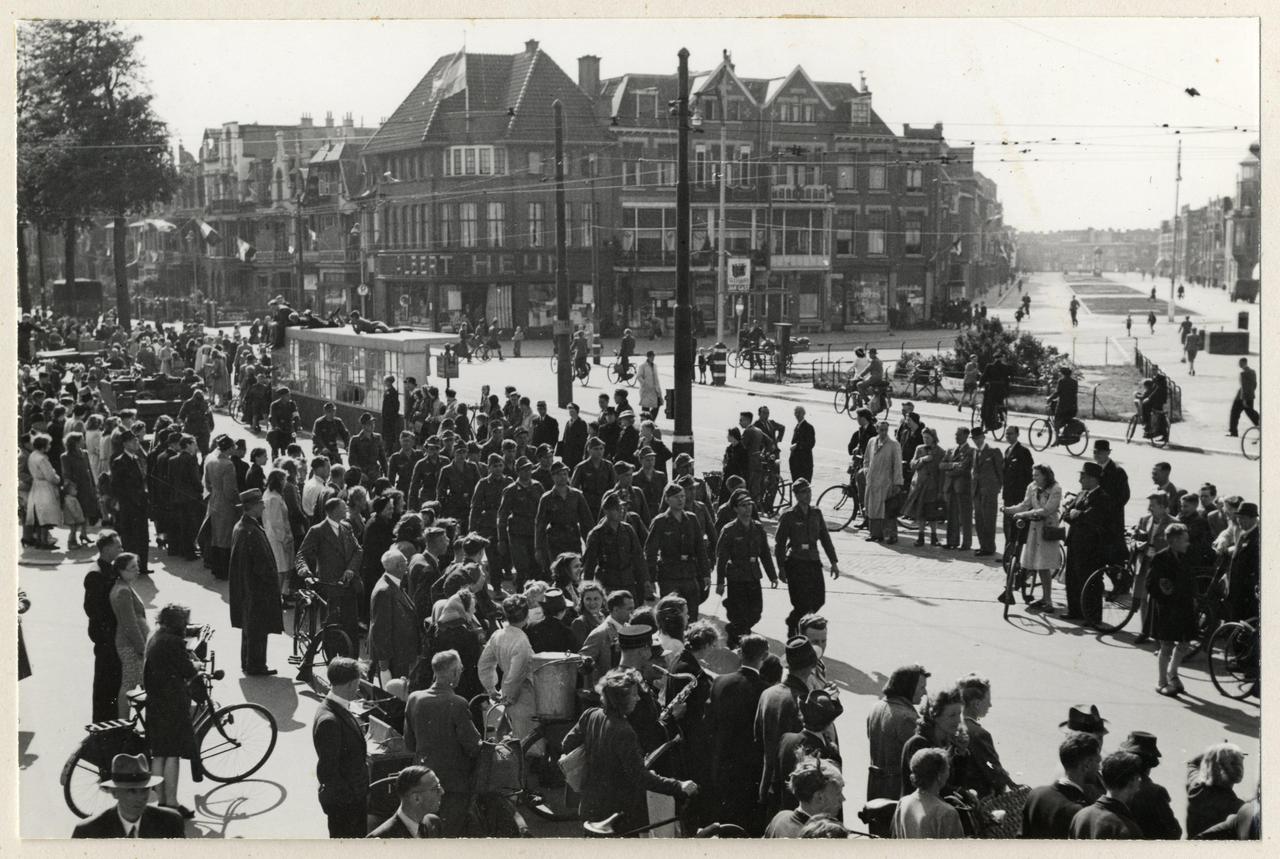
The Hague during World War II
World War II left deep scars in The Hague. Once a city of diplomacy and culture, it became a place of fear, destruction, and resistance.
Mayor Salomon de Monchy showed great courage early in the war by refusing to comply with the demands of the occupying forces. He was dismissed in September 1940. His replacement, NSB member Harmen Westra, brought a period of collaboration and repression.
For the Jewish community, tragedy struck in 1942. With about 17,000 Jewish residents, The Hague was the second largest Jewish community in the Netherlands after Amsterdam. They lived throughout the city, including near the Nieuwe Kerk and in Scheveningen. Most did not survive the war due to systematic deportations. Their absence left a lasting void.
The city’s landscape also suffered. The construction of the Atlantikwall led to the demolition of entire neighborhoods and the forced displacement of about 135,000 residents. Empty homes and abandoned streets became a stark symbol of the war.
One of the darkest days came on March 3, 1945. British planes targeting German V2 sites accidentally bombed the Bezuidenhout district. More than 550 people were killed, thousands injured, and much of the neighborhood was destroyed.
During the Hunger Winter of 1944-1945, residents endured extreme hardship. Cold and food shortages claimed the lives of over 2,100 people. Yet many held on to hope—finally fulfilled on May 8, 1945, with the liberation of the city.
Any feedback for this story?