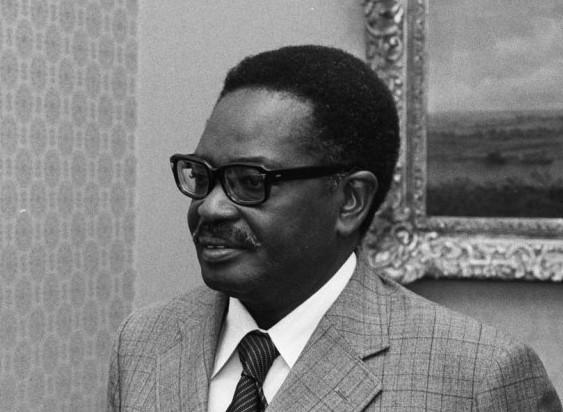
Agostinho Neto at Aljube
Let's pause here at the Aljube, a place where silence once held one of Africa's most powerful voices. In this former prison near the Sé Cathedral, the Portuguese dictatorship locked away António Agostinho Neto from 1962 to March 1963. Neto was an Angolan poet and doctor whose words inspired his people's fight for freedom. He cofounded the MPLA, the Popular Movement for the Liberation of Angola, which directly challenged Portugal's colonial grip on his homeland. His poetry became a weapon against oppression, which is exactly why António Salazar's Estado Novo regime considered him so dangerous.
This wasn't his first arrest. The authorities had detained him multiple times before, always trying to silence his voice. But Neto's influence only grew stronger. While behind these walls, he was elected president of the MPLA in late 1962, even as a prisoner. International outrage eventually forced his release, though they kept him under house arrest. In June 1963, Neto and his wife Maria Eugénia escaped Portugal with their two children, fleeing to Morocco and then Zaire. He continued leading the independence movement from exile. When Angola finally broke free from Portuguese rule in 1975, Neto became the country's first president, transforming from prisoner to national leader.
Any feedback for this story?