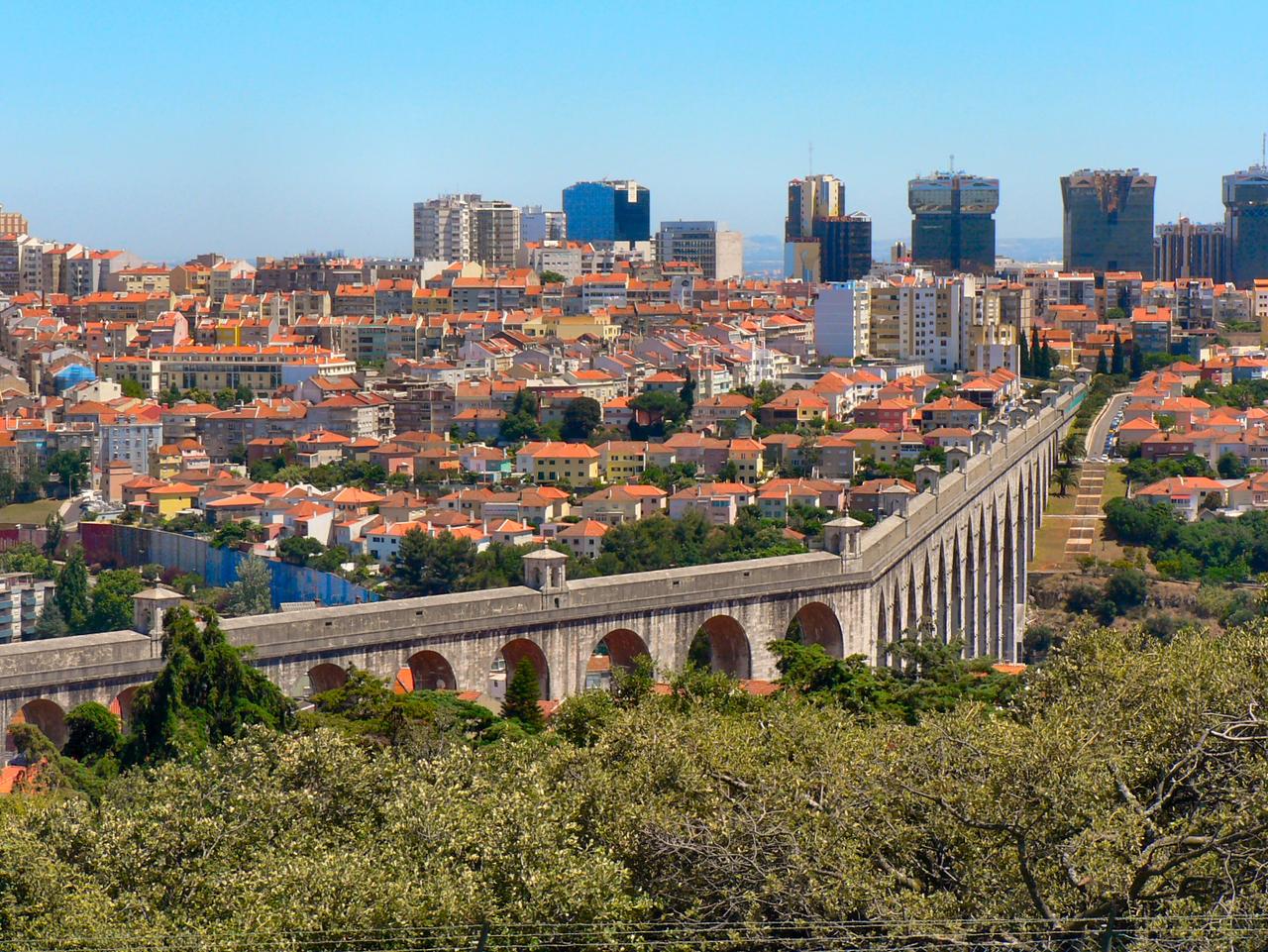
Águas Livres Aqueduct & Mãe d’Água
Right in front of you is one of the tallest stone arches ever built, rising 65 meters above the Alcântara Valley. This is the Águas Livres Aqueduct, an engineering marvel that saved a city from dying of thirst. Before 1731, the city survived on just three public fountains. Water was so scarce that residents faced constant shortages, especially during dry seasons. King John V decided to solve this crisis by bringing clean water from springs in the distant hills, 58 kilometers away.
It was the most ambitious water project of the 18th century. Construction was paid for by taxing everyday items like wine, meat, and olive oil. When water finally flowed through in 1748, it transformed life completely. Dozens of new fountains appeared across the city, supplying homes, convents, and factories. Then came the earthquake of 1755. While most of the city crumbled, the aqueduct's 109 arches stood firm. The water kept flowing even as everything else collapsed.
The system ended here at the Mãe d'Água das Amoreiras reservoir in the Amoreiras neighborhood. Completed in 1834 after 88 years of construction, this cathedral like chamber held 5,500 cubic meters of water. Designed by Hungarian architect Carlos Mardel, it distributed water across the growing capital until 1967.
Any feedback for this story?