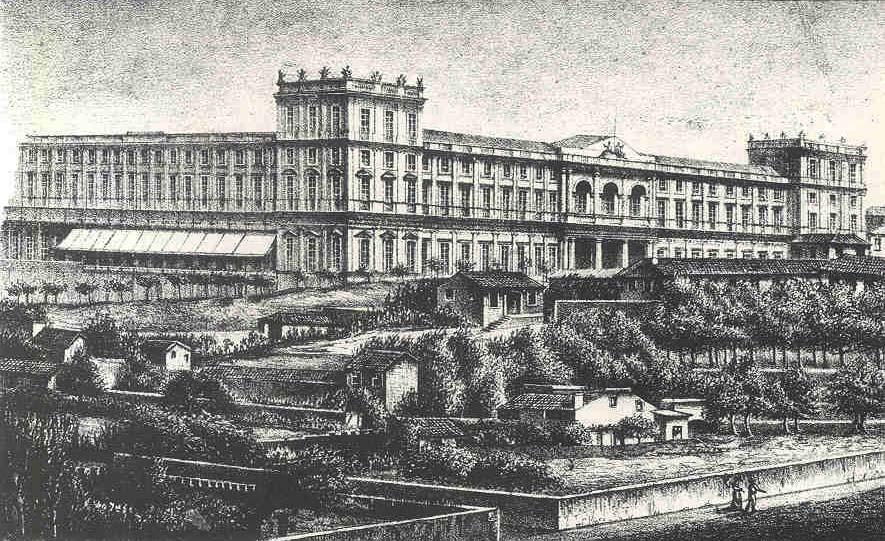
Ajuda National Palace
This grand palace above the Tagus was born from tragedy, built twice after disaster struck. The royal family's original home crumbled in the 1755 earthquake, leaving King José I so terrified of stone buildings that he ordered an elaborate wooden palace constructed on this hilltop. For 33 years, the royal court lived in what locals called the "Wooden Palace" until flames devoured it completely in 1794. What stands here represents only one third of the architects' ambitious vision.
The entrance visitors use was never intended as the main door. Designers planned it as a mere side entrance. The grand façade was meant to face the river below, creating a magnificent spectacle for ships arriving in the capital. Construction began in 1796 under Queen Maria I, but Napoleon's 1807 invasion forced the entire royal family to flee across the Atlantic to Brazil.
They ruled their empire from Rio de Janeiro for 14 years while work on the palace crawled forward. When King João VI finally returned in 1821, he found the building still incomplete and chose to live elsewhere. The palace only became a true royal residence in 1862 when King Luís I and his Italian bride, Queen Maria Pia of Savoy, moved in and transformed the unfinished rooms into their home.
Any feedback for this story?