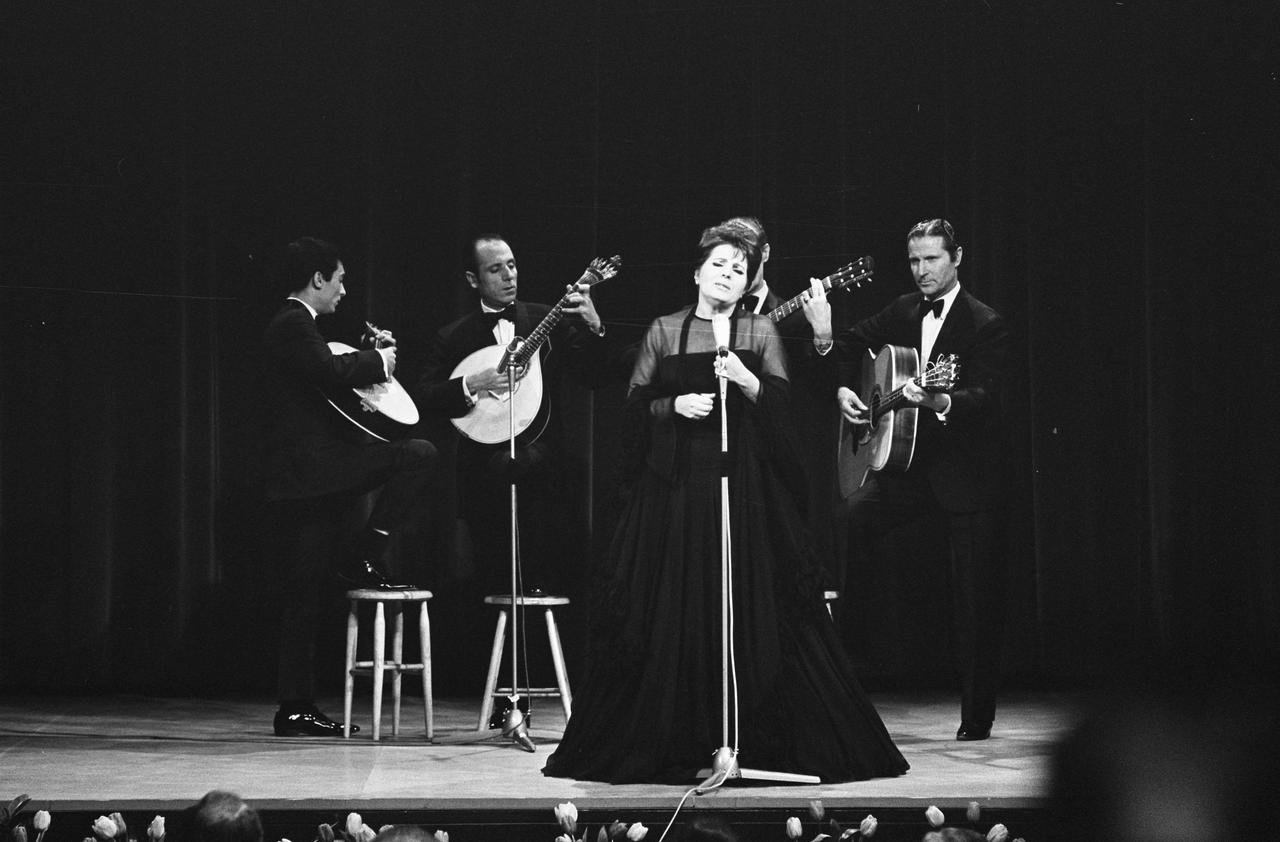
Amália Rodrigues
The voice that turned a city's melancholy into the world's most beloved Portuguese sound came from a girl who sold fruit at the waterfront. Amália Rodrigues transformed fado from music sung in dimly lit taverns into an art form that moved audiences on every continent. Born in 1920 into poverty, young Amália worked at Cais da Rocha selling oranges to help feed her family. But when she sang while working, people stopped.
They listened. By 19, she was performing in fado houses, her voice carrying the saudade, that untranslatable Portuguese longing, that defined a nation's soul. What made Amália revolutionary was how she reimagined fado itself. She brought in poetry from contemporary writers, collaborated with composer Alain Oulman, and stretched the boundaries while honoring tradition. In 1954, her album reached number one in America, extraordinary for non English music.
She performed at the Olympia in Paris for ten seasons. Charles Aznavour wrote songs for her. She recorded 170 albums and became the best selling Portuguese artist in history. When she died in 1999, three days of national mourning followed. In 2001, she became the first woman transferred to the National Pantheon, resting among Portugal's greatest figures.
Any feedback for this story?