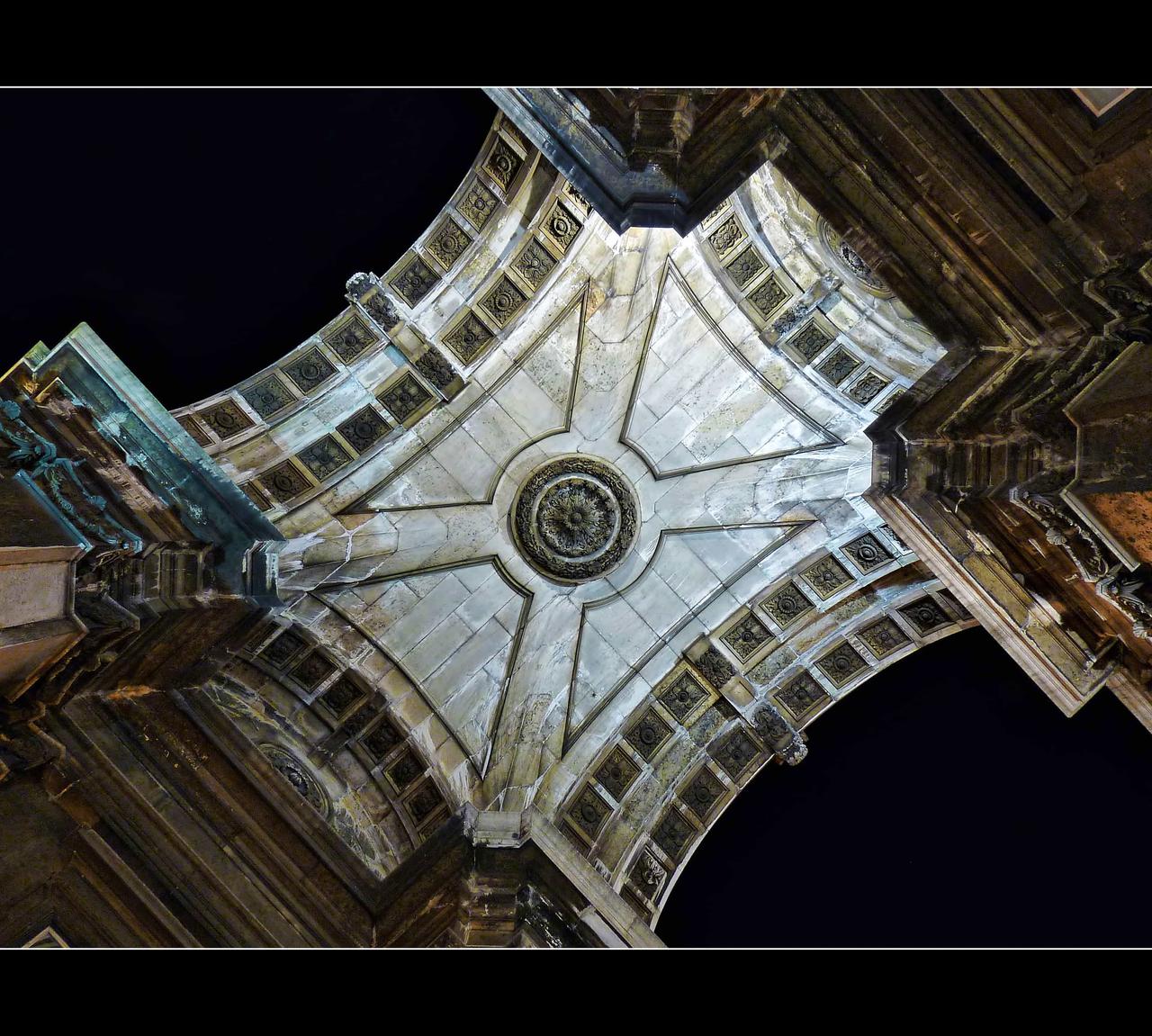
Baixa & Rua Augusta Arch
Beneath your feet in Baixa Pombalina lies Europe's first earthquake proof district, built from the ashes of one of history's deadliest natural disasters. On November 1, 1755, at 9:40 in the morning, a massive earthquake shattered this downtown area during All Saints' Day mass. Within minutes, fires and tsunamis turned everything into ruins. Over 30,000 people died. The royal palace at Terreiro do Paço, churches, and centuries of treasures vanished in hours.
What rose from the rubble changed urban planning forever. The Marquis of Pombal, the king's minister, refused to rebuild the old medieval maze of narrow streets. Instead, military engineers Eugénio dos Santos and Carlos Mardel designed something radical: a perfect grid pattern with wide streets, uniform buildings, and open squares like Praça do Comércio. But the real genius was hidden inside the walls. They invented the gaiola pombalina, a wooden cage structure built into every building that could flex during tremors. Engineers actually tested it by marching troops around miniature models to simulate earthquakes. It worked.
These became the world's first seismically protected buildings, completed by 1758. At the northern entrance to Baixa, where Rua Augusta meets Praça do Comércio, stands the Rua Augusta Arch. Originally planned as a bell tower in 1759, it transformed into a triumphal monument celebrating the district's resilience. The construction took 114 years to complete, finally finished in 1873 with six towering columns and statues of Portuguese heroes including Vasco da Gama and the Marquis of Pombal himself.
Any feedback for this story?