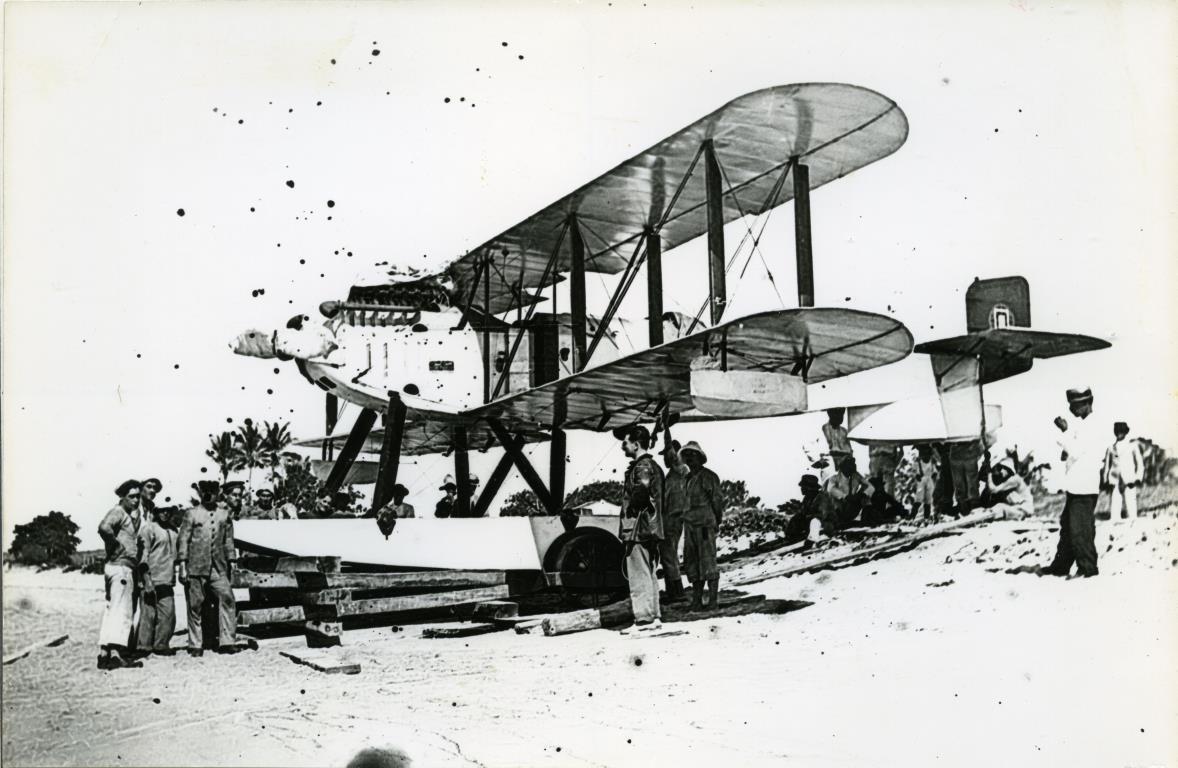
First South Atlantic Crossing
A century ago, the seemingly impossible became reality when two Portuguese aviators conquered the South Atlantic by air, changing aviation history forever. Admiral Gago Coutinho and Captain Sacadura Cabral took off from the Tagus River on March 30, 1922, embarking on the first aerial crossing of the South Atlantic. Their destination was Rio de Janeiro, where Brazil was celebrating 100 years of independence.
The 8,400 kilometer journey would test every limit of early aviation. The crossing took 79 days, but not because of flight time. They crashed twice and used three different seaplanes to complete the journey. When their first aircraft, the Lusitânia, went down in the Atlantic near the island of Fernando de Noronha, a replacement was sent from Portugal. The second plane also failed, forcing them to switch to a third seaplane, the Santa Cruz, which finally carried them to Rio de Janeiro on June 17, 1922.
What made this flight revolutionary was Coutinho's invention of a precision sextant with an artificial horizon. This allowed them to navigate using only cockpit instruments, a technique that became fundamental to modern aviation. Before this, pilots relied on visual references, making ocean crossings nearly impossible. The Santa Cruz seaplane now rests at the Museu de Marinha in Belém, the only complete Fairey III seaplane surviving anywhere in the world.
Any feedback for this story?