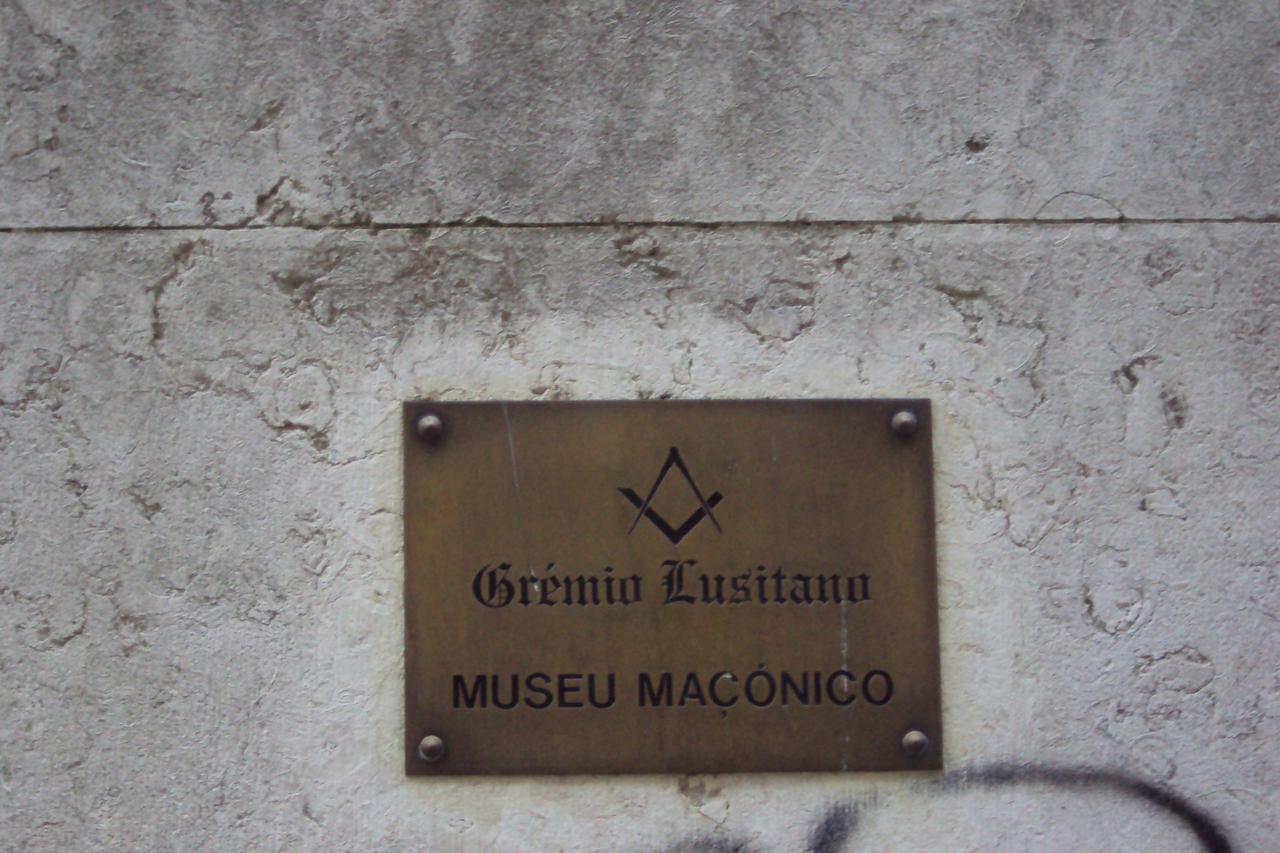
Grande Oriente Lusitano
Welcome to the headquarters of Portugal's oldest secret society, a place where power, philosophy and persecution collided for over two centuries. The Grande Oriente Lusitano, founded in 1802 at Rua do Grémio Lusitano, became the heart of Portuguese Freemasonry. This wasn't just a social club. It was a political force that shaped the nation, pushing for liberal reforms, freedom of thought and the separation of church and state during turbulent times.
Its first Grand Master was Sebastião José de Melo e Castro, grandson of the Marquis of Pombal who rebuilt the capital after the devastating 1755 earthquake. The organization attracted influential thinkers, politicians and reformers who met in secret to discuss ideas that threatened traditional power structures. But secrecy came at a cost. In 1935, dictator António de Oliveira Salazar declared war on Freemasonry, passing law 1901 that banned all Masonic activities.
This very building was seized and handed over to the Portuguese Legion, a paramilitary force loyal to the Estado Novo regime. Freemasons were hunted down, imprisoned and forced into exile. For 39 years, they operated in complete secrecy, risking everything to keep their ideals alive. The Carnation Revolution of April 25, 1974 ended the dictatorship and returned this building to the Freemasons. Inside now sits the Portuguese Masonic Museum, where ritual objects, documents and artifacts tell the story of resistance, survival and forbidden knowledge.
Any feedback for this story?