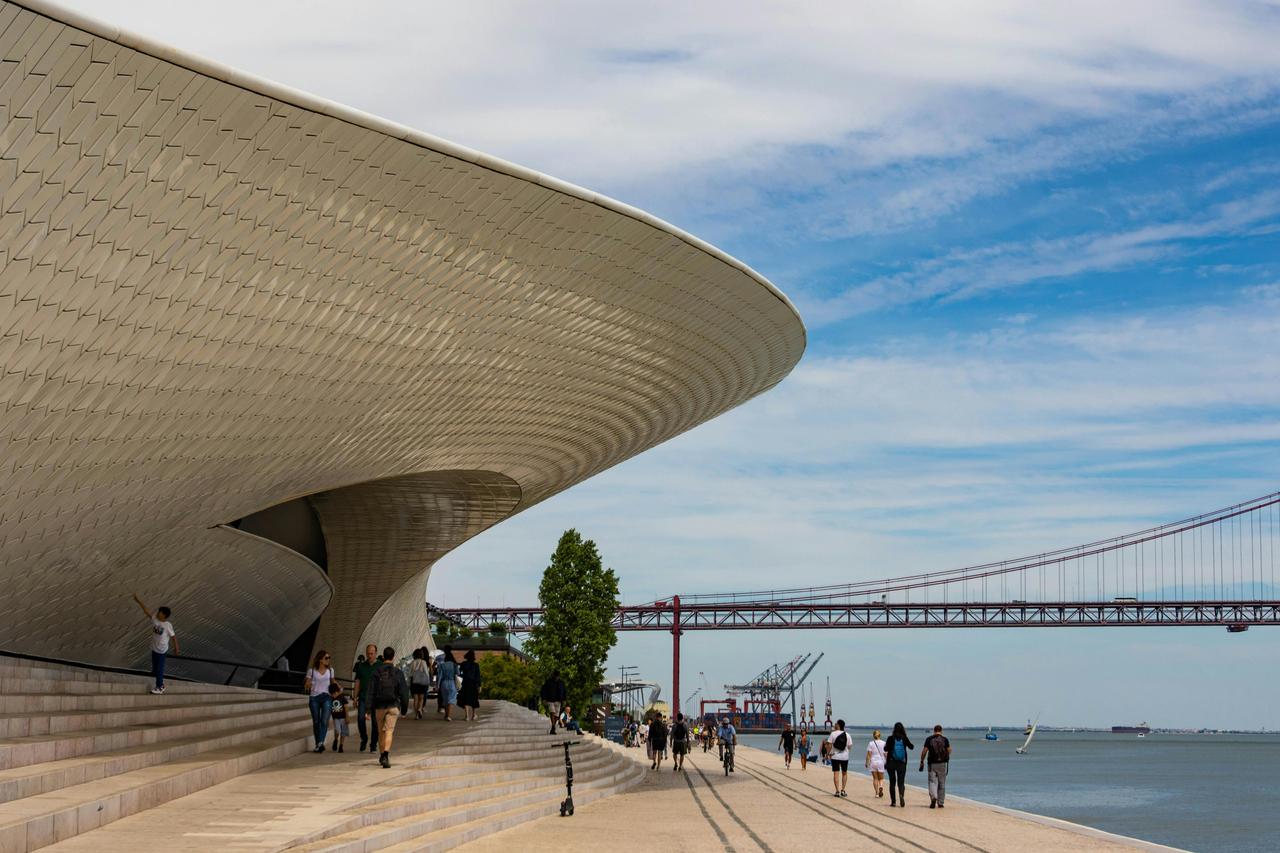
MAAT & Central Tejo
The building in front of you was once the beating heart of an entire city's power supply. Central Tejo, built in 1908, was the largest power plant in Portugal for over 30 years, supplying electricity to all of the region and the Santarém Valley from 1909 to 1972. Back then, it wasn't just a factory—it was a symbol of modernity.
Central Tejo was one of the first buildings in the city to be fully lit by electricity, showcasing the future while it created its iron structure, covered in decorative brick with Art Nouveau and classical influences, still stands as one of Portugal's finest examples of early 20th-century industrial architecture. What makes its story remarkable is what happened in August 1972Political opponents sabotaged the city's high voltage lines, plunging everything into darkness.
Retired workers were called back, boilers were fired up, and Central Tejo produced electricity for one final week—powering one-fifth of the city's needs in its last act of service. After being decommissioned in 1975, the power station was classified as a building of public interest in 1986It reopened as the Electricity Museum in 1990, preserving all original machinery including 30-meter-high boilers and turbo-alternators from the 1930s-1950s.
Any feedback for this story?