MAAT Garden
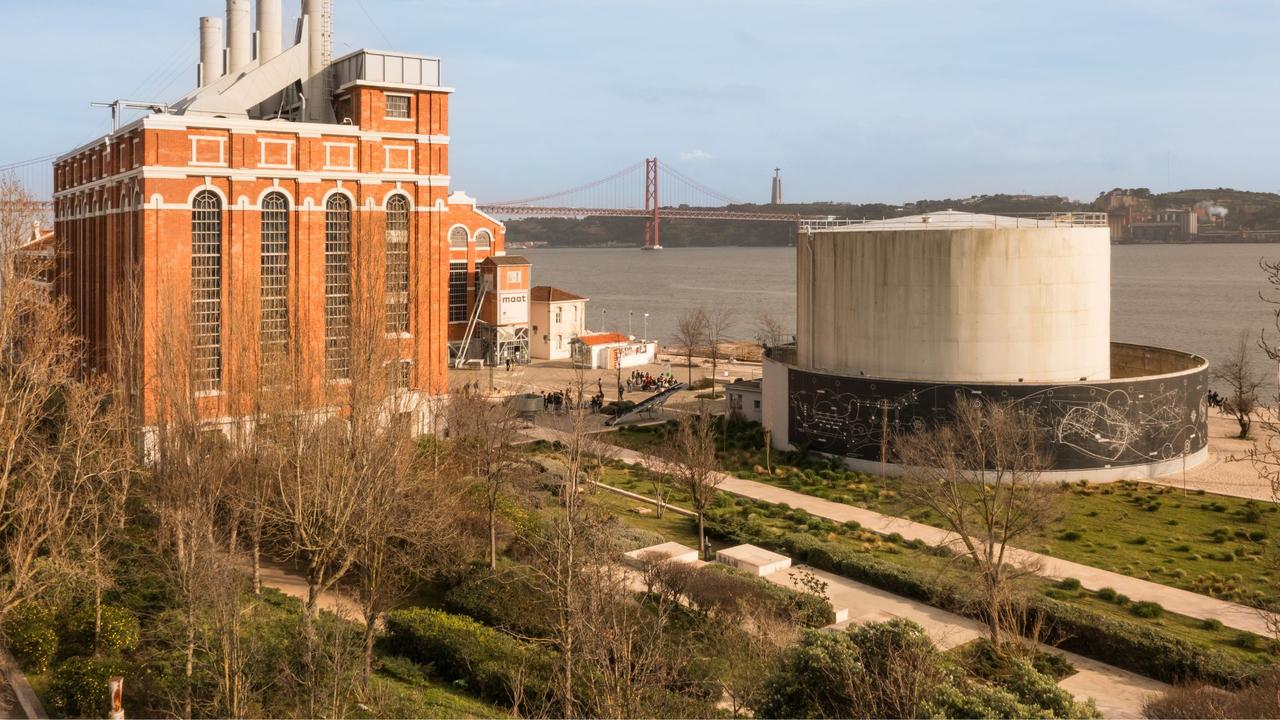
On a 225-metre strip of the riverside, Lebanese architect Vladimir Djurovic’s landscaping project makes reference to the wooded areas that grow along certain parts of the Tagus, aiming to highlight their inherent nature and characteristics in contrast to the rich and varied surrounding vegetation. To the north, gentle hills and dense arboreal vegetation mitigate the impact of road and rail traffic. To the south, on the river side, the terraces and pebble beach invite you to linger and relax, much like the square with granite blocks.
The core of MAAT Garden consists of an area of mixed wildflower meadow with scattered trees and a footpath paved with granite leading to an adjacent park to the west. Located between the beach and the tree-lined spaces, this area accentuates the distinctive character of both parks, creates biodiversity and is also educational in purpose.
In this remarkable and freely accessible leisure space embracing the two buildings, the museum presents large-scale sculptures in addition to a frequent programme of performative and other events.
Any feedback for this story?