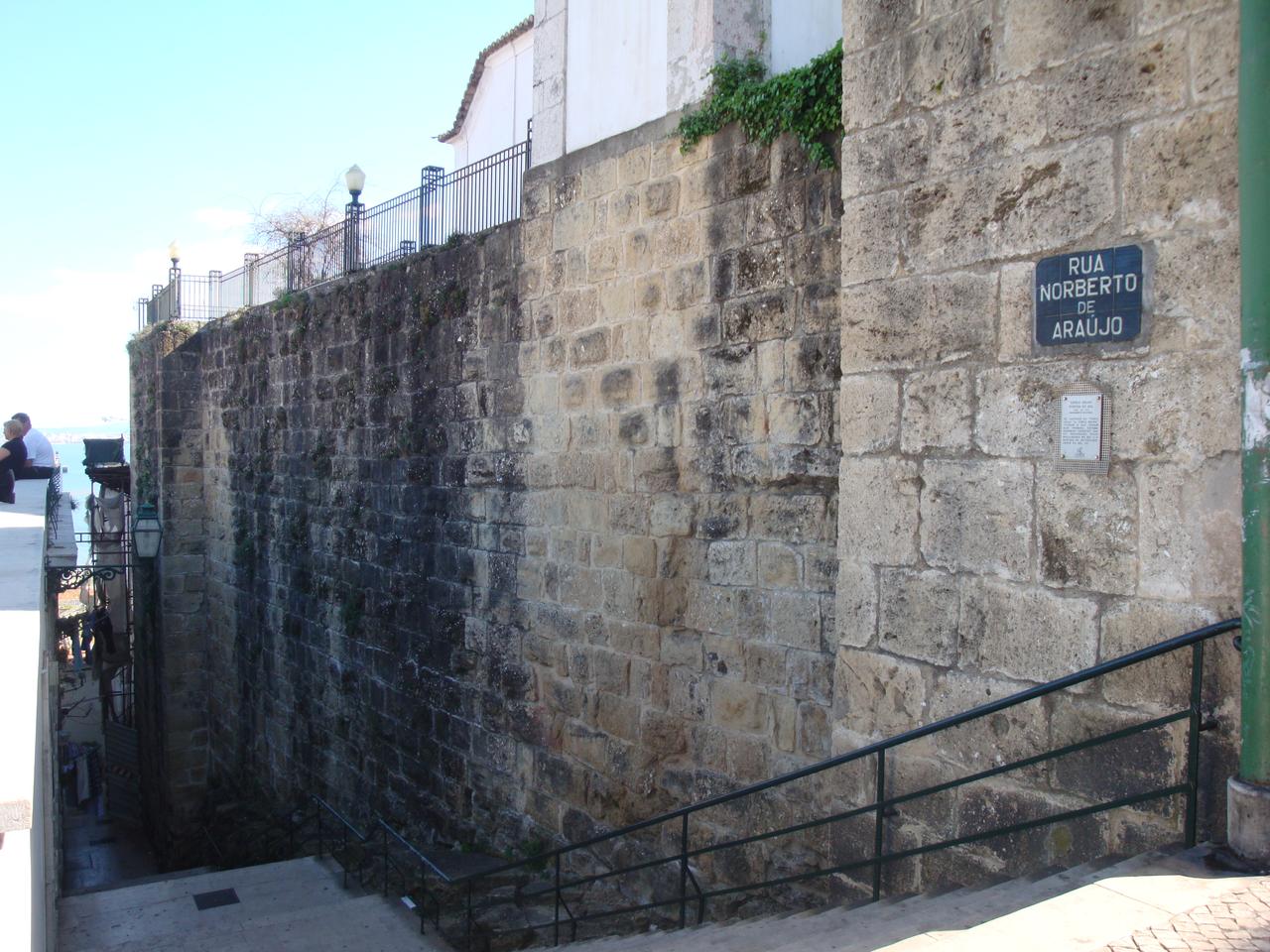
Old City Wall
You've arrived at one of the oldest continuously defended sites in Europe, where massive stone walls have stood guard for over 2,000 years. The fortifications you see around neighborhoods like Alfama and Graça began as Roman defenses built in 48 BC to protect the growing municipality. These walls followed the hilltop down to the riverside, creating a protected zone for citizens and commerce.
When the Moors ruled from the 8th to 12th centuries, they reinforced and expanded these defenses into what became known as the Cerca Moura. Arabic geographers recorded the names of gates that still echo in modern street names. Bab al Hamma, meaning "Gate of the Hot Baths," gave Alfama its name. Other gates like Porta do Sol and Porta de Alfama controlled access to the walled city. In 1373, King Ferdinand I faced a critical threat from Castilian invaders.
He ordered construction of the Fernandina Wall, a defensive masterpiece stretching nearly 5 kilometers with 77 towers and 38 gates. Approximately 2,000 laborers and craftsmen worked on this project that enclosed over 100 hectares. The volume of stone used was so massive that if laid out one meter high, it would stretch from here all the way to Porto, roughly 300 kilometers north.
Any feedback for this story?