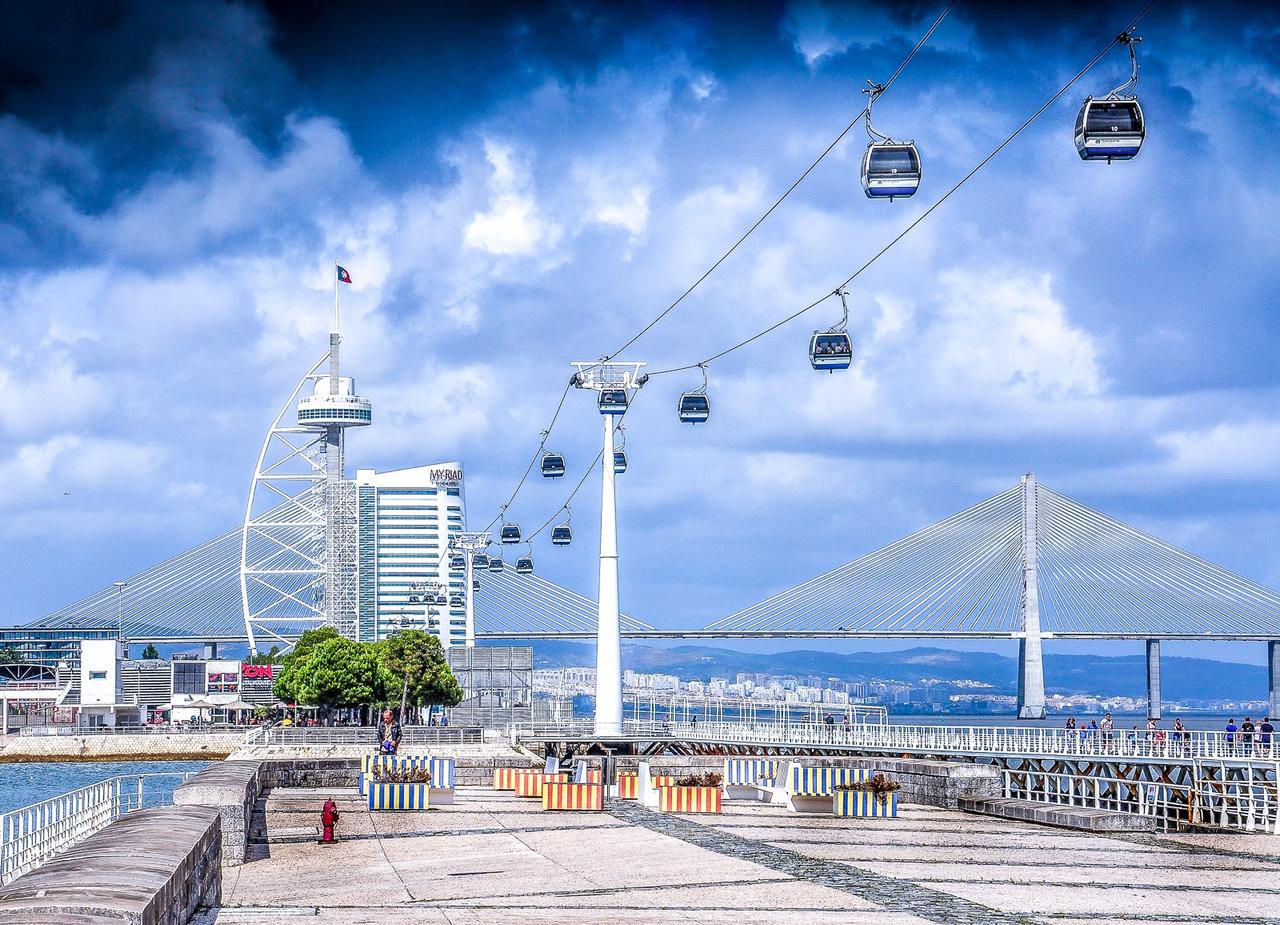
Parque das Nações
"You're standing on land that didn't exist 30 years ago. Where toxic factories and slaughterhouses once lined the Tagus estuary, this waterfront district rose from industrial ruins to host Expo 98—the last World's Fair of the 20th century. Portugal had six years to transform this wasteland into a showcase for 143 nations. The event marked 500 years since Vasco da Gama reached India, with the theme ""The Oceans: A Heritage for the Future."
What emerged changed the eastern riverfront forever. Oriente Station anchors the area. Spanish architect Santiago Calatrava designed this soaring glass and steel structure across five levels, winning the 1998 Brunel PrizeIts tree-like canopy references the city's seven hills, functioning as a major transport hub linking metro, trains, and buses.
Walk toward the river and you'll find the Portugal Pavilion, designed by Pritzker Prize-winner Álvaro Siza Vieira. The showpiece is an impossible-looking concrete canopy—just 20 centimeters thick yet spanning 70 meters between two massive porticoes. Siza described it as ""a sheet of paper between two bricks."" Steel cables support the draped concrete using suspension bridge technology, framing dramatic views across the Tagus. The Telecabine connects both landmarks.
This cable car carries passengers 30 meters above the river for 1,230 meters in 40 enclosed cabins. The 8 to 12-minute journey offers sweeping views of the Vasco da Gama Bridge—Europe's longest when completed—and the entire waterfront district that refused to become another abandoned Expo site."
Any feedback for this story?