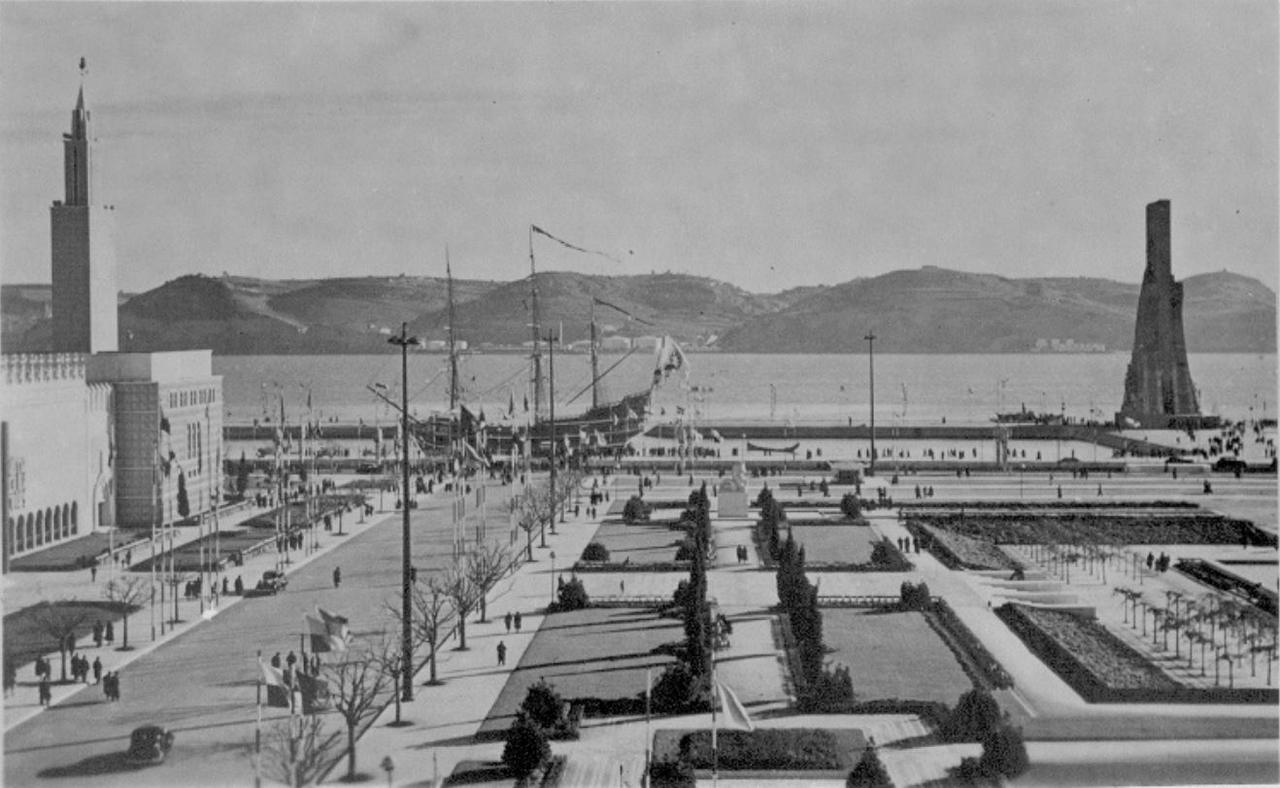
Portuguese World Exhibition
Right where you stand, an entire world once unfolded. In 1940, while war consumed Europe, Portugal staged the Portuguese World Exhibition here in Belém, transforming this waterfront into a showcase of empire that drew over 3 million visitors. From June 23 to December 2, elaborate pavilions lined the newly built Praça do Império, displaying Portugal's colonies from Brazil to Mozambique, Goa to Timor. Each structure celebrated 800 years of exploration and conquest, presenting a carefully crafted image of Portuguese greatness to the world.
But this was no ordinary fair. Dictator António de Oliveira Salazar orchestrated the entire spectacle as propaganda for his Estado Novo regime. While neighboring countries tore themselves apart in World War II, Portugal projected itself as a peaceful, unified empire stretching across four continents. The regime poured enormous resources into grand monuments, including the iconic Monument to the Discoveries you see nearby. The exhibition permanently reshaped this district.
The geometric gardens, the imposing buildings, the wide ceremonial spaces all emerged from those six months. Salazar used architecture and spectacle to rewrite history, hiding colonial exploitation behind romanticized glory. What began as a temporary exhibition became Belém's defining landscape, a physical reminder of how authoritarian powers use culture and space to control national memory.
Any feedback for this story?