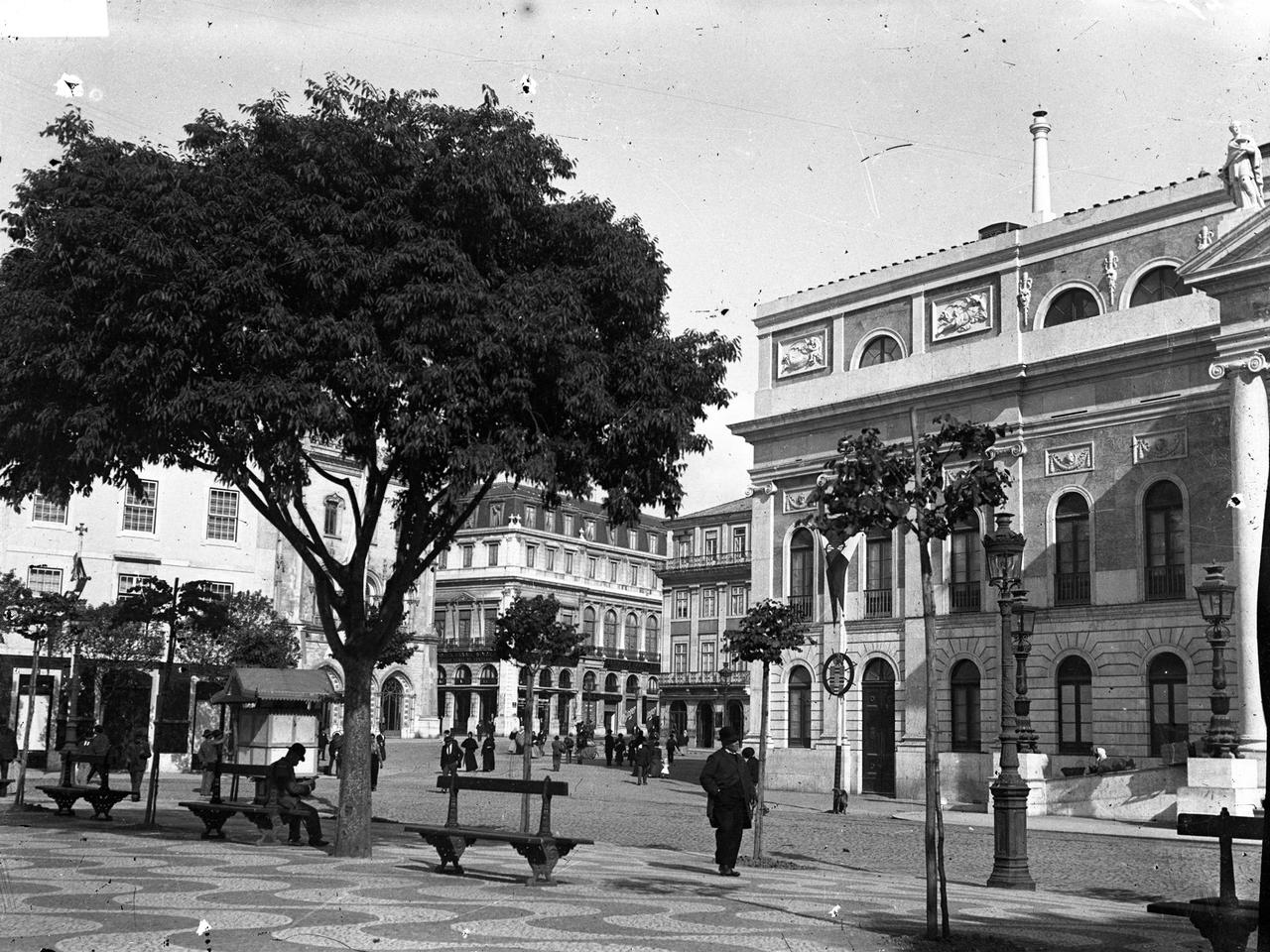
Rossio Square
This square in the heart of Baixa witnessed some of the darkest chapters in Portuguese history, yet locals still gather here as they have for 700 years. The bronze statue towering 23 meters above you supposedly honors King Dom Pedro IV, but legend insists it's actually Emperor Maximilian of Mexico, hastily repurposed after his 1867 execution when his monument was nearly complete. Rossio, meaning "common land," became the city's main plaza during medieval times. But from 1536 to 1755, the Estaus Palace standing where the grand theater now rises served as headquarters of the Portuguese Inquisition.
In underground cells, accused heretics endured brutal torture before facing public execution. The square hosted Portugal's first auto da fé in 1540, a ritual burning that drew massive crowds. For over two centuries, executions, bullfights, and royal proclamations unfolded on this very ground. The catastrophic 1755 earthquake destroyed the Inquisition palace along with most structures around the square. Rebuilding gave birth to the elegant Pombaline buildings you see now.
The Teatro Nacional DMaria II, completed in 1846, replaced the palace of persecution with a temple of culture. The distinctive wave patterned cobblestones beneath your feet, laid in the 19th century, honor Portugal's seafaring legacy. Two baroque fountains imported from France in 1889 frame the controversial statue, marking this Baixa heart where centuries of triumph and tragedy converge.
Any feedback for this story?