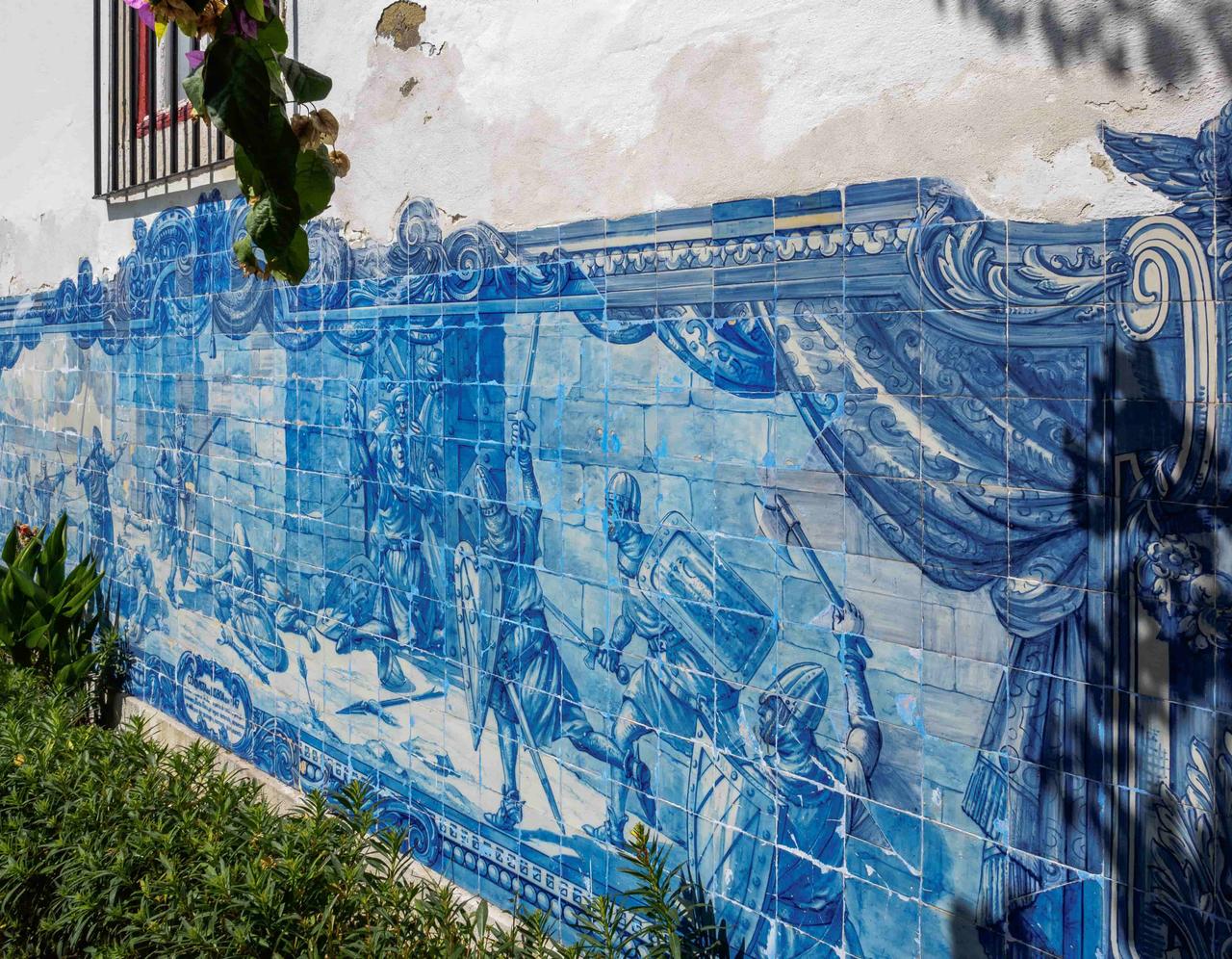
Santa Luzia Tile Panels
These brilliant blue tiles on the church wall aren't just decoration. They're windows into two defining moments that shaped this city centuries apart. On the southern facade of the Church of Santa Luzia, overlooking the terrace near Alfama's narrow streets, two massive azulejo panels were created in the 1940s by skilled ceramic artists. Each panel tells a story that most people walking past have never heard.
The first panel captures the Conquista de Lisboa in 1147. Christian crusaders, allied with Portugal's first king Afonso Henriques, laid siege to the Moorish forces entrenched in the hilltop castle above. After months of battle, the city fell, ending over 400 years of Moorish rule. This moment transformed the settlement into the capital of a new Christian kingdom. The second panel shows something lost forever: the Terreiro do Paço before destruction.
This grand riverside palace square, with its medieval royal palace and elegant arcades, dominated the waterfront for centuries. Then the 1755 earthquake struck, reducing it all to rubble in minutes. The panel preserves the only visual record of how this royal heart of the city once looked. These ceramic masterpieces turn an exterior church wall into a gallery of history, capturing conquest and catastrophe in thousands of hand painted tiles.
Any feedback for this story?