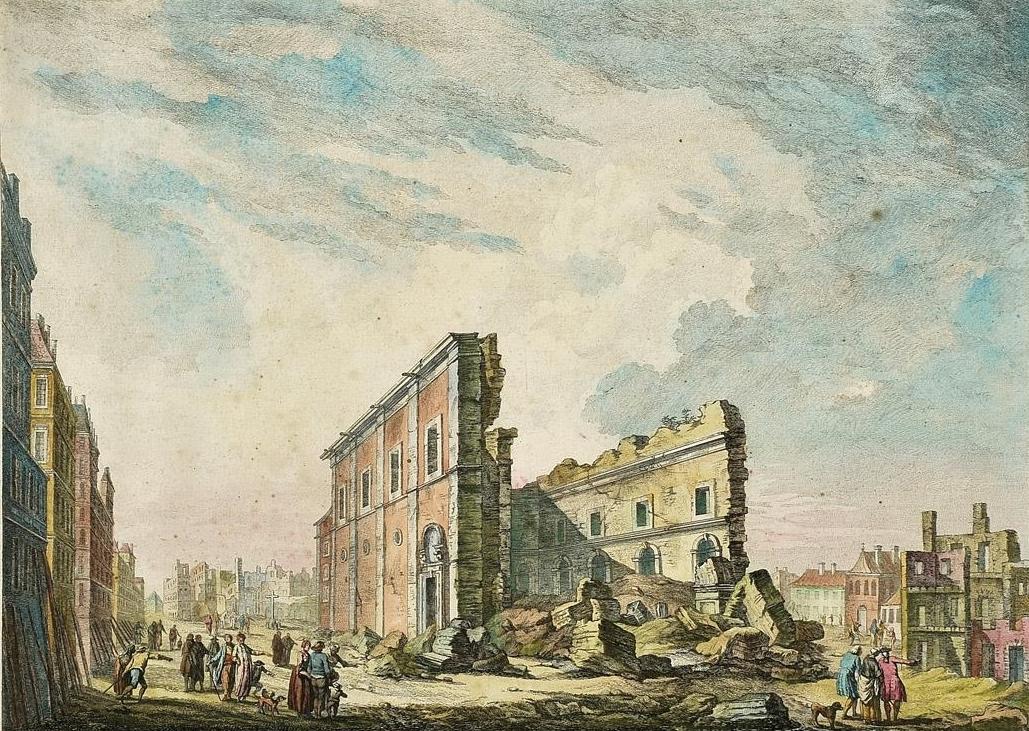
São Paulo Church Rebuilt
It all started in 1755 when one of Europe's most devastating earthquakes reduced São Paulo Church to rubble in a matter of minutes. On the morning of November 1, at 9:40, the ground shook violently during All Saints' Day mass, collapsing this historic church along with nearly every religious building in the area and killing thousands of worshippers trapped inside.
For 13 years, the ruins stood as a painful reminder of the catastrophe that changed everything. Then came Francisco Remígio de Abreu, one of the Senate's official architects, who was entrusted with an ambitious mission: to rebuild the church from the ground up. He didn't just restore what was lost, he reimagined it completely. By 1768, Abreu's vision became reality. The new São Paulo Church featured a single rectangular nave, two square bell towers rising above the roofline, and eight side chapels for intimate prayer.
His design embodied the Pombaline style, named after the Marquis de Pombal who orchestrated the city's massive reconstruction effort after the disaster. The church you see in Largo de São Paulo, near the vibrant Cais do Sodré waterfront, represents one of the greatest architectural comebacks in Portuguese history. Abreu rebuilt several churches destroyed by the earthquake, but São Paulo remains his most enduring statement about human resilience.
Any feedback for this story?