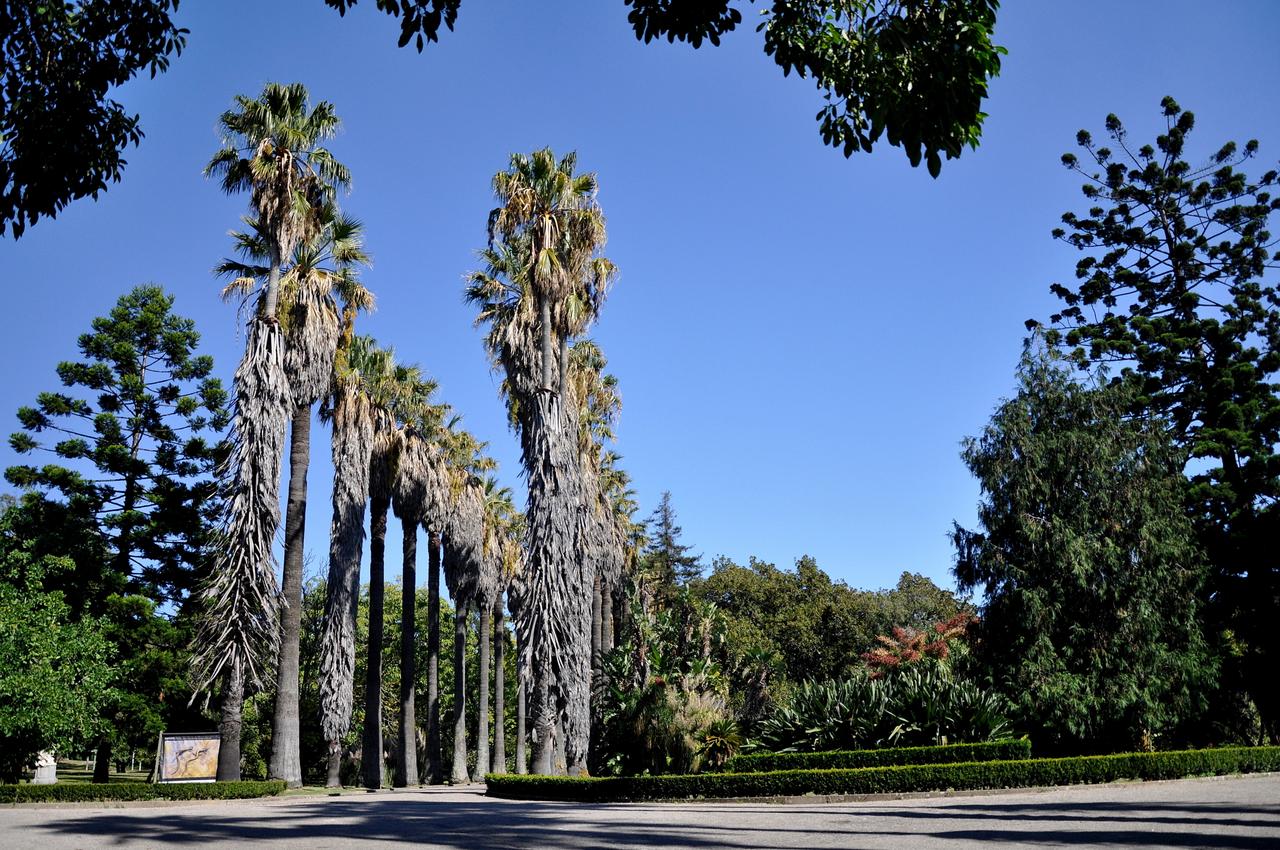
Tropical Botanical Garden
At this exact location, just steps behind the iconic Jerónimos Monastery, you're standing in a botanical collection that once served as Portugal's window to its distant colonies. The Tropical Botanical Garden opened on January 25, 1906 by royal decree of King Carlos I, created specifically to study and preserve plants from territories spanning three continents. French landscape architect Henri Navel spent seven years transforming this space into a living laboratory. Between 1910 and 1917, he designed pathways through 7 hectares where scientists could research agricultural possibilities for Angola, Mozambique, Macau, Cape Verde, and other Portuguese territories.
The garden became home to around 600 tropical and subtropical species, many of which are now endangered in their original habitats. In 1940, the garden played a central role in the Portuguese World Exhibition. An Oriental Garden was built, inspired by Macau, complete with a replica Chinese arch that still stands. The baroque Palace of the Counts of Calheta, dating to the 1600s and acquired by King João V in 1726, houses research laboratories within the grounds. After closing in 2019 for restoration work, the first since the 1940s, the garden reopened in January 2020 as a National Monument managed by the University of Lisbon.
Any feedback for this story?