30 St Mary Axe
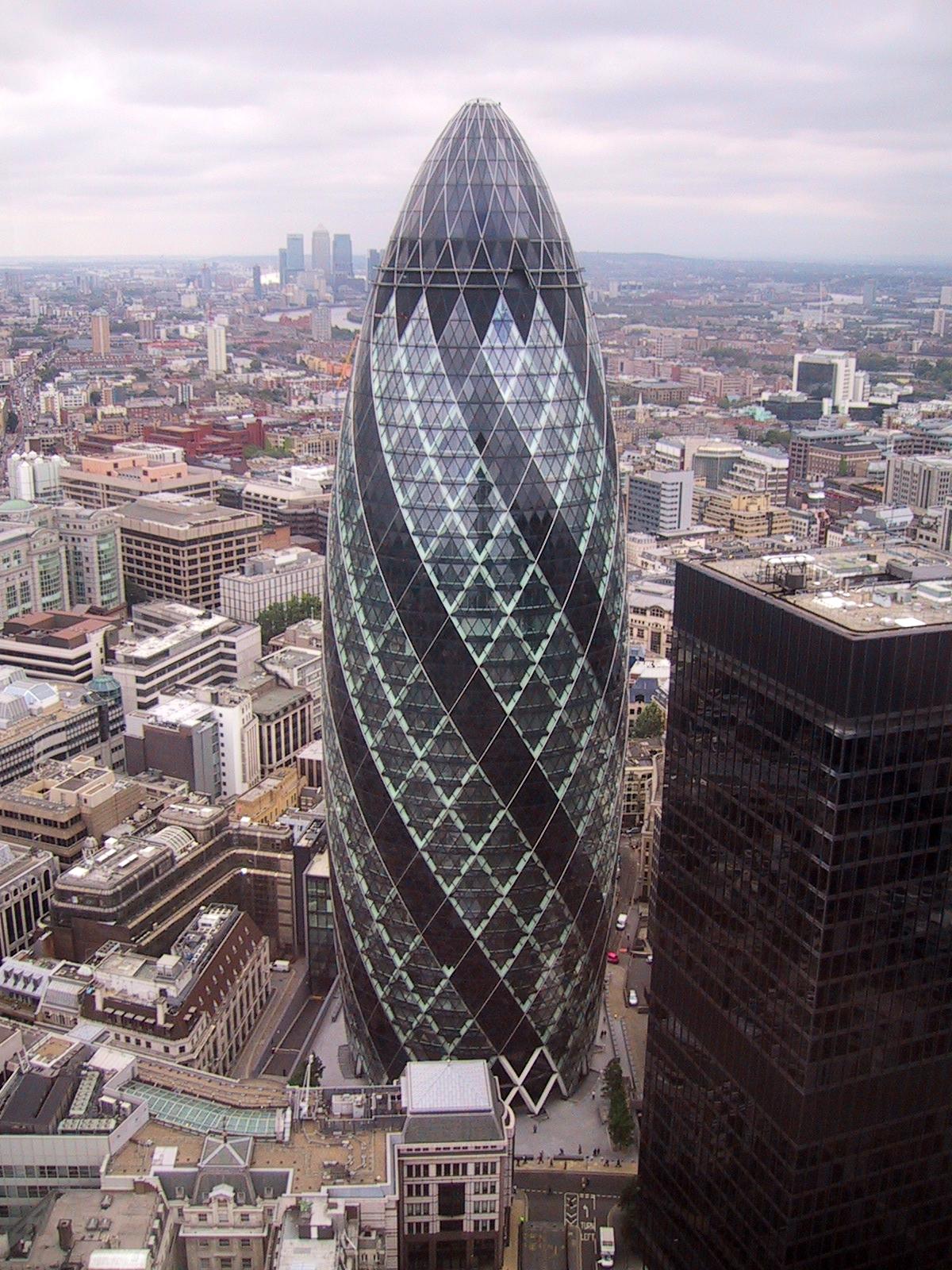
You are now at a building that dominates the financial district skyline with its distinctive pickle shape. This is 30 St Mary Axe, though everyone calls it The Gherkin. Standing 180 meters tall with 41 floors, it earned its beloved nickname in 1999, two years before construction even began. This site holds layers of history beneath the glass and steel. On 10 April 1992, a bomb destroyed the Baltic Exchange, a historic marketplace for shipping contracts that stood here for nearly a century.
When workers cleared the ruins in 1995, they uncovered something extraordinary: the skeleton of a teenage girl buried 1,600 years ago when this was part of Roman Londinium. She had been laid to rest with her arms crossed, pottery beside her dating to between 350 and 400 AD. The remains were preserved at the Museum of London throughout construction and returned to rest beneath the building in 2007.
Designed by Norman Foster and completed in December 2003, the Gherkin revolutionized sustainable architecture. Despite its curved appearance, only one glass panel is actually curved: the lens shaped dome at the summit. The building uses natural ventilation through spiraling light wells, consuming half the energy of comparable towers. In 2004, it won the prestigious RIBA Stirling Prize in a unanimous vote, a first in the award's history.
Any feedback for this story?