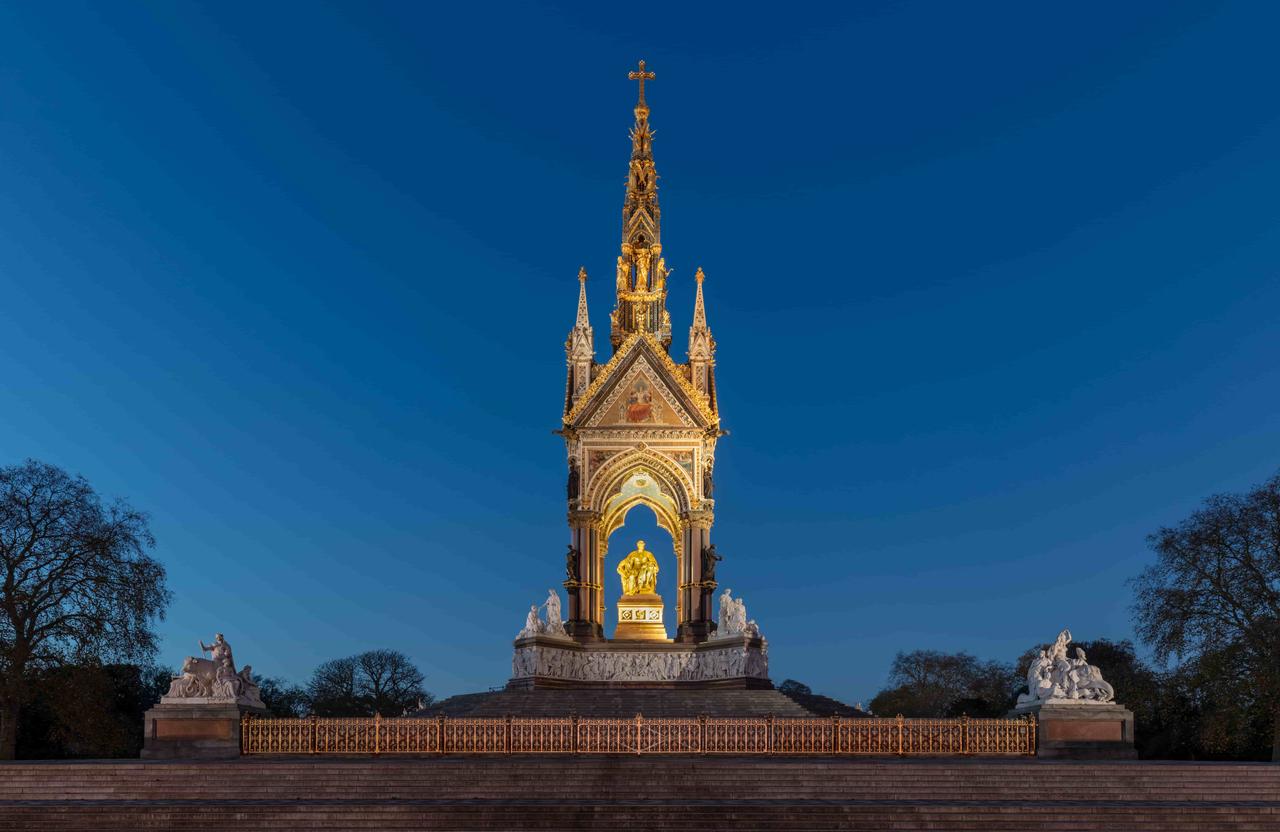
Albert Memorial
Opposite the Royal Albert Hall in London stands the majestic Albert Memorial, a testament to Queen Victoria's profound love for her husband, Prince Albert of Saxe-Coburg. After his untimely death in 1861 at the age of 42 from typhoid fever, Queen Victoria personally commissioned this grand monument, positioning it on the edge of Kensington Gardens. The Albert Memorial, designed by Sir George Gilbert Scott, features an unusual structure: a seated statue of Prince Albert beneath a towering Gothic canopy, gazing towards the concert hall he founded.
Prince Albert's death was a devastating blow to Queen Victoria. Stricken with grief, she withdrew from public life, attending only to unavoidable duties. Their marriage was seen as a fairytale union, a rarity among the high aristocracy where marriages were often arranged for political or economic reasons. Albert and Victoria, however, found genuine love and partnership, making his loss even more poignant for the Queen. The idea for the monument faced opposition from the British government, which preferred to honor Prince Albert by naming a university or scholarship after him.
Nevertheless, Queen Victoria was determined to have a lasting stone tribute to her beloved husband, reflecting his contributions to art, science, and industry. Unveiled in 1872, the Albert Memorial is an ornate masterpiece of Victorian design, standing 176 feet tall and adorned with numerous sculptures symbolizing various fields and continents. At its base, a frieze features 169 figures representing painters, poets, and architects, emphasizing Albert’s influence on the arts.
The central figure of Albert holds a catalogue of the Great Exhibition of 1851, which he organized and championed, further cementing his legacy. Today, the Albert Memorial remains one of London’s most striking monuments, a symbol of enduring love and a tribute to a man who left an indelible mark on British culture and society.
Any feedback for this story?