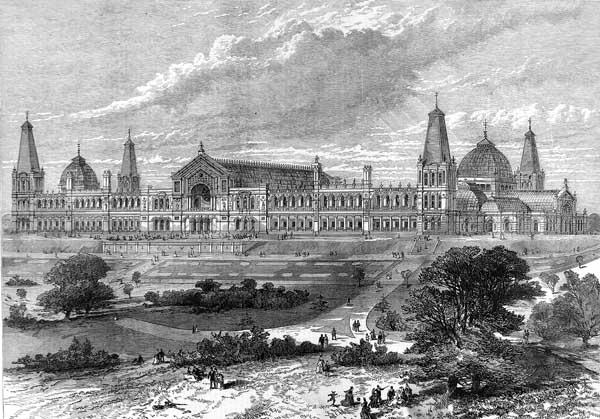
Alexandra Palace
You are standing at a palace that witnessed the moment that changed the world forever. This is where television was born. On November 2, 1936, the first regular high definition television broadcast flickered to life from this very building, reaching an estimated 500 television sets across the capital. The BBC had transformed former Victorian dining rooms into cutting edge studios, and history was made. Perched on a hilltop between Wood Green and Muswell Hill, this grand entertainment venue sits on land that was once Tottenham Wood Farm.
Built in 1873 and named after Princess Alexandra of Denmark, who had just married Prince Edward, the palace attracted over 120,000 visitors in its first 16 days. Then disaster struck. A massive fire destroyed the entire building, killing three staff members. Only the outer walls survived. The palace was swiftly rebuilt and reopened in 1875 as a cultural playground with a concert hall, theatre, museum, art galleries, and even a racecourse that operated until 1970.
During World War One, it served as a refugee camp for displaced Belgians, later housing German and Austrian internees. The original BBC Studios A and B still exist in the southeast wing, preserving the very spaces where television as we know it was born.
Any feedback for this story?