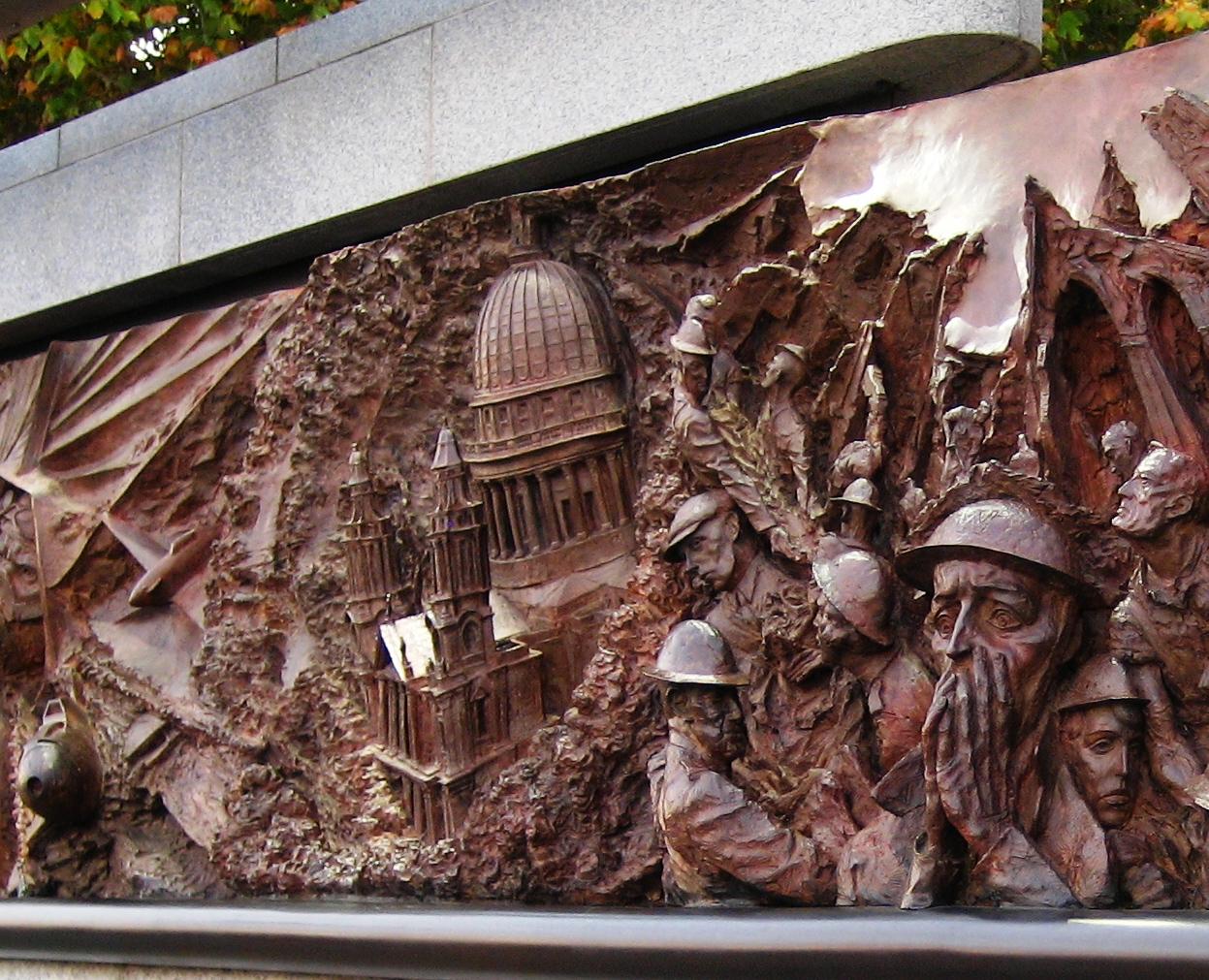
Battle of Britain Monument
Standing on the Victoria Embankment with the Thames behind you, the Battle of Britain Monument stretches along the riverside wall in a long sweep of bronze. Sculptor Paul Day, known for his richly detailed figurative work, unveiled it on September 18, 2005, on the 65th anniversary of the battle it commemorates.
The reliefs capture everything: pilots sprinting to their aircraft, civilians craning their necks at the sky, cities burning below. They tell the story of a four-month air campaign in 1940, when Adolf Hitler was planning to invade Britain. His plan, called Operation Sea Lion, required destroying the Royal Air Force first. For months, the German Luftwaffe hammered British airfields, radar stations, and cities in wave after wave of bombing raids.
The RAF fought back with something unexpected: a radar warning system called Chain Home, which gave pilots just enough time to scramble before the enemy arrived. Despite being heavily outnumbered, they held the line. Prime Minister Winston Churchill called them "The Few," and the name stuck.
By October 1940, Hitler quietly shelved his invasion plans. The RAF had won the first battle in history fought entirely in the air.
Each year, wreaths are laid here after a service at Westminster Abbey nearby.
Any feedback for this story?