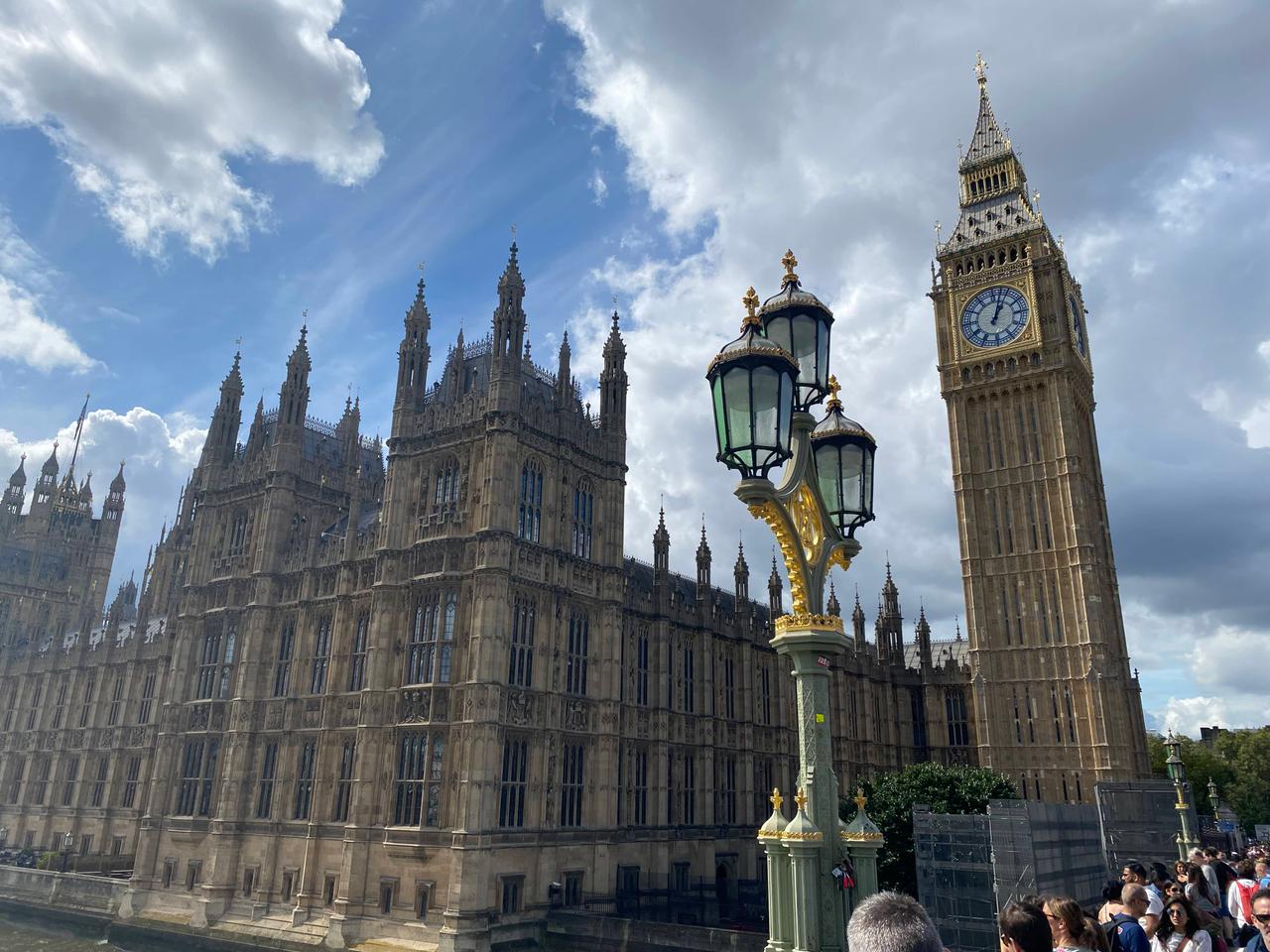
Big Ben and the Clock Tower, Palace of Westminster
It started with a bonfire that nobody planned. In 1834, British Treasury officials decided to dispose of a large stockpile of tally sticks, wooden rods that had been used for centuries to record tax payments. They burned them in the ovens beneath the House of Lords, and the fire quickly spiraled out of control, reducing much of the Palace of Westminster to ashes.
By 1835, architect Charles Barry had won the competition to rebuild the palace, working alongside Augustus Pugin, a brilliantly obsessive designer who controlled every detail of the new building, right down to the door handles. Pugin also designed the iconic Clock Tower rising 96 meters above the Thames, including its famous clock face. Tragically, he died in 1852 after a mental breakdown, never seeing the tower fully complete.
The great bell inside, Big Ben, was named either after Sir Benjamin Hall, a senior parliamentary official, or Benjamin Caunt, a celebrated heavyweight boxer of the era. It cracked twice during testing and was repaired by simply rotating it slightly so the hammer struck a different spot. Clever, if a little undignified for the most famous bell in the world.
Since 1923, the BBC has opened its radio news bulletins with Big Ben's chime, a tradition that has outlasted empires, wars, and at least two cracked bells.
Any feedback for this story?