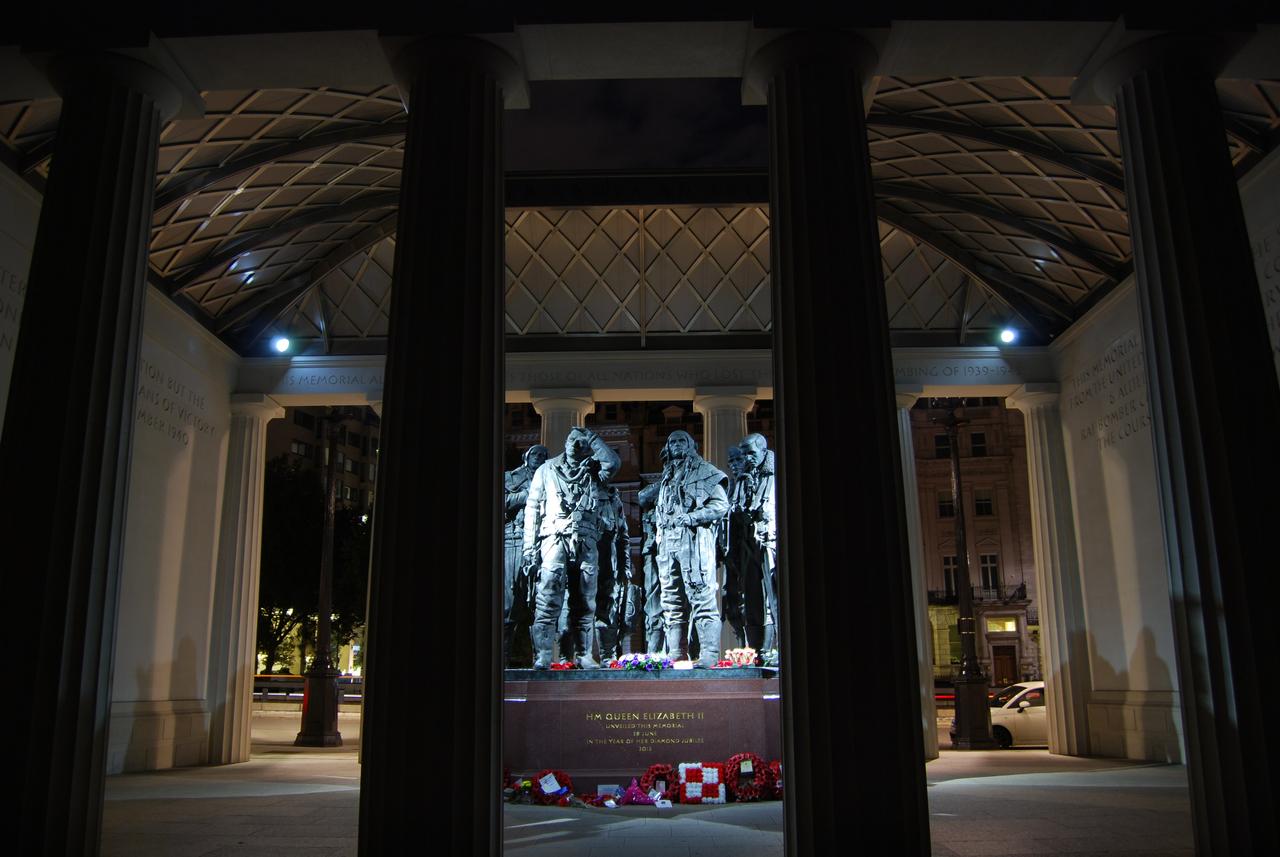
Bomber Command Memorial
The Royal Air Force Bomber Command Memorial honors the 55,573 aircrew members from the UK, Australia, Canada, New Zealand, Poland, Czechoslovakia, and other Allied countries who died during World War II. These brave individuals perished on thousands of missions. Unveiled by Queen Elizabeth II on June 28, 2012, the ceremony was attended by 6,000 veterans. After the unveiling, a World War II Avro Lancaster bomber dropped red poppies over Green Park, symbolizing remembrance.
The memorial, located on the south side of Green Park near Wellington Arch, owes its existence to the efforts of singer Robin Gibb of the Bee Gees and Jim Dooley, who raised the necessary funds. Designed by architect Liam O’Connor, the structure is a colonnade made of white Portland stone. Within this impressive monument stand seven bronze figures, crafted by sculptor Philip Jackson, depicting a bomber crew returning from a mission over enemy territory. The memorial serves as a poignant reminder of the sacrifices made by Bomber Command during the war.
The aircrews faced harrowing conditions and high mortality rates, contributing significantly to the Allied war effort. The Bomber Command played a crucial role in strategic bombing campaigns, targeting industrial sites and infrastructure to weaken the Axis powers. Despite their significant contributions, Bomber Command crews received little recognition after the war due to the controversy surrounding the bombing of German cities. The memorial helps to rectify this oversight, providing a space for reflection and honoring the bravery and sacrifice of these airmen. It stands not only as a tribute to those who lost their lives but also as a reminder of the complex and often tragic nature of wartime service.
Any feedback for this story?