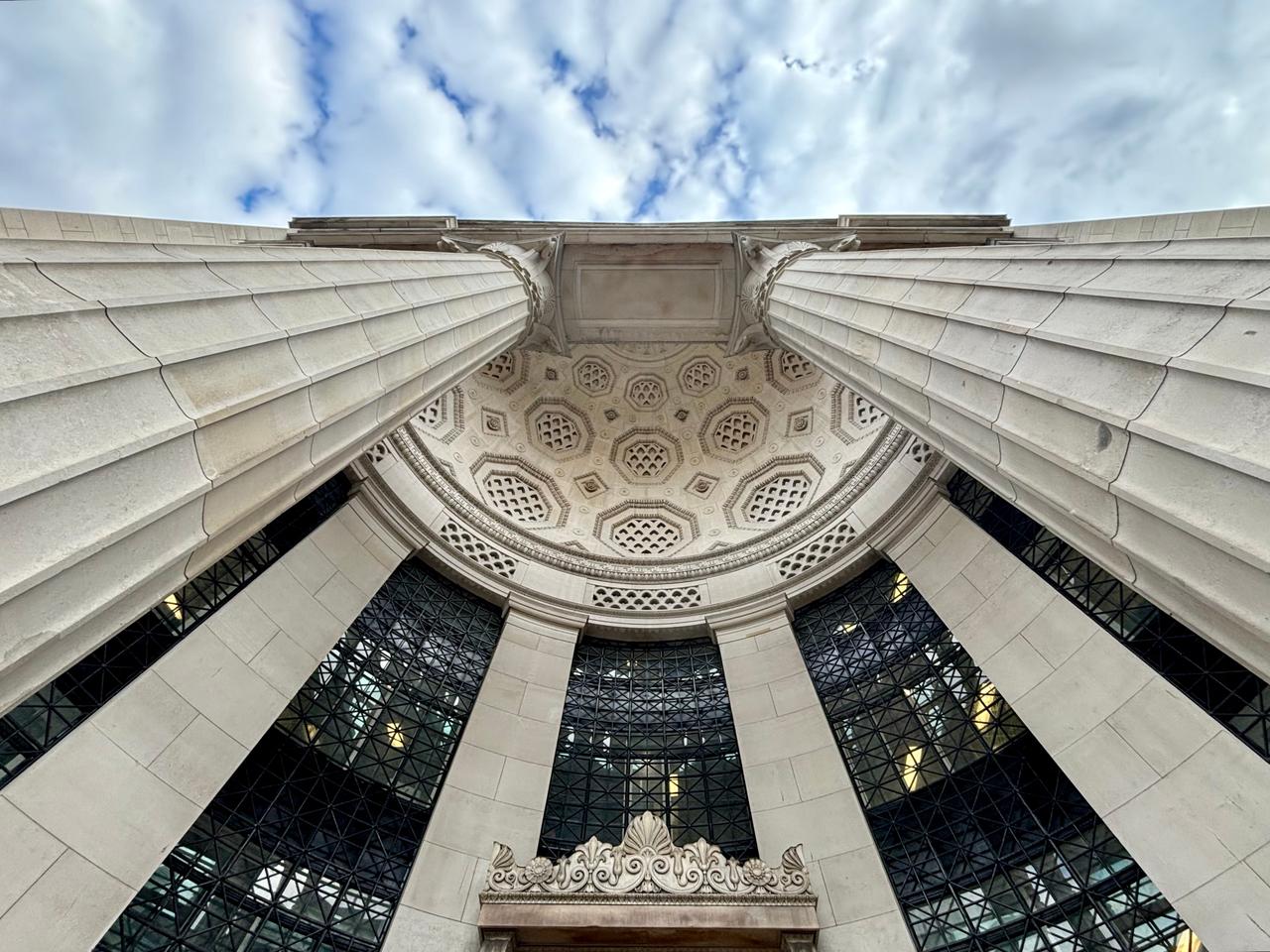
Bush House
Bush House, an iconic structure in Aldwych, Westminster, has a rich history of cultural and political significance. Commissioned by American businessman Irving T. Bush in 1919, the building was designed by renowned architect Harvey Wiley Corbett, known for his skyscrapers and office buildings like the Bush Tower in Manhattan. The construction of Bush House, a collaborative effort with British firm John Mowlem & Co., was completed in 1935, though its first wing opened in 1925. The official opening on July 4, 1925, featured the unveiling of two sculptures by American artist Malvina Hoffman.
These sculptures, positioned above the main entrance, symbolized the harmony and cooperation between English-speaking peoples, with the inscription: "To the friendship of English-speaking peoples." This theme of international cooperation was particularly poignant in the post-World War I era. From 1941 to 2012, Bush House served as the headquarters for the BBC World Service, playing a crucial role during World War II. It was from here that Radio Oranje broadcasts were made to the occupied Netherlands, providing a vital link and a voice of hope to the Dutch resistance.
Over the decades, Bush House became synonymous with global broadcasting, significantly contributing to the BBC's reputation as a trusted source of international news and information. In 2012, the BBC World Service moved out of Bush House, marking the end of an era. However, the building found a new purpose in 2015 when it was taken over by King's College London. Today, Bush House serves as a vibrant academic hub, housing various departments and student facilities. This transition from a media powerhouse to an educational institution reflects the building's adaptability and enduring significance in London's architectural and cultural heritage.
Any feedback for this story?